
As a dedicated player who has spent countless hours exploring the vibrant yet dangerous world of Yara, I've experienced firsthand the polarizing design choice Ubisoft made with Far Cry 6. In 2026, this title remains a staple in the open-world shooter genre, celebrated for its chaotic action and compelling narrative. However, one aspect continues to spark debate within the community: the game's rigid perspective system. From the moment I first landed on the island, the cinematic trailers led me to believe we might get a more varied visual experience. Yet, the core gameplay enforces a strict first-person view, a decision that has left many fans, including myself, wishing for more control over how we see the action unfold.
The Unchangeable Core: First-Person Dominance
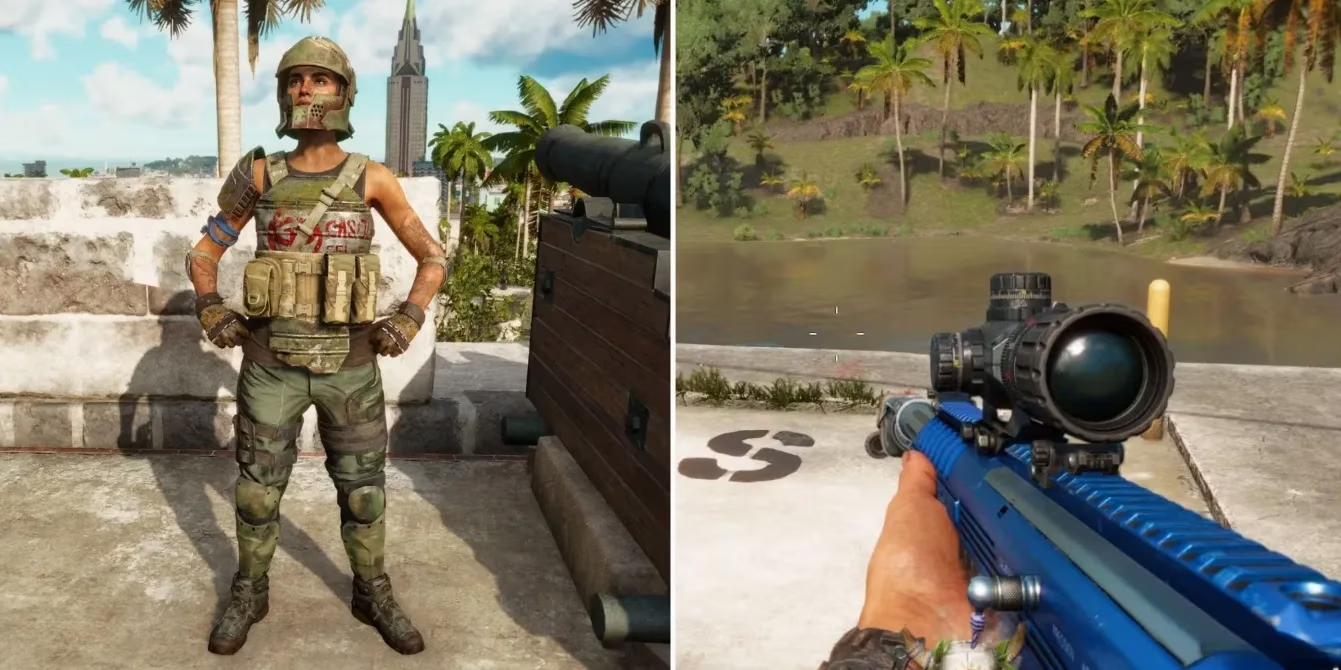
Let's address the elephant in the room directly: No, you cannot manually switch to a third-person perspective during standard gameplay in Far Cry 6. This isn't a setting buried in the options menu or a toggle on the D-pad. The game's primary viewpoint is firmly anchored in the first person, placing you directly behind the eyes of protagonist Dani Rojas. This design philosophy is most evident during the game's most intense moments:
-
Driving & Piloting: Whether you're tearing through the jungle in a beat-up vintage car or soaring above military checkpoints in a wingsuit, the camera remains locked in a first-person cockpit view. This immersion is undeniable, making every crash and near-miss feel visceral, but it sacrifices the broader situational awareness a third-person view provides.
-
Core Combat & Gunplay: The vast majority of firefights, from stealthy takedowns to all-out assaults on FND bases, are experienced from Dani's direct line of sight. Aiming down sights, throwing grenades, and using standard gadgets all happen within this intimate, first-person framework.
This consistent perspective is a double-edged sword. It creates an unparalleled sense of immersion and personal connection to the chaos of Yara's revolution. However, it also means players who prefer a broader tactical view or simply enjoy seeing their customized character in action during gameplay are left wanting.
When the Camera Pulls Back: Scripted Third-Person Moments
Ubisoft didn't completely ignore the third-person perspective. The game employs a hybrid system, automatically switching viewpoints at specific, scripted moments. These transitions are seamless but entirely outside player control. Here’s where you can expect to see Dani from a different angle:
| Scenario | Perspective | Purpose & Player Experience |
|---|---|---|
| Narrative Cutscenes | Third-Person | Allows for cinematic storytelling, showing Dani's reactions and interactions within the environment. |
| Guerrilla Camp Interiors | Third-Person | Facilitates easier navigation and interaction with NPCs for gear upgrades and story missions. |
| Activating Supremo Abilities | Third-Person | Provides a dramatic, empowering view of Dani unleashing devastating special attacks. |
| Photo Mode | Fully Customizable | The only place where players have complete freedom, allowing for first-person, third-person, or free camera shots. |
These moments are welcome respites, offering a chance to appreciate character customization and environmental scale. The shift to third-person in camps, for instance, makes the social hubs feel more alive and manageable. Yet, these moments highlight what's missing—the inability to carry that viewpoint back out into the wilds of Yara.
The Modding Community's Answer
For PC players, the modding community has stepped in to fill the void left by the official game design. Utilizing platforms like Nexus Mods, dedicated fans have created tools to alter the core experience. It's important to note that even years after release, fully stable third-person mods remain a niche and somewhat janky pursuit, but they represent the community's desire for choice.
🔧 Notable Perspective & FOV Mods:
-
FC6 Third Person View & Improved 3rd Person: These are the primary mods attempting to overhaul the camera. They force a third-person view during general exploration and combat. However, they often come with significant caveats:
-
Animation Glitches: Character animations, especially for weapons and movements, aren't designed for an external camera and can appear broken.
-
UI Misalignment: The HUD and aiming reticles may not function correctly.
-
Limited Vehicle Support: They rarely work well, if at all, during driving or flying sequences.
-
-
Field of View (FOV) Enhancements: While not changing the perspective itself, FOV mods address a related visual concern by widening the player's peripheral vision, reducing the "tunnel vision" effect some players dislike.
-
Libertad Mod: Adjusts FOV settings for specific contexts like horseback riding and vehicular combat.
-
Scalable Ironsight FOV: Allows fine-tuning of the zoom level when aiming down iron sights, offering greater comfort during prolonged shootouts.
-
These modifications are a testament to player ingenuity but also underscore the complexity of hacking a perspective into a game not built for it. Console players, unfortunately, have no such recourse and must accept the game's designed vision.
Looking Back and Forward: The Perspective Paradigm
Reflecting on Far Cry 6 from our vantage point in 2026, its perspective system stands as a defining, if contentious, feature. Ubisoft's commitment to first-person immersion creates a powerful, consistent narrative and gameplay experience. The automatic shifts to third-person are well-placed for cinematic and practical purposes. Yet, the enduring discussion and the efforts of the modding community clearly signal a strong player desire for agency in this fundamental aspect of gameplay.
For a franchise known for its player freedom and chaotic emergent gameplay, the lack of a simple perspective toggle feels like a missed opportunity for customization. As we look to the future of the series, one can't help but hope that the lessons from Far Cry 6—both its strengths in immersion and the player feedback on its limitations—will inform a more flexible approach in titles to come. Perhaps the next journey into a Far Cry world will let us choose not just our weapons and allies, but also the very eyes through which we see the revolution.
Comments