

Even five years after its turbulent launch, Far Cry 6 remains a fascinating case study in narrative architecture—like a labyrinth whose walls are painted with the illusion of choice, yet whose handful of true forks carve deep scars into the soil of its world. The base campaign may march toward a seemingly inevitable collision with Anton Castillo’s regime, but the game’s ultimate legacy lies in the echoes that follow: a secret exodus, a post-credits resurrection, and three psychological deep-dives that recast the series’ most iconic antagonists as prisoners of their own minds.
The Main Road And Its Fork
For the vast majority of players, the journey through Yara is a straight line with a brutal terminus. The canonical ending arrives only after Dani Rojas has dismantled Castillo’s military apparatus piece by piece. In the final confrontation, the ailing dictator—his body riddled with an incurable cancer—chooses a self-determined exit over surrender. He executes his son Diego before turning the gun on himself, delivering a sermon about breaking a generational cycle of tyranny. Dani’s victory is hollow; the rebel refuses leadership, handing Yara’s uncertain future to the revolution’s ideological compass, Yelena. This conclusion feels less like a reward and more like a last will whispered through gunfire.
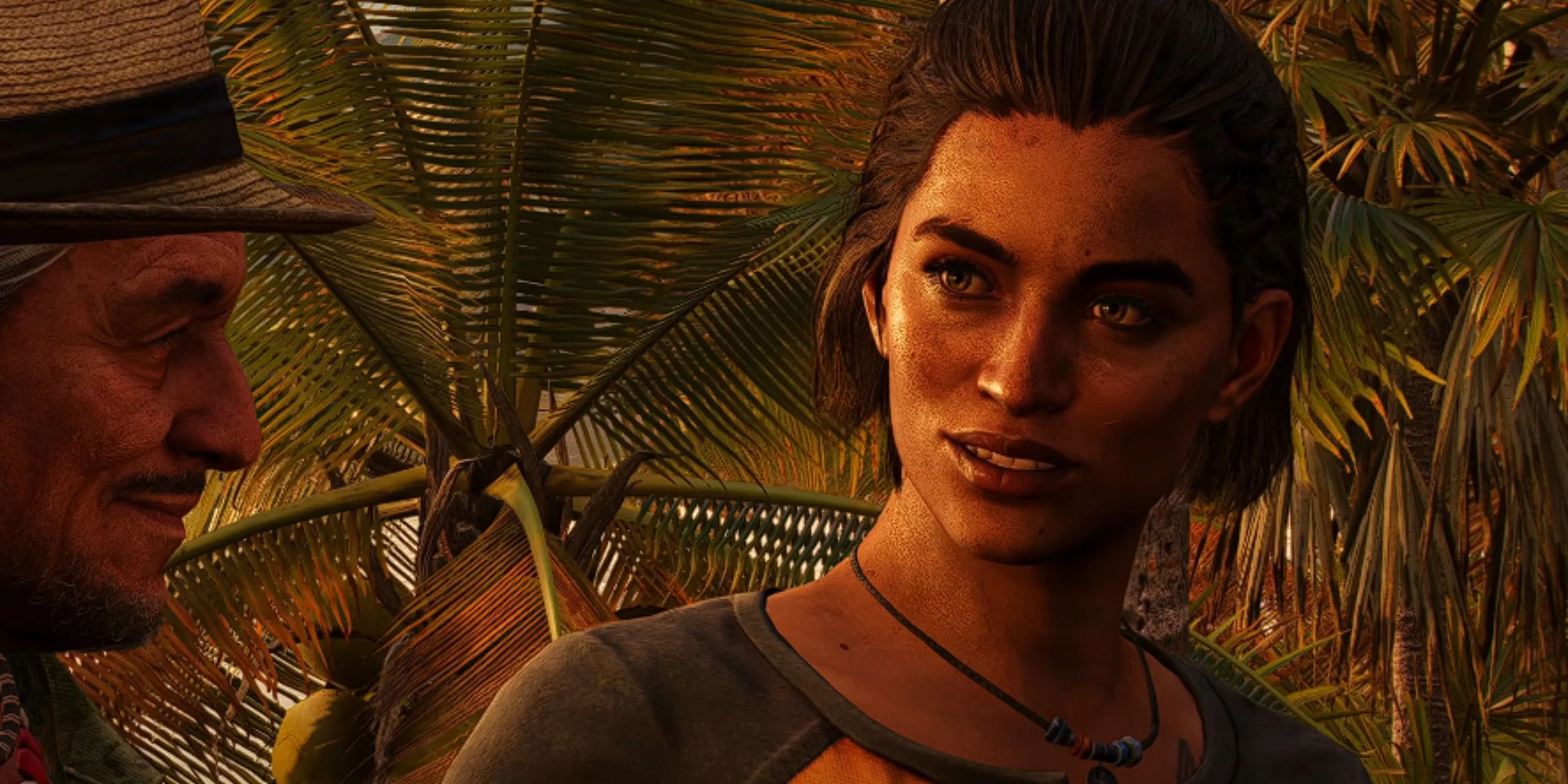
Yet, hidden in the opening hours, the game’s true narrative wildcard waits like a trapdoor beneath a stage. Shortly after joining Clara’s Libertad movement, a promise is made: complete one pivotal mission and a boat to Miami will be yours. If Dani chooses to set sail, the screen fades not to a triumphant epilogue but to a news report months later, detailing how Castillo effortlessly crushed Libertad and erased Clara from existence. This “secret” ending is a masterstroke of anti-climax—a gleam of selfish salvation that leaves an entire nation bleeding in the rearview mirror. It reconfigures the entire struggle as a fleeting detour, as disposable as a matchstick bridge across a bottomless ravine.

A Ghost With A Tennis Ball
Before the credits roll, a seismic post-credits scene rewires the canon. A smuggler is seen shipping the rare cancer medication that Anton desperately needed, and that smuggler is identified as Vaas Montenegro—the fan-favorite pirate from Far Cry 3 who was assumed dead. His survival is not a retcon but a statement: the chaos of the earlier games was never contained. This revelation cascades into the first of three DLC episodes, Insanity, where Vaas’s fractured psyche becomes the battlefield.
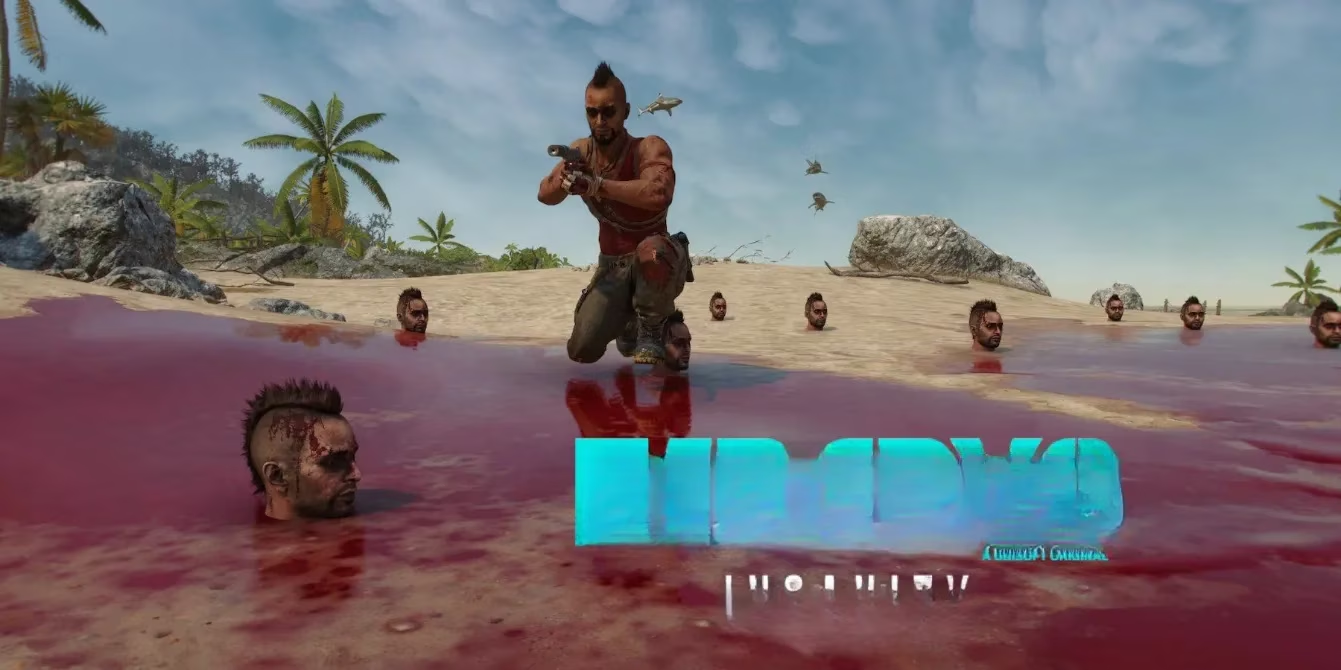
The roguelite structure of Insanity forces players to navigate Vaas’s internal purgatory, reliving his abuse at the hands of his sister Citra and the scarred bond with Jason Brody. Three resolutions emerge like neurons firing in a shattered brain. If Vaas stays and confronts his demons, he declares that he will no longer let the past define him, breaking the cycle. If he leaves, he second-guesses himself, wondering if enduring the pain might have unlocked a higher enlightenment. The secret ending, unlocked by escaping his mind on the fifth Mind level, deposits him on a beach, talking to a tennis ball painted like a face—a surrogate Jason. It’s a quietly deranged image that confirms he never died at all, merely stepped sideways into a different shade of madness.
The King’s Nuclear Whisper
Control, Pagan Min’s DLC, operates as an emotional confessional. Trapped in his own guilt over Mohan Ghale’s murder and the deaths that followed, Pagan relives the onslaught where he must choose to protect his family or flee. Staying sees his wife Ishwari urge him to save himself, and as he steps into light, their daughter’s voice murmurs that though they couldn’t be together, she is happy he tried. Leaving ends with Ishwari’s heartbreaking admission that he remembers her as better than she was—and that they cannot reunite.
The DLC’s true payload, however, arrives with the secret ending (Mind Level 5). A black screen cuts to a recording addressed to Ajay Ghale from Far Cry 4. Pagan reveals the existence of a nuclear weapon hidden beneath his palace, aimed squarely at Montana—the setting of Far Cry 5. This single line retroactively knits the series’ geography into a tapestry of mutually assured destruction. It’s less an Easter egg and more a delayed-action fuse that recontextualizes the entire franchise.
The Irredeemable Prophet
Joseph Seed’s Collapse is the most theologically claustrophobic of the trio. He battles “The Voice,” a warped projection of God, as he tries to atone for his cult’s atrocities. If he chooses to keep fighting and refuses to enter Eden’s Gate, the Voice eventually convinces him that home lies beyond the threshold; once he steps inside, he is told he is finally home—a chilling acceptance of his own damnation. If he enters Eden’s Gate immediately, the Voice praises his newfound obedience bred from doubt.
The secret ending (Mind Level 5) unspools a voicemail so disturbing that it redefines Joseph entirely. It is his final call to his original wife, Faith, unaware that she and their baby are dead. The message hints that Joseph has been grooming replacements ever since, a revelation that sets him apart from Vaas and Pagan: while they are tormented by circumstance, Joseph Seed is irredeemable. His mind is not a prison he seeks to escape but a cathedral he built to worship himself.
Taken together, Far Cry 6 and its DLCs compose a narrative mosaic where the most compelling endings are often the ones that reject closure. Whether it’s Dani sailing away from a burning island, Vaas giggling at a painted ball, or Pagan aiming a doomsday weapon at another game’s backyard, the message is clear: in this universe, every ending is just another beginning’s shadow.
Comments