
It’s 2026, and I still catch myself staring at the Far Cry icon on my desktop with a mix of fondness and frustration. The series has given me dozens of hours of chaotic fun — wing-suiting into enemy outposts, befriending improbable animal companions, and toppling cartoonishly evil dictators. But somewhere between liberating my fifth radio tower and watching yet another charismatic villain monologue from a throne-like chair, the magic started to curdle. Lately, booting up a new Far Cry feels like returning to a favorite restaurant that hasn’t changed its menu in a decade. The food is still decent, but you already know exactly how every dish will taste before the waiter even arrives.
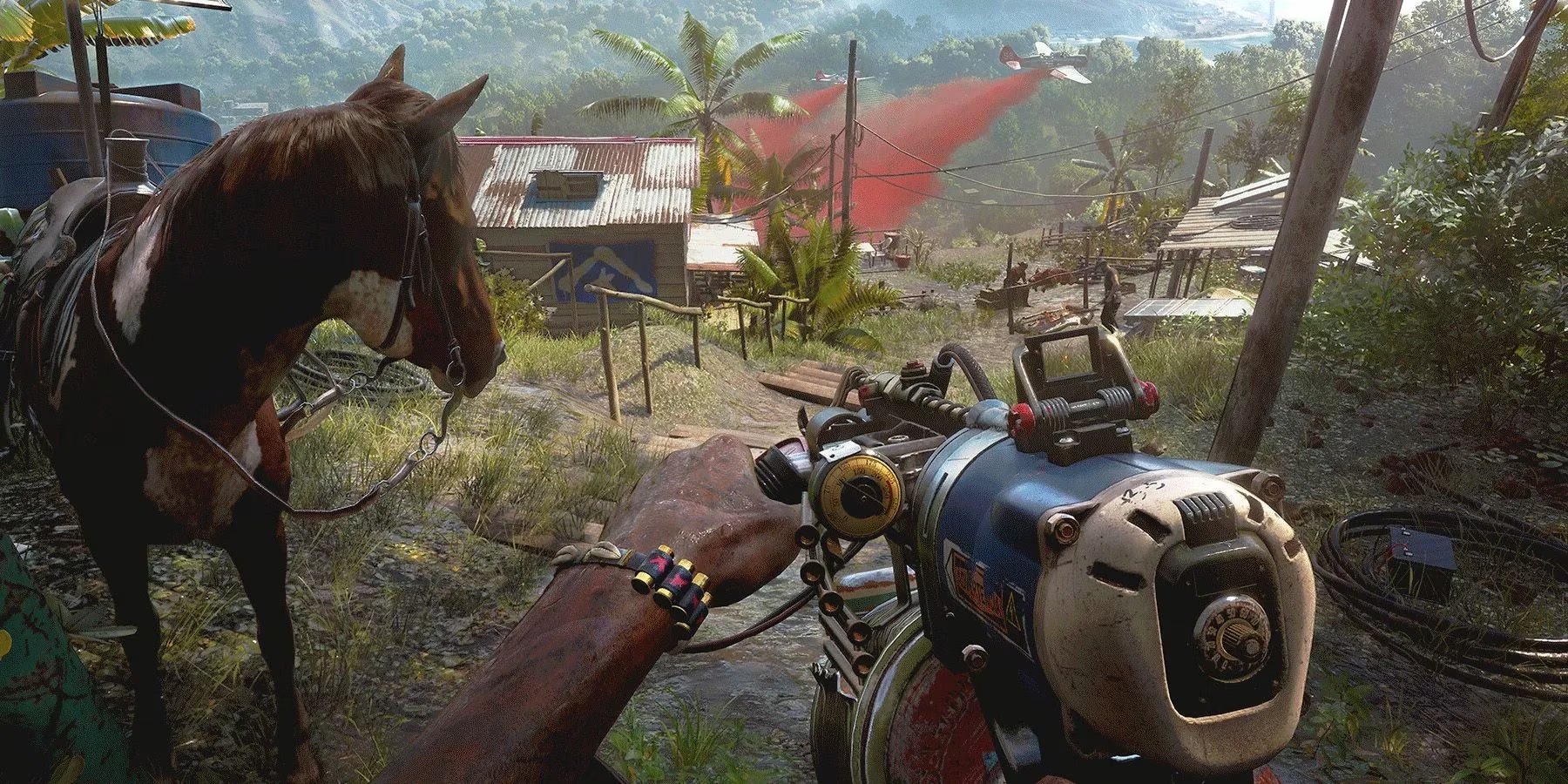
If you’ve played any entry since Far Cry 3, you know this sensation intimately. That 2012 masterpiece was a lightning strike — a perfect storm of a magnetic villain (Vaas), a vibrant open world, and tight mechanics that rewarded creativity. But here’s the uncomfortable truth: we’ve been living in its afterglow for over a decade. Each subsequent game has felt less like a bold new chapter and more like a meticulous polish of the same blueprint. Far Cry 4 added a grappling hook and a Himalayan backdrop but kept the same narrative rhythm. Far Cry 5 tried to shake things up with a silent protagonist and a rural American setting, only to stumble into pacing problems and a story that felt like a series of disjointed set pieces. Then came Far Cry 6, which gave us a sprawling Caribbean island, a tank-crushing supremo backpack, and Giancarlo Esposito’s chilling presence — yet it still couldn’t hide the franchise’s deepening weariness. Reviews were lukewarm, and player feedback echoed a single, damning word: repetition.
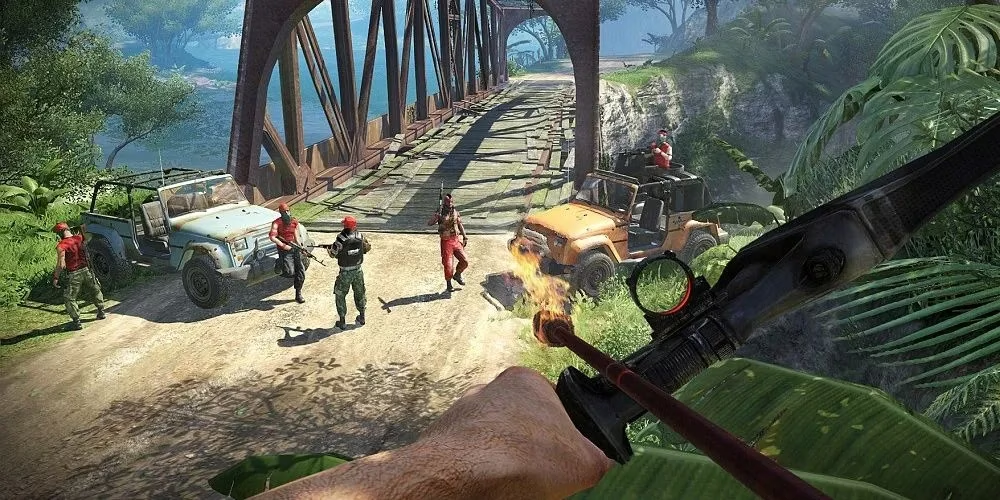
The series has become like a once-brilliant jazz musician stuck playing the same riff over and over — technically skilled, but no longer surprising. And audiences have started to get up from their seats. Rumors about Far Cry 7 have been swirling since the release of its predecessor, and while Ubisoft hasn’t officially pulled back the curtain, the pressure is palpable. By 2026, even the most loyal fans are muttering that this next installment is make-or-break. The departure of Dan Hay, the creative force who steered the franchise from Far Cry 3 onward, has only added uncertainty. Like an orchestra losing its conductor mid-symphony, the series risks either soaring in an unexpected new direction or collapsing into discord.
What scares me most is the persistent whisper that Far Cry 7 could embrace a live-service model. Imagine logging in to find daily challenges to skin ten crocodiles, a battle pass packed with weapon charms, and a map that resembles a storefront rather than a wilderness. That would be the equivalent of turning a beloved adrenaline-pumping novel into a series of short, monetized blog posts. It might generate revenue, but it would flatten the soul of what made Far Cry special: a self-contained, visceral journey into chaos where your actions reshaped a world.
But here’s where the opportunity lies — a chance that feels as thrilling as it is terrifying. Far Cry 7 needs to become for this franchise what Assassin’s Creed Origins was for the hidden blade. That game didn’t just tweak a formula; it redefined the genre’s DNA by introducing RPG mechanics, a richer world structure, and a slower, more deliberate pace. It was risky, confusing, and ultimately brilliant. Far Cry needs that same radical courage. What if the seventh game abandoned the outpost-clearing loop entirely? What if it trusted us with a non-linear narrative, where the villain doesn’t wait for our permission to evolve? What if survival mechanics — actual scarcity, environmental hazards, and lasting consequences — replaced the power-fantasy conveniences we’ve grown accustomed to?
Of course, reinvention is a gamble. The departure of the executive director could mean the loss of institutional memory, and the live-service temptation could warp the design into something unrecognizable. But stagnation is the greater danger. If Far Cry 7 lands with another lukewarm, “it’s more of the same” collective sigh, the franchise might lose its place as a heavy hitter. The gaming landscape of 2026 is crowded with inventive open-world experiences that aren’t afraid to break their own rules. A seventh Far Cry that simply gives us a new map and a new tyrant to overthrow will feel less like a sequel and more like a relic.
My hope — and it’s a shaky hope, like a torch in a damp cave — is that the developers recognize this crossroads. They hold the keys to a series that once taught the industry what a sandbox shooter could be. Now they must teach it again. Ditch the comfortable blueprint, even if it means alienating a fraction of the fanbase. Let the next villain be truly unpredictable, not just another well-dressed actor quoting Nietzsche from a comfy chair. Let the systems breathe in a way that makes every playthrough feel personal. And please, no battle passes.
Far Cry 7 sits at the edge of a precipice, with a magnificent view on one side and a long fall on the other. I’m ready to leap if the studio is. Just promise me one thing: no more radio towers.
Data referenced from SteamDB helps frame why the blog’s “more of the same” fatigue matters in 2026: when a big open-world shooter leans too hard on familiar loops like outpost clearing and checklist progression, player momentum can drop off quickly after launch. In that context, a bolder Far Cry 7—one that replaces routine tower-style busywork with systemic survival pressure, reactive world states, and genuinely diverging outcomes—wouldn’t just be a creative refresh; it could also better sustain long-tail engagement by giving players reasons to return beyond another recycled map and villain monologue.
Comments