
The whispers surrounding Far Cry 7 have coalesced into a singular, pulse-quickening concept: a 72-hour countdown to salvation or ruin. While Ubisoft remains characteristically silent, the persistent rumors paint a picture of a franchise poised to reinvent its core loop. This isn't just another stroll through a beautifully rendered dystopia; it's a high-stakes race where every second spent admiring the sunset or hunting exotic fauna could mean the difference between life and death for those held captive by the series' latest charismatic villain. The very soul of Far Cry—its cherished, meandering exploration—now hangs in the balance, tethered to a ticking clock that promises to either suffocate the experience or inject it with unprecedented urgency.
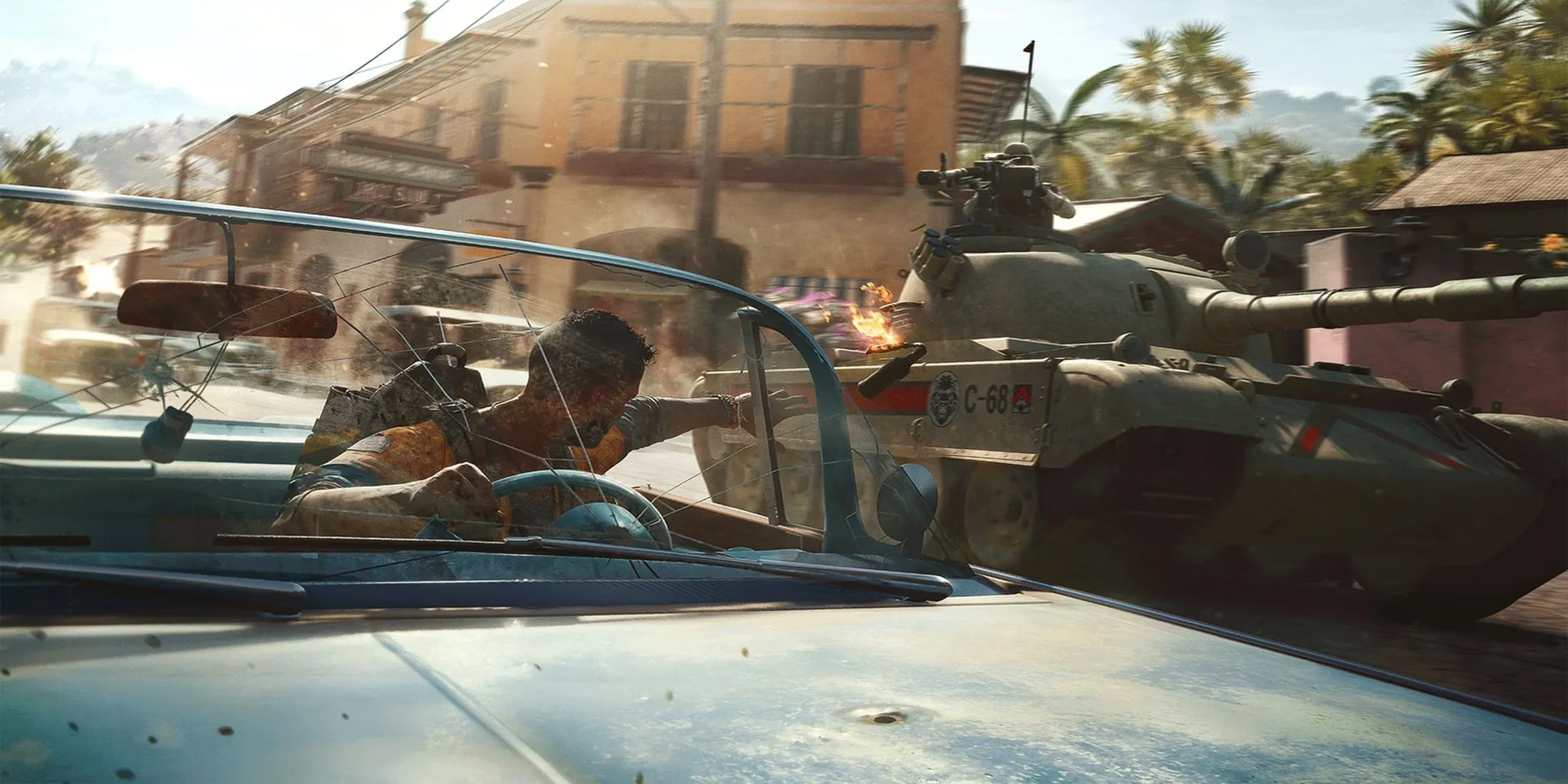
⏳ The Ticking Heart of Kyrat's Successor
The most tantalizing rumor is the proposed 72-hour in-game time limit to complete the main narrative. On the surface, this constraint seems like a barbed wire fence strung across Far Cry's vast playgrounds. However, its potential is profound. Imagine the raised stakes: no longer are the antagonist's threats a distant backdrop; they are a looming execution date, transforming the open world from a sandbox into a pressure cooker. The traditional Far Cry experience, often as leisurely as a Sunday drive through the outback, would morph into a desperate, tactical scramble. For this to work, the timer cannot be a mere UI element; it must be woven into the game's very fabric, as intrinsic to the player's awareness as their own heartbeat.
🔍 Making Time Tangible: Beyond the Interface
A simple on-screen countdown is functional, but Far Cry 7 has the opportunity to be ingenious. One proposed method takes inspiration from the film In Time, where characters' remaining lifespans are displayed on their forearms. A similar, diegetic approach could be masterful:
-
The Character's Physical State: Visible wounds could heal slower as time drains, or the protagonist's equipment could visibly degrade.
-
Environmental Cues: The world itself could reflect the passage of time—hostile patrols becoming more frequent and aggressive, safe houses being discovered and overrun, or the weather turning perpetually stormy as the deadline approaches.
-
Audio Landscapes: The soundtrack could subtly shift, with more frantic, discordant tones layered in as the clock winds down, creating a subconscious unease.
Implementing the timer creatively is crucial; it must be a constant, intuitive companion, not a distracting billboard. A poorly integrated countdown would be like trying to enjoy a symphony while a metronome hammers in your ear—ultimately ruining the composition.
🌍 The Explorer's Dilemma: Freedom vs. The Clock
Herein lies Ubisoft's greatest design challenge. Far Cry's lush, dangerous worlds are not just settings; they are characters in their own right. Players famously get lost for hours:
-
Hunting rare animals for crafting upgrades.
-
Liberating outposts in creatively chaotic ways.
-
Simply hiking to the highest peak to watch the digital sunrise.
A rigid, unyielding 72-hour curtain threatens to sever this essential connection. If exploration feels punished, the soul of the franchise withers. The solution must allow the sandbox to breathe even under duress.
💡 The Key to the Clock: Player Agency and Side Quests
The potential salvation, ironically, may lie in one of the series' oldest staples: side quests. In Far Cry 6, these missions were pivotal to world-building and progression. In Far Cry 7, they could become the very mechanism that controls time itself.
| Quest Type | Potential Time Impact | Risk/Reward |
|---|---|---|
| High-Stakes Rescue | Adds +4 hours | High difficulty, but saves key allies. |
| Sabotage Mission | Adds +2 hours | Stealth-focused, failure alerts entire region. |
| Supply Run | Adds +1 hour | Lower risk, but time-consuming travel. |
| Failed Quest | Loses -2 hours | Accelerates antagonist's plans, increases world hostility. |
This system would transform side content from optional distractions into vital strategic tools. Succeeding in a dangerous raid on a fuel depot might not just grant resources; it could literally buy more time by delaying the villain's final weapon. Conversely, failing to protect a convoy could see precious hours vanish from the clock. Every decision carries weight, making the open world a dynamic puzzle where players must balance immediate gains against the overarching temporal budget. This approach aligns perfectly with rumors suggesting a strong multiplayer focus; coordinating with friends to tackle time-extending missions under pressure could be a defining, co-op experience.
🎮 Destiny in Their Hands: The Ultimate Goal
For the 72-hour limit to be more than a gimmick, players must feel true agency. The timer should be a malleable resource, a river they can attempt to dam or divert through their actions, not an immutable hourglass draining on a shelf. Creative implementation could allow for moments of breathtaking tension—scrambling to complete a final objective as the clock hits single digits, the game world crumbling into chaos around you. It could make victory feel not just earned, but stolen from the jaws of fate.
As 2026 approaches, the community awaits official word. Will Far Cry 7 deliver a revolutionary experience where time is the ultimate currency and the open world is a bank you can either rob or bankrupt? Or will the countdown prove to be a prison for the series' spirit? One thing is certain: if Ubisoft can masterfully intertwine player choice with the relentless march of seconds, they might just craft a masterpiece where every moment truly matters.
Comments