
The sprawling, chaotic landscapes of the Far Cry franchise have fallen into an uncharacteristic quiet. With the last mainline entry, 2021's Far Cry 6, now a distant memory, the series is experiencing its longest development hiatus in over two decades. This extended silence from Ubisoft has left a void, but also ignited a spark of hope within the dedicated fan community. Many believe this break is a necessary recalibration, a chance for the developers to step back from the near-annual release cycle and fundamentally reimagine the future of their open-world shooter series. The critical and player response to Far Cry 6 was a clear signal: while commercially successful, the game was often criticized for feeling too familiar, too derivative of its own established blueprint. The wilderness was calling for true innovation.
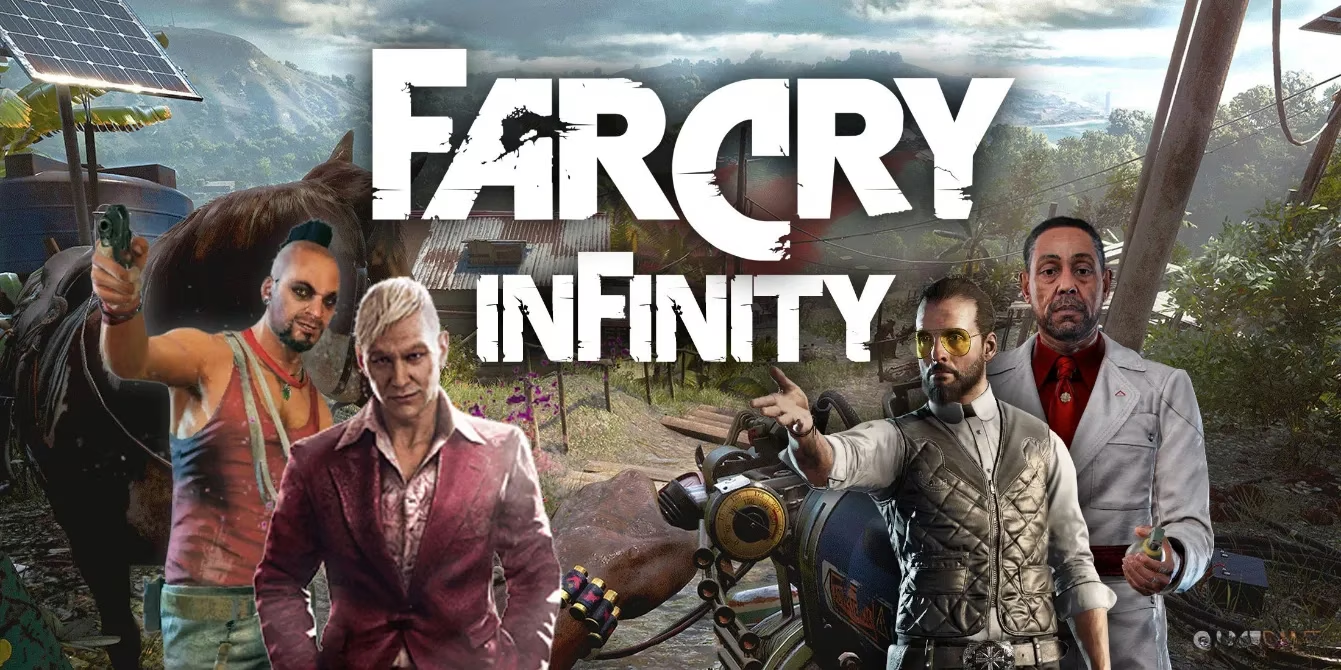
For years, the whispers and rumors about the next chapter, tentatively dubbed Far Cry 7, have painted a picture of radical change. Initial insider reports in 2021 sent shockwaves through the community by suggesting the franchise might adopt a live-service business model, similar to the framework of Assassin's Creed Infinity. The immediate backlash was fierce and widespread, with fans fearing the dilution of the series' signature solo-narrative adventures into a grind-heavy, monetization-focused experience. However, subsequent leaks have since clarified and complicated this vision, suggesting Ubisoft is pursuing a dual-path strategy for the franchise's revival.
🔫 The Two-Pronged Approach: Solo Survival & Multiplayer Extraction
According to detailed reports from outlets like Insider Gaming, Ubisoft is not developing just one, but two distinct Far Cry experiences to reignite the brand:
-
Project 1: The Alaskan Extraction Shooter
-
Genre Shift: A bold departure into the competitive realm of extraction shooters (think Escape from Tarkov or Hunt: Showdown).
-
Setting: The harsh, unforgiving wilderness of Alaska.
-
Focus: High-stakes, session-based multiplayer where players infiltrate a map, complete objectives, gather loot, and attempt to escape—all while battling both the environment and other players.
-
Potential: This could leverage Far Cry's strengths in crafting immersive, hostile open worlds and tense combat, applying them to a modern, popular genre.
-
-
Project 2: The Time-Limited Solo Adventure
-
Core Experience: A return to pure, single-player-only storytelling.
-
Major Innovation: The introduction of a persistent, Dead Rising-esque time limit or countdown mechanic that fundamentally changes how players engage with the open world.
-
Implication: This could force meaningful player choice, creating urgency and consequence rarely seen in the series' traditionally sprawling, checklist-friendly worlds. Every side mission or exploration detour would come at a potential cost to the main objective.
-
This dual strategy appears to be a direct response to fan feedback. It allows Ubisoft to experiment with new, trend-aware gameplay in the multiplayer space while simultaneously addressing the core community's desire for a revitalized, high-stakes narrative campaign.
⚙️ The Infinity Question: Does Far Cry Need a Hub?
The shadow of Assassin's Creed Infinity and its Animus Hub still looms over discussions about Far Cry 7' potential structure. The Animus Hub, launched with Assassin's Creed Shadows, acts as a central launcher and narrative nexus for the AC universe, offering access to games, bonus missions, and lore timelines.
| Feature | Assassin's Creed (With Animus Hub) | Far Cry (Traditional) |
|---|---|---|
| Narrative Connection | Deeply Interconnected Lore | Largely Standalone Stories |
| Common Thread | Modern Day Plot & Animus Tech | Thematic & Gameplay Loops |
| Recurring Elements | Assassins vs. Templars, Isu | Mayhem, Outposts, Unhinged Antagonists |
| Hub Utility | High (Links narrative & content) | Questionable |
Implementing a similar hub for Far Cry raises significant questions about its necessity. The Assassin's Creed franchise is built on a dense, interconnected mythology that spans centuries and continents, making a unified hub a logical tool for cohesion and discovery. In stark contrast, the Far Cry series (with the minor exception of Far Cry 5 and New Dawn) is an anthology. Each game introduces a new setting, new characters, and a new self-contained conflict. While fans adore recurring elements like the charismatic, psychotic villains and the liberating outpost takeovers, there is no overarching "modern day" narrative or unifying technology to bind them together.
Therefore, grafting an Animus Hub-like interface onto Far Cry 7 could feel more like an imposed corporate synergy than a meaningful enhancement. What would it connect? A timeline of unconnected dictators and disasters? The resources required to build and maintain such a system might be better invested in deepening the core gameplay loop, enriching the new time-limited narrative, or ensuring the extraction shooter stands out in a crowded field.
🚀 Looking Ahead to 2026 and Beyond
As we move through 2026, the anticipation for Ubisoft's official reveal continues to build. The extended development time suggests ambition. The rumored projects promise diversity. The key will be in execution. The single-player title must prove that its time-limit mechanic is an engaging layer of strategy, not a frustrating constraint. The extraction shooter must capture the tense, emergent storytelling of Far Cry's best moments within a competitive framework.
Ultimately, the future of Far Cry seems to be branching into two distinct paths: one honoring and evolving its solo roots with a bold new mechanic, and another venturing bravely into uncharted multiplayer territory. This strategy shows Ubisoft is listening. They are not just making another Far Cry; they are attempting to redefine what a Far Cry experience can be. The silence will soon break, and when it does, the echo will tell us if this gamble in the wilderness has paid off.
Comments