
The video game industry has never been shy about genre-bending experiments. From tactical shooters that double as dating sims to rhythm-based dungeon crawlers, the walls between categories are thinner than ever. Yet one transformation remains stubbornly underutilized: the pivot into outright horror. As 2026 unfolds, several blockbuster series sit on untouched veins of terror—franchises whose lore, mechanics, and built-in audiences make them ideal candidates for a spine-chilling reinvention. Like a rust-edged scalpel slowly drawn across a nerve, these dormant horror potentials demand to be felt.
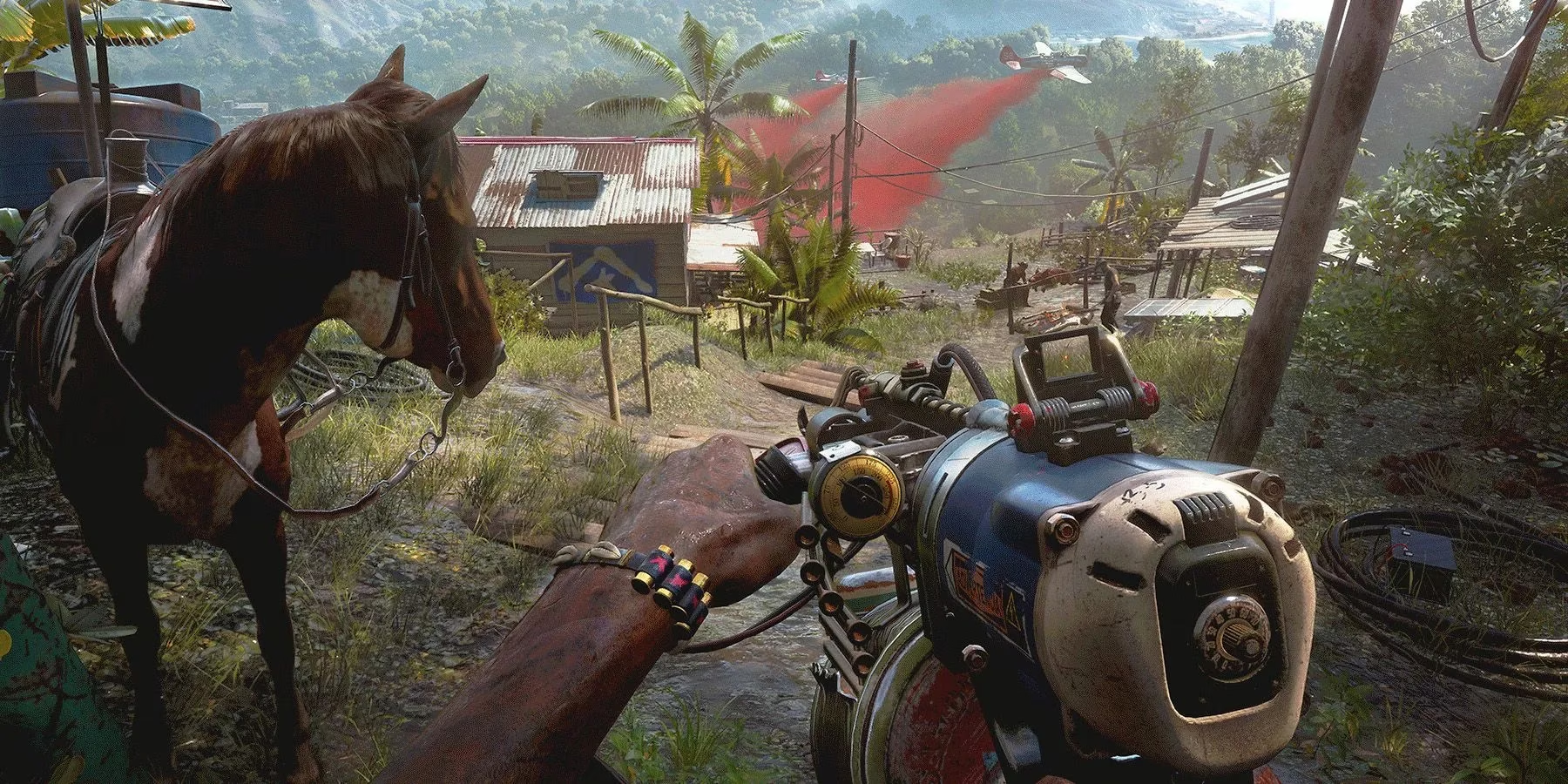
Far Cry’s Island of Lost Souls
Ubisoft’s Far Cry has already proven its chameleonic DNA, hopping from the retro-futurist neon of Blood Dragon to the stone-age brutalism of Primal. Despite that, the series has never properly tapped into survival horror. Imagine a stand-alone expansion where a lush tropical setting warps into something out of H.G. Wells’ darkest nightmares—an isolated archipelago governed by genetic monstrosities, or an alternate-history collapse that turns the player into the hunted. The framework is already there: outposts become traps, wildlife mutates into abominations, and the cheery radio calls from allies slowly distort into static-laced screams. Far Cry’s horror potential sits like a fossilized dinosaur in amber, perfectly preserved and quietly screaming to be cracked open.
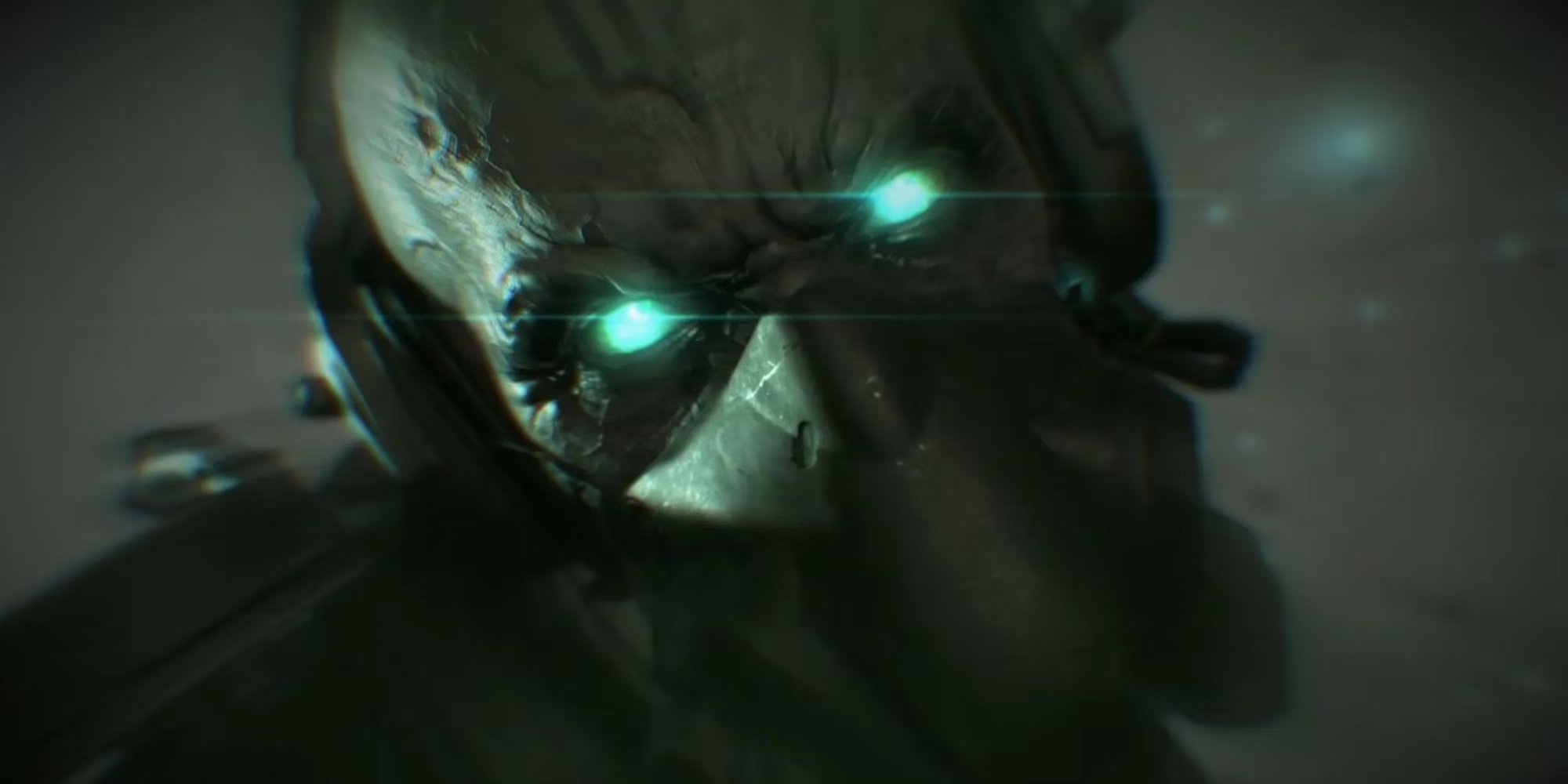
Metal Gear’s Ghosts of Powerlessness
The Metal Gear saga has always flirted with the uncanny—psychic bosses, phantom soldiers, and The Sorrow’s river of the dead. A true horror entry would strip the player of high-tech gadgets and force reliance on the stealth DNA the series itself defined. Picture a junior operative trapped in a facility overrun by reanimated cyborgs or an unkillable Parasite Unit stalker that learns from every mistake you make. Without the safety net of CQC mastery or a Fulton recovery, the only option is to hide, breathe shallowly, and pray. This would be a return to roots deeper than nostalgia: it would feel like being locked in a room with your own failure, the walls inching closer every time you blink.
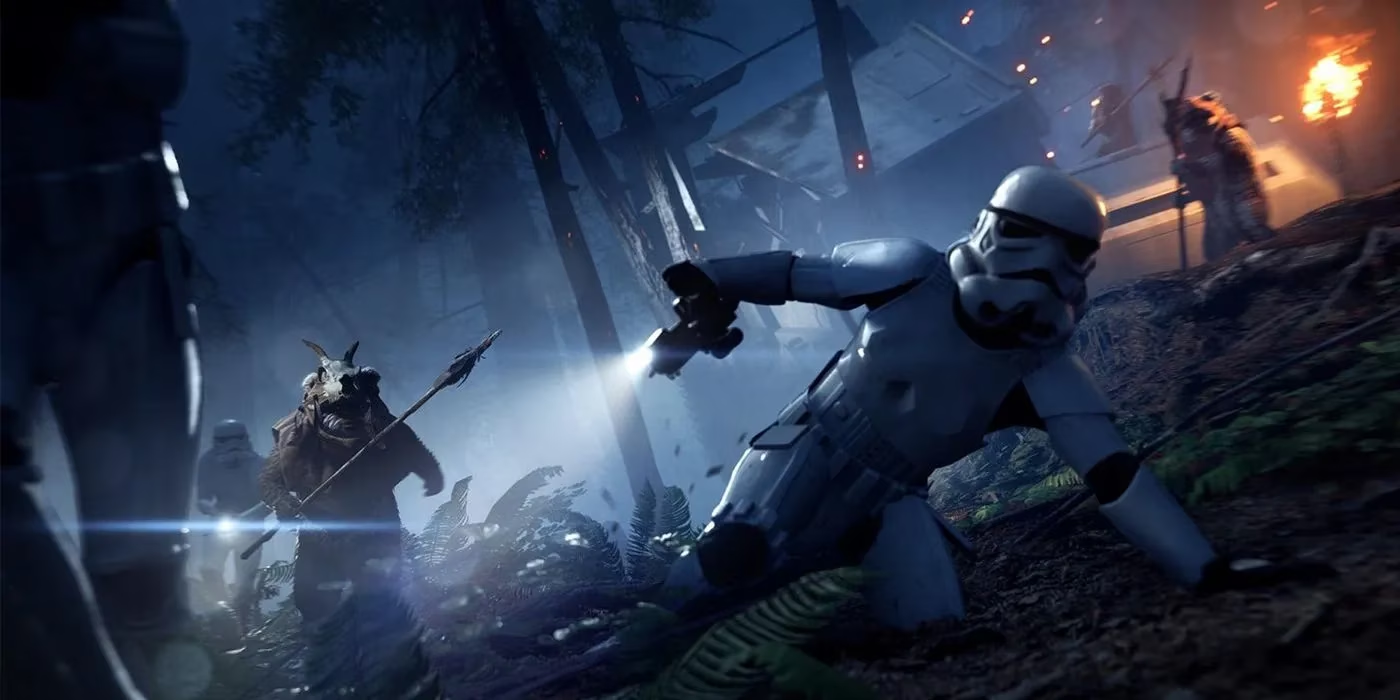
Star Wars: Ewoks in the Fog
Every Star Wars fan who played Battlefront II’s Ewok Hunt mode remembers the primal fear—limited visibility, horned helmets barely visible, and chittering calls echoing through the redwood twilight. That mode was a proof-of-concept for an asymmetric multiplayer horror experience. A full spin-off could expand this into a Dead by Daylight-style cat-and-mouse playground, where stormtroopers fumble with jammed blasters and Tusken Raiders emerge from sandstorms like vengeful spirits. Geonosian hive tunnels, abandoned Death Star corridors, or a lone clone trooper stalked by a Nightsister acolyte—the galaxy far, far away is stuffed with settings that could turn the heroic fantasy inside out and reveal its twitching, shadow-draped underbelly.
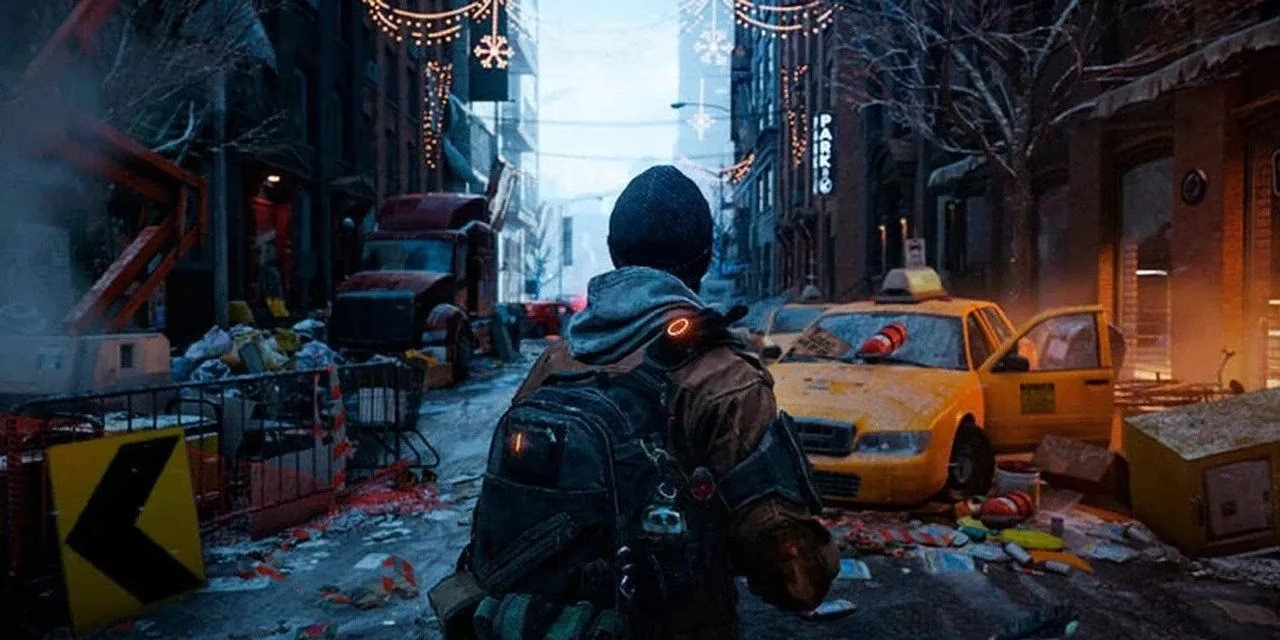
The Division’s Hunters Turn Predator
Tom Clancy’s The Division introduced Hunters as masked, axe-wielding enigmas that erase your HUD and mimic your tactics. For years they have been confined to brief encounters and survival modes, but their lore is a horror novel waiting to be written. A single-player spin-off could place players as a fresh Division agent investigating a quarantine zone where Hunters operate as a silent cult. Ammo is scarce, gadgets fail under EMP barrages, and the only way to survive is to become the ghost you’re hunting. The predators’ mystery—their hallucinogen-laced shroud, the axe-strike kill animations—could form the backbone of a survival-horror experience that makes you feel like a mouse under a sealed glass jar, slowly running out of air.
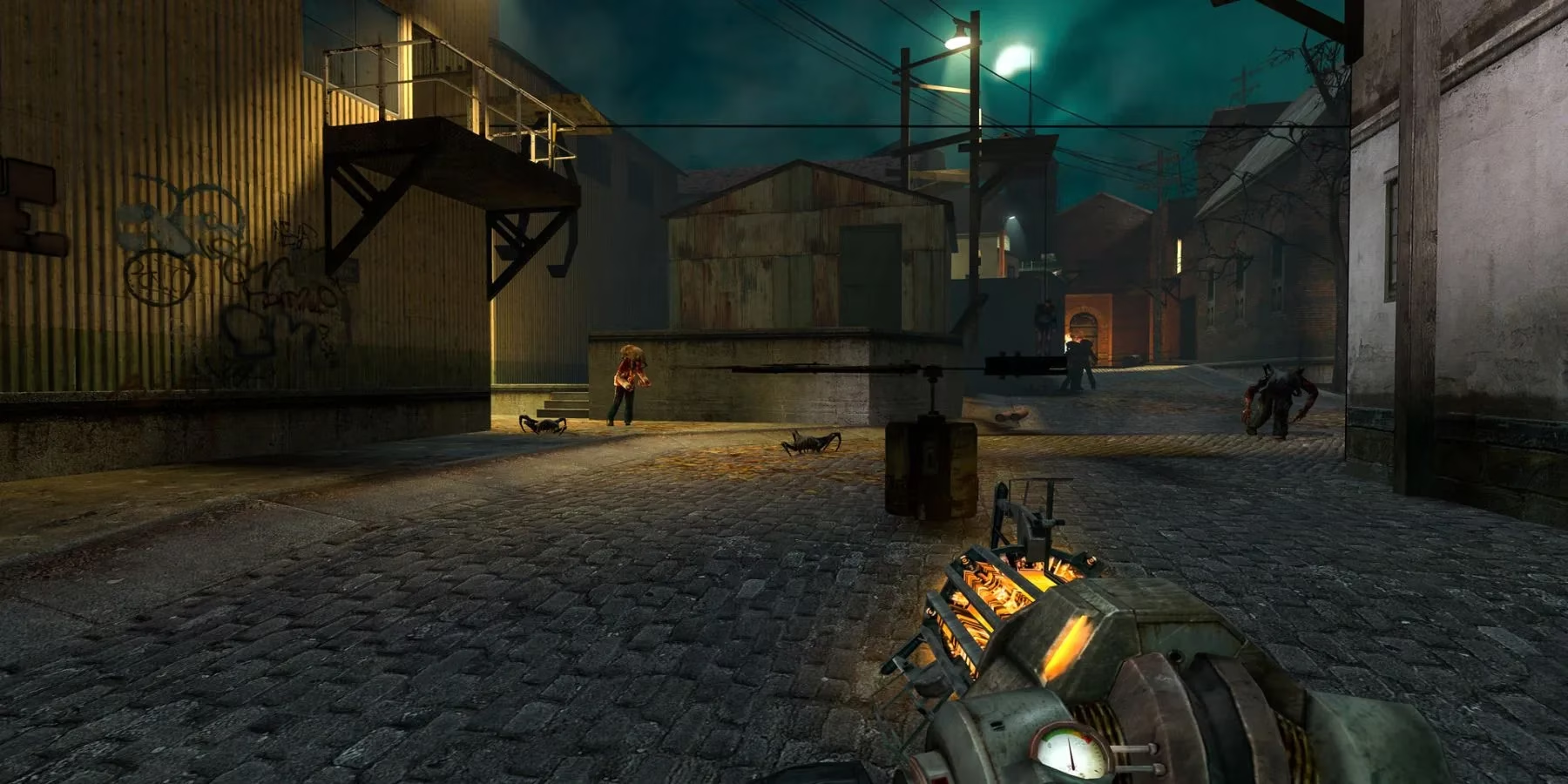
Half-Life: Ravenholm’s Cancelled Scream
Ravenholm is perhaps the most infamous cancelled horror spin-off in gaming history. The small slice players lived through in Half-Life 2—a town choked with headcrab zombies and the deranged Father Grigori—proved that Gordon Freeman’s universe could curdle blood. By 2026, rumors occasionally swirl about a proper horror entry, yet nothing materializes. A full-scale survival game set during the Combine occupation, with scarce resources, fast zombies that climb walls, and a pervasive sense of alien melancholy, would slot neatly beside Dead Space in the sci-fi terror pantheon. It remains a golden opportunity, suspended in time like a carbon-frozen ghoul, waiting for someone to light the fire.
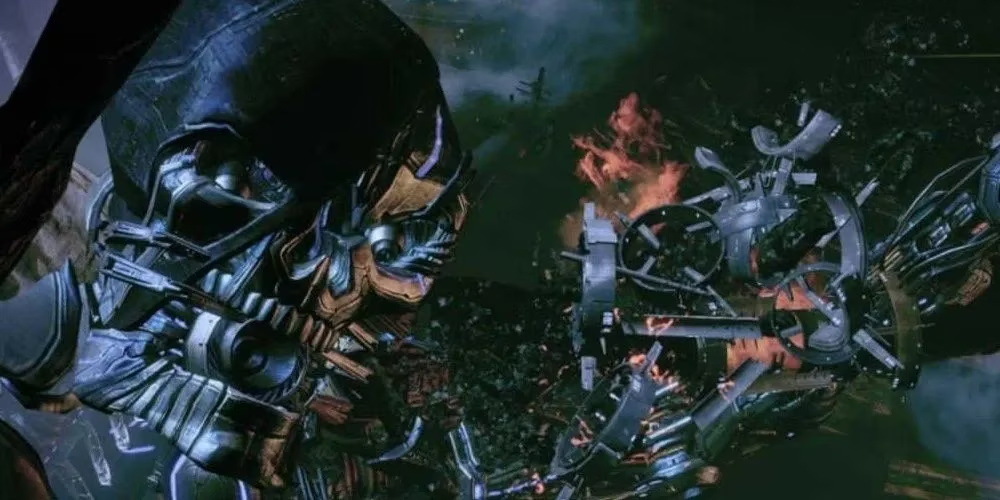
Mass Effect’s Civilian Nightmare
Commander Shepard punched, shot, and paragon-speeched their way through Reaper abominations, often robbing them of psychological impact. But imagine Mass Effect from the perspective of a civilian on a derelict freighter, weeks before the Normandy arrives. The Reapers don’t just kill—they indoctrinate, turning crewmates into smiling traitors. A survival-horror narrative where you cannot fight back, only document logs and seal bulkheads while the ship’s AI begins to sing eerie lullabies, would restore the Reapers’ mythic dread. It would feel like navigating a haunted house where the walls themselves want to wear your skin.
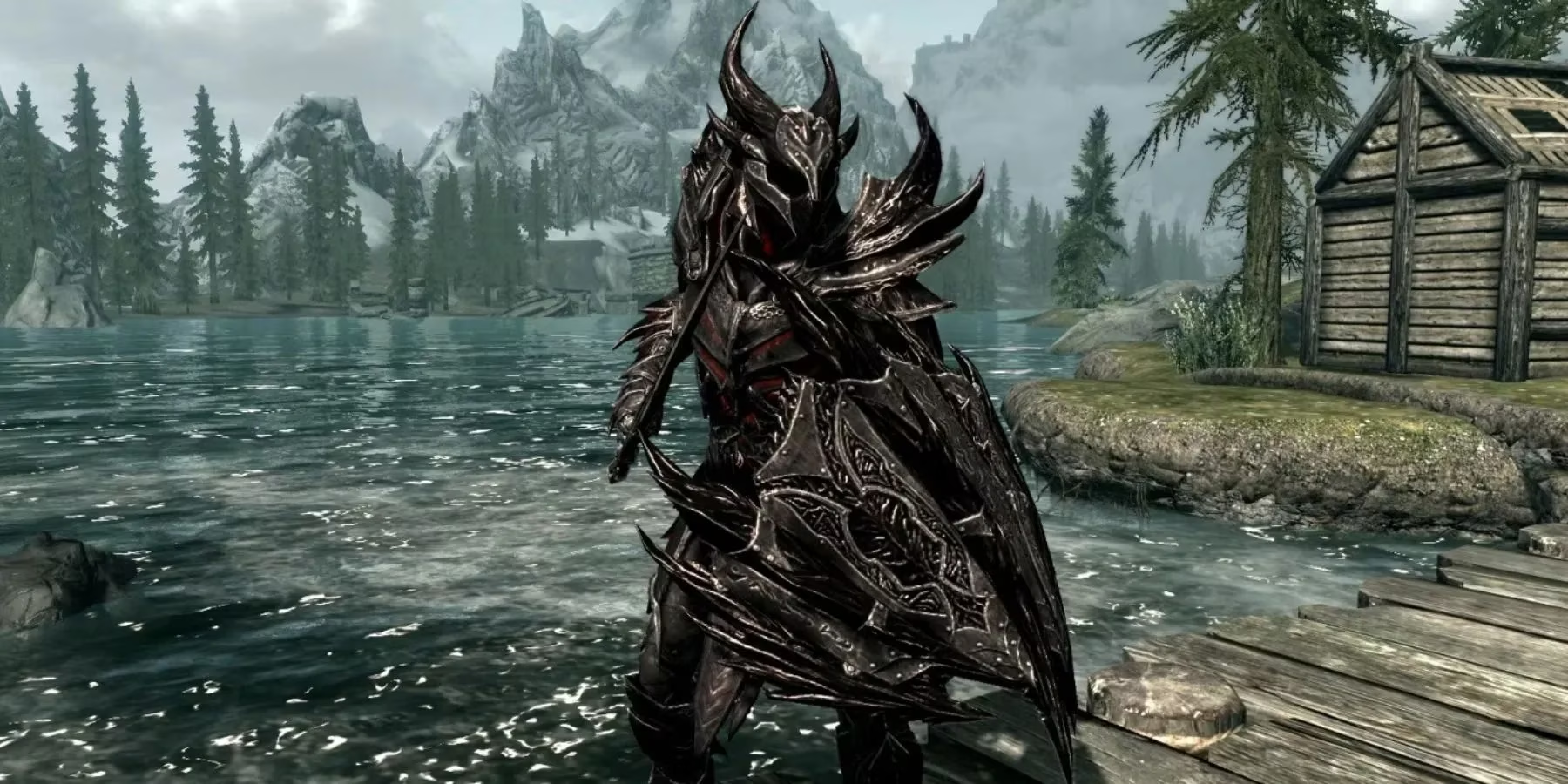
The Elder Scrolls: Daedric Princes Unbound
Seventeen Daedric Princes rule over planes of Oblivion, yet their appearances in mainline Elder Scrolls games mostly serve as loot piñatas. A horror-focused spinoff could finally treat Hermaeus Mora’s library as a suffocating labyrinth of forbidden knowledge, or Sheogorath’s realm as a whimsical madhouse where every laugh hides a scream. A narrative centered on a mortal tricked into a Prince’s service—perhaps as a collector of sacrifices—would unmask the Lovecraftian marrow that has always anchored the lore. It’s a genre pivot that makes more sense than a thousand fetch quests.
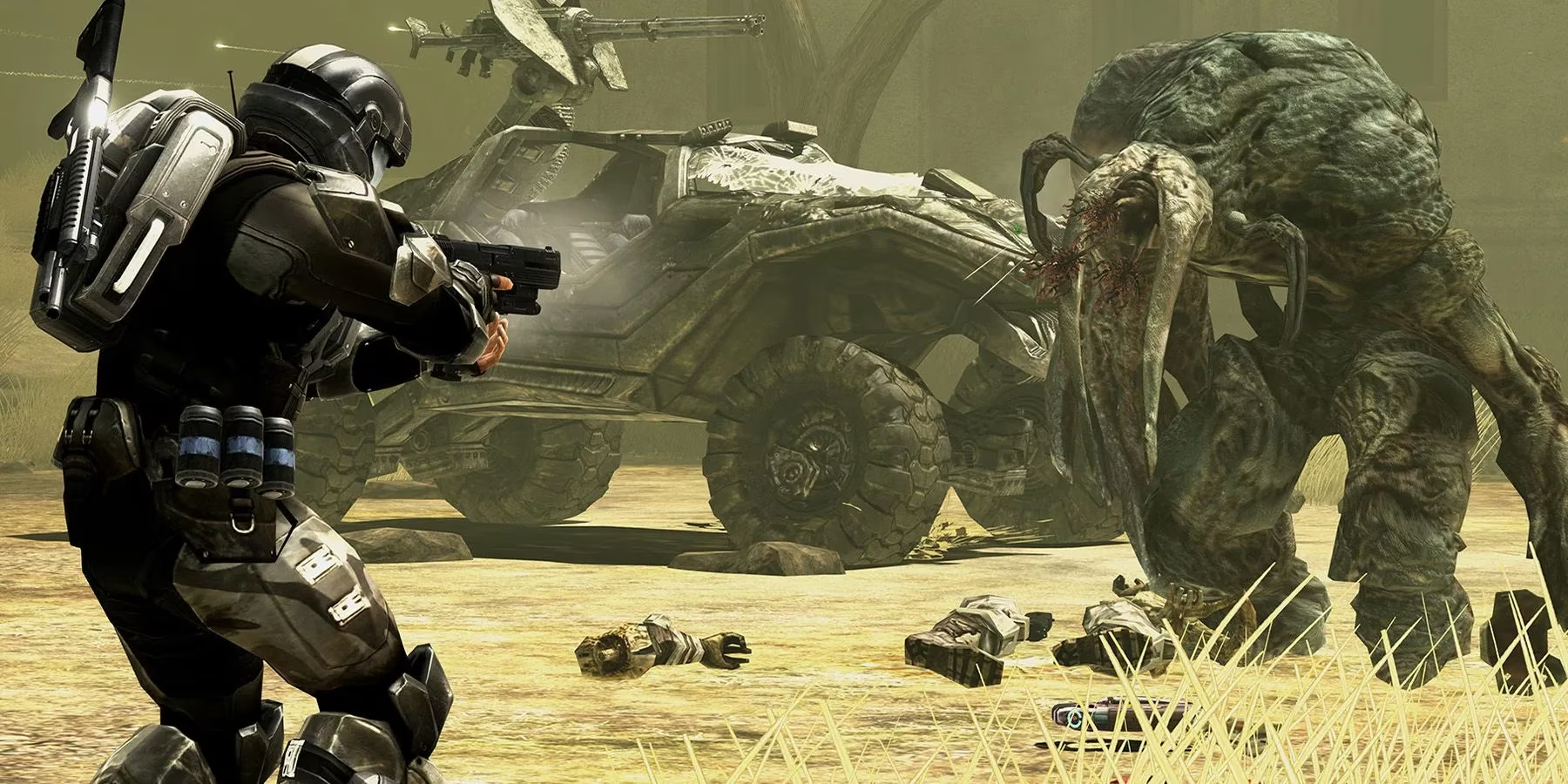
Halo: Before the Flood Swallowed Truth
The Flood remains one of the most viscerally terrifying enemy designs in FPS history, yet the series has sidelined them since Halo 3. A prequel set aboard an ancient human or Covenant vessel in the final hours before complete infection could be a masterclass in dread. No Spartan super-strength, no Cortana to crack the ship’s systems—just a handful of engineers and marines trying to seal off corridors while the parasite reshapes flesh into screaming blunt-forces. The lore already documents such “closed casket” scenarios, and playing through one would recapture the horror that the original game’s Library level hinted at, like a match flickering in a wind that never stops howling.
God of War: The Pantheon Prey
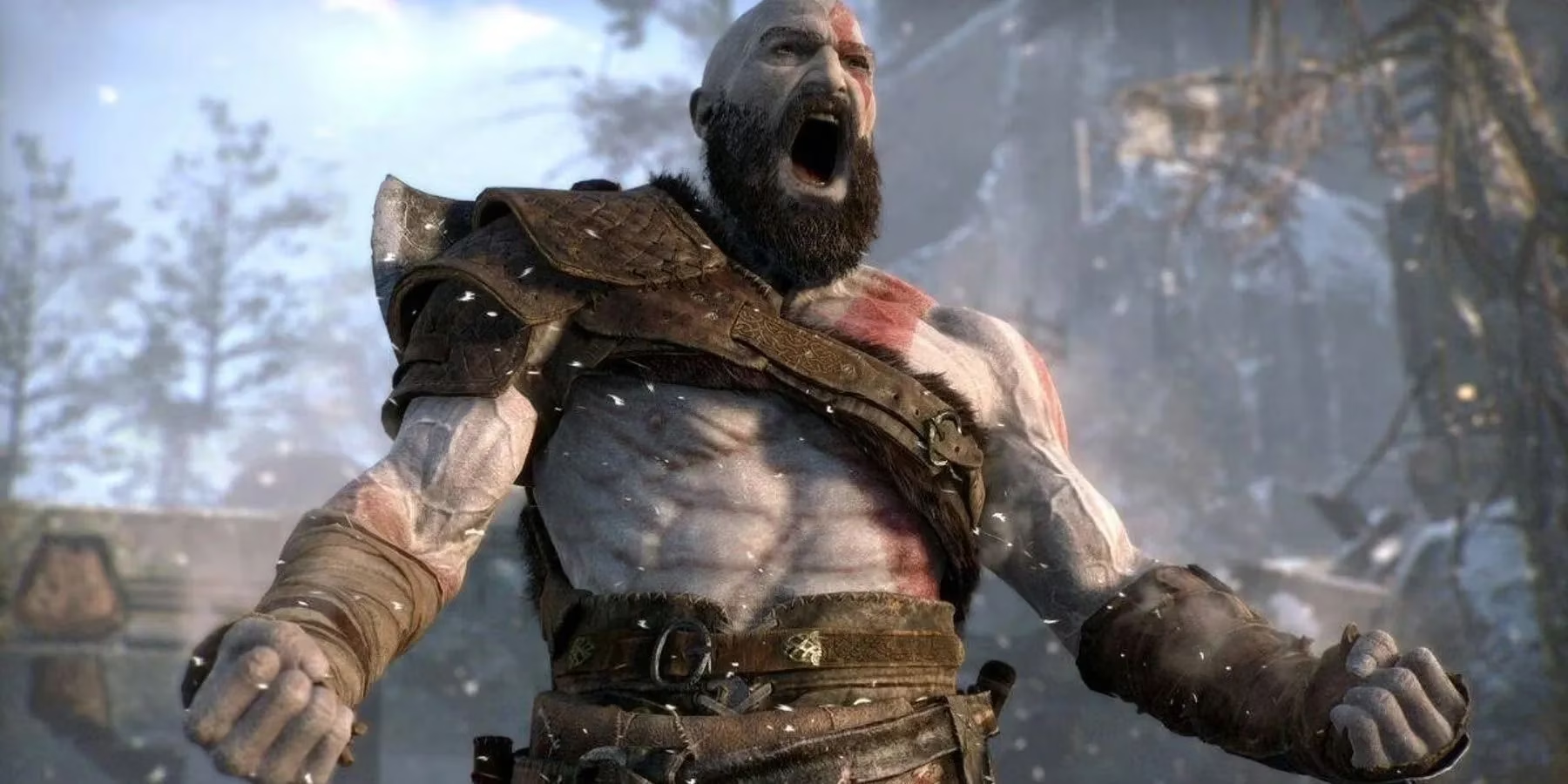
Kratos has toppled two mythologies, but the gods themselves rarely get to tell their side of the slaughter. A horror entry could flip the perspective: control a lesser deity or a human oracle tasked with stalling the Ghost of Sparta’s advance through psychological warfare. Encounters would not be boss fights but desperate puzzles and escape sequences, knowing that Kratos cannot be stopped—only delayed. It would turn the power fantasy inside out, letting players feel the immense helplessness of being an ant under a magnifying glass while the sunbeam that is Kratos draws closer. With God of War’s narrative now looking beyond Ragnarök, such a spin-off could be the perfect interstitial nightmare.
From the lush jungles of Far Cry to the cosmic libraries of Elder Scrolls, the DNA for horror already pulses within these franchises. It only takes a developer willing to flip the switch, and in an era where remakes and reboots dominate, a full-blown genre shock might be the most original move of all.
Comments