
As I sit here in 2026, reflecting on the state of gaming, the allure of open-world titles remains as potent as ever. For me, the true magic lies not just in epic quests or intricate combat systems, but in those quiet moments of digital escapism. I find myself increasingly drawn to the serene corners of these vast worlds—specifically, to their tranquil lakes. They offer a promise of calm, a serene commune with nature where the relentless pace of the in-game (and real-world) grind seems to slow to a contemplative crawl. It's a feeling that games, at their best, can evoke uniquely, transporting us away from any modern stresses to places of pure, immersive beauty.
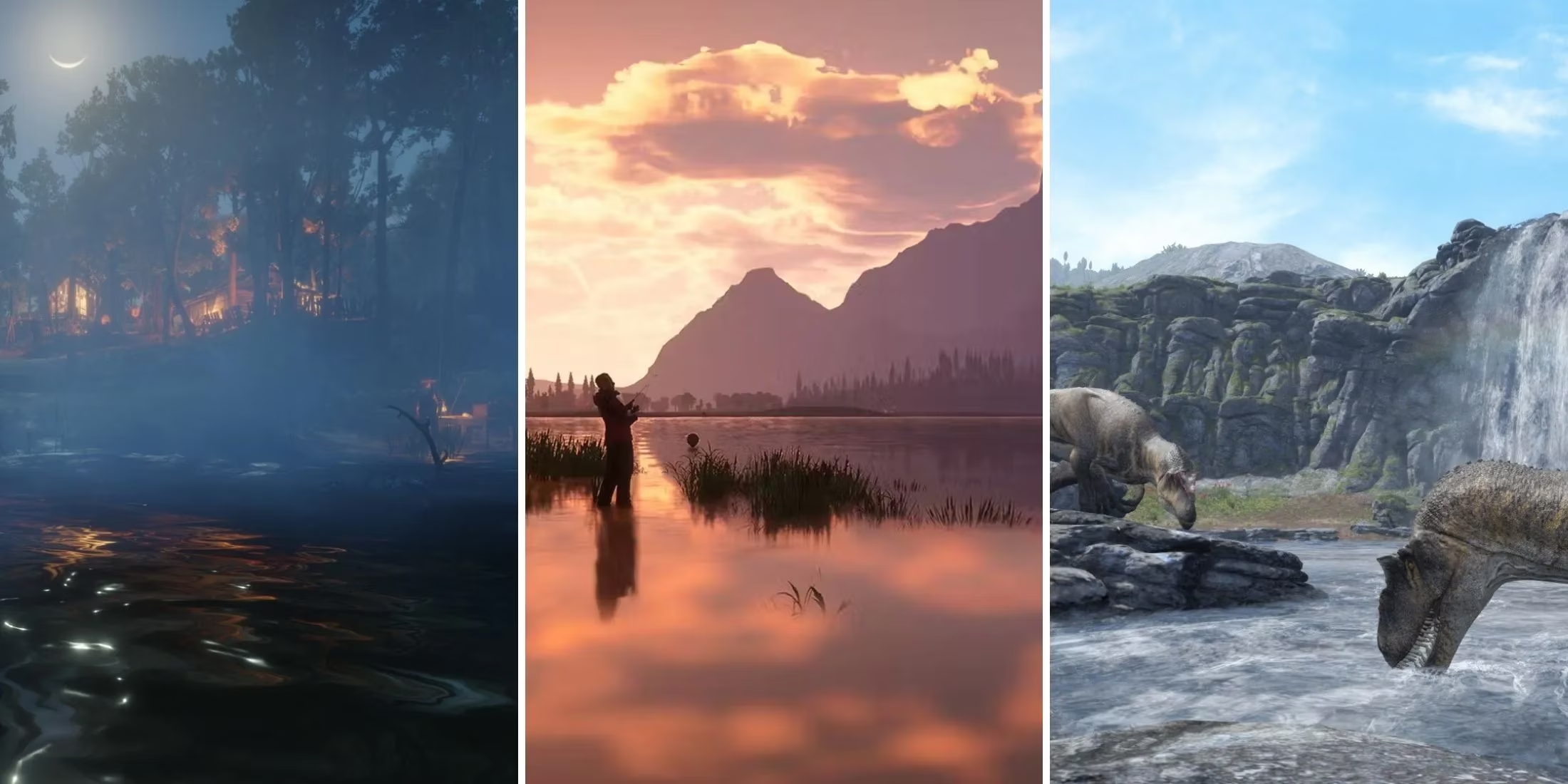
My journey often begins in the untamed wilderness of Red Dead Redemption 2. Arthur Morgan's world is a masterclass in realism, and its lakes are more than just scenery—they are destinations. I remember spending hours by the frozen, majestic expanse of Lake Isabella in the Grizzlies West, the snowcapped mountains reflecting perfectly in the icy surface as I patiently waited for a tug on my line, hoping for the legendary Sockeye Salmon. The act of fishing here isn't a mere mini-game; it's a fully fleshed-out ritual of patience. Then there's the vast Flat Iron Lake, stretching westward from Blackwater. Sailing its waters or fishing for the Legendary Bluegill at dusk, with the sky painted in hues of orange and purple, is an experience that few other games have matched. The lakes in this world are sparse but profoundly impactful, each one a scenic postcard from a bygone era.
For a completely different kind of lakeside tranquility, I often boot up Call of the Wild: The Angler. As a hyper-realistic fishing simulator, its entire raison d'être is built around these serene bodies of water. The gameplay loop is beautifully simple: explore a breathtaking open world, find a perfect spot, cast your line, and just… breathe. In 2026, with its array of expansive DLC maps, the options are plentiful. Each map is a tapestry of lakes, both large and small, nestled between towering mountains and dense forests. The water is so still, the reflections so perfect, that it sometimes feels less like playing a game and more like a form of digital meditation. There's no better title when I simply want to appreciate the calm, to listen to the virtual water lap against the shore without a care in the world.
Venturing into more mythical realms, The Legend of Zelda: Breath of the Wild presents its waters with a sense of iconic grandeur. Lake Hylia remains a centerpiece, its grandeur undiminished by time. I love crossing the immense Bridge of Hylia, looking out over the sparkling waters that have been a part of this series' soul for decades. The contrast with places like Ralis Pond is striking—there, the water level is so curiously low that Link can simply walk across the lakebed, a quirky detail that makes the world feel alive and unpredictable. While its sequel introduced dizzying new mechanics, the first game's focus on pure, undisturbed exploration makes its lakes feel like peaceful oases amidst Hyrule's ruins.
Sometimes, I crave lakes with a touch more… prehistoric danger. That's when I log into The Isle. This isn't your typical survival game. Here, I don't play as a human, but as a dinosaur—a Deinosuchus lurking in the depths or a Pteranodon skimming the surface. This fundamental twist transforms every lake from a scenic backdrop into a vital, dangerous ecosystem. Titan's Lake, near the map's center, isn't just for viewing; it's a hunting ground, a refuge, and a battleground. The authenticity of this sandbox, with its Twin Lakes and Spring Lakes scattered throughout, sells the fantasy completely. A lake in this world isn't peaceful; it's pulsating with primeval life, and that makes it incredibly immersive in its own right.
Of course, lakes can also serve as stunning geographical anchors in more chaotic worlds. Far Cry 5's Hope County is carved up by rivers and lakes, with Silver Lake acting as a sprawling central hub. I've spent countless moments navigating its branches, discovering points of interest on its shores and the small island that splits it in two. It’s a beautiful centerpiece that grounds the region's chaos. Similarly, in Assassin's Creed Valhalla, the lakes of Ireland from the Wrath of the Druids expansion, like the vast Lough Neagh, offered a misty, serene contrast to England's more rugged landscapes. They were pockets of quiet beauty in Eivor's epic saga, proving that even in a game focused on raiding and conquest, there's room for a moment of stillness by the water's edge.
| Game | Notable Lake(s) | Primary Vibe |
|---|---|---|
| Red Dead Redemption 2 | Lake Isabella, Flat Iron Lake | Realistic & Scenic 🎣 |
| Call of the Wild: The Angler | Various across DLC maps | Meditative & Peaceful 😌 |
| Zelda: Breath of the Wild | Lake Hylia, Ralis Pond | Iconic & Exploratory ⚔️ |
| The Isle | Titan's Lake, Twin Lakes | Primal & Dangerous 🦖 |
| Far Cry 5 | Silver Lake, Snowshoe Lake | Central & Expansive 🗺️ |
| Assassin's Creed Valhalla | Lough Neagh (DLC) | Serene & Historic ⛵ |
In the end, these digital lakes serve a profound purpose for players like me. They are more than pixels and water textures. They are deliberate pauses in the narrative, invitations to explore not for loot or XP, but for the sheer joy of discovery and tranquility. They remind us that the greatest open worlds are those we want to simply exist within, whether we're fishing for a legendary catch, evading a T-Rex, or just watching the sun set over a perfectly still, mirrored surface. As technology advances, these serene moments of immersion are, for me, becoming the true benchmarks of a world worth getting lost in.
Comments