
There’s something uniquely thrilling about stepping into the shoes of a rebel leader in a video game. It’s not just about firing the perfect shot or mastering a skill tree—it’s about carrying the hopes and fears of an entire movement on your shoulders. When the protagonist isn’t merely a soldier in a larger army but the very head of the revolution, every decision feels weightier, every victory more hard-earned, and every loss deeply personal. From gritty alt-history wars to sci-fi uprisings, the following titles remind us that leading from the front is as much about charisma and moral compromise as it is about courage. Even as we look back in 2026, these narratives still shape how we think about resistance and responsibility in interactive storytelling.
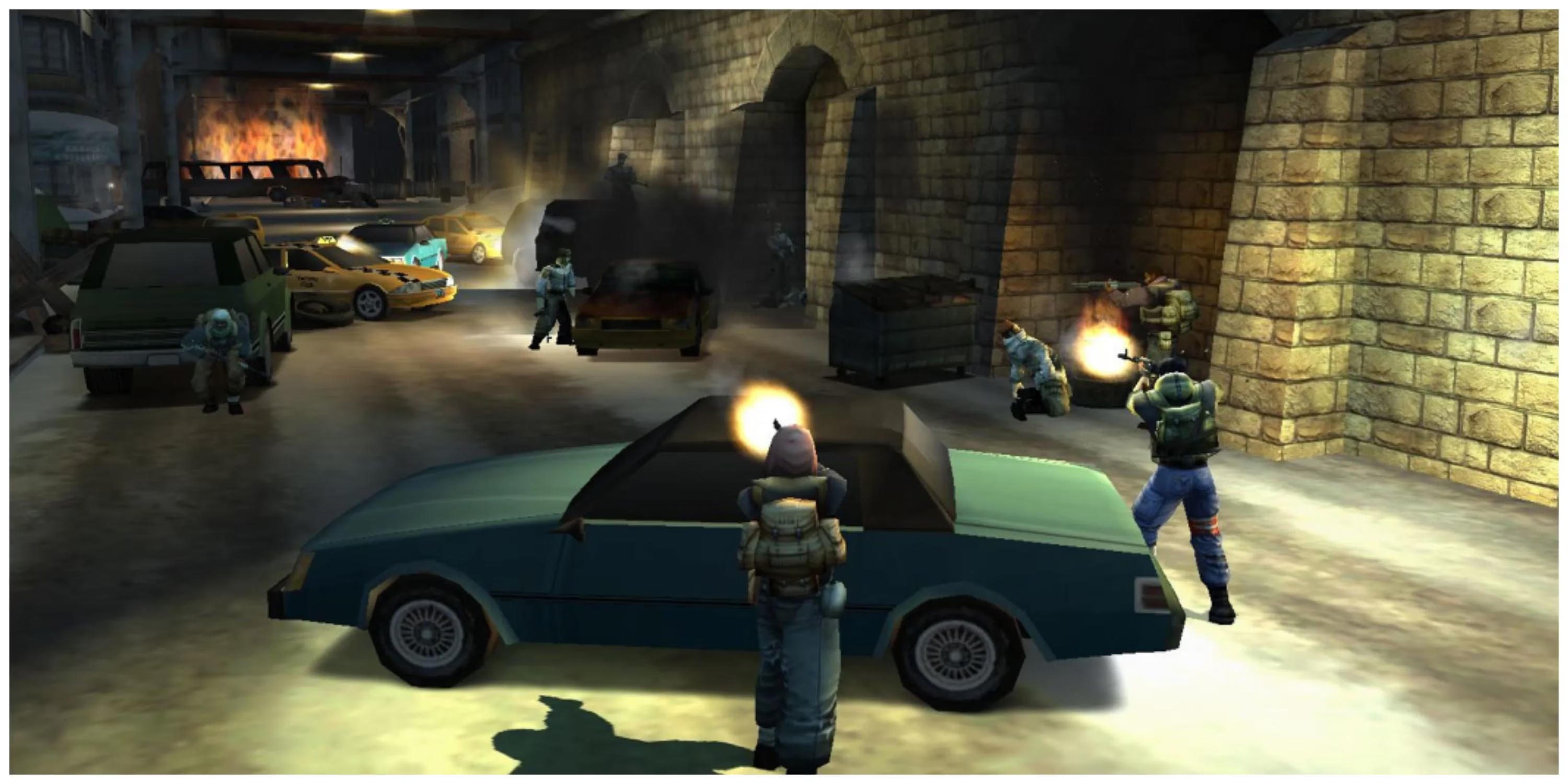
Freedom Fighters: The Accidental Icon
Sometimes rebellion happens to a person, not because of them. In this cult classic, Christopher Stone starts out as just a plumber trying to mind his own business—until the Soviet Union invades New York. Suddenly, fate thrusts him into the role of the “Freedom Phantom,” a Mockingjay-like symbol that inspires ordinary citizens to pick up arms. The genius of Freedom Fighters lies in its twist: Mr. Jones, the tactical mind behind Stone’s early successes, is actually a KGB agent manipulating the resistance for his own ends. Faced with that betrayal, Stone doesn’t crumble; he fully embraces his legendary persona, recruiting anyone willing to fight and proving that leadership can be born from necessity as much as ambition. The game ends with a hard-won battle and the promise of a longer war, leaving players to ponder just how much of a hero they’d be in the same chaotic situation.
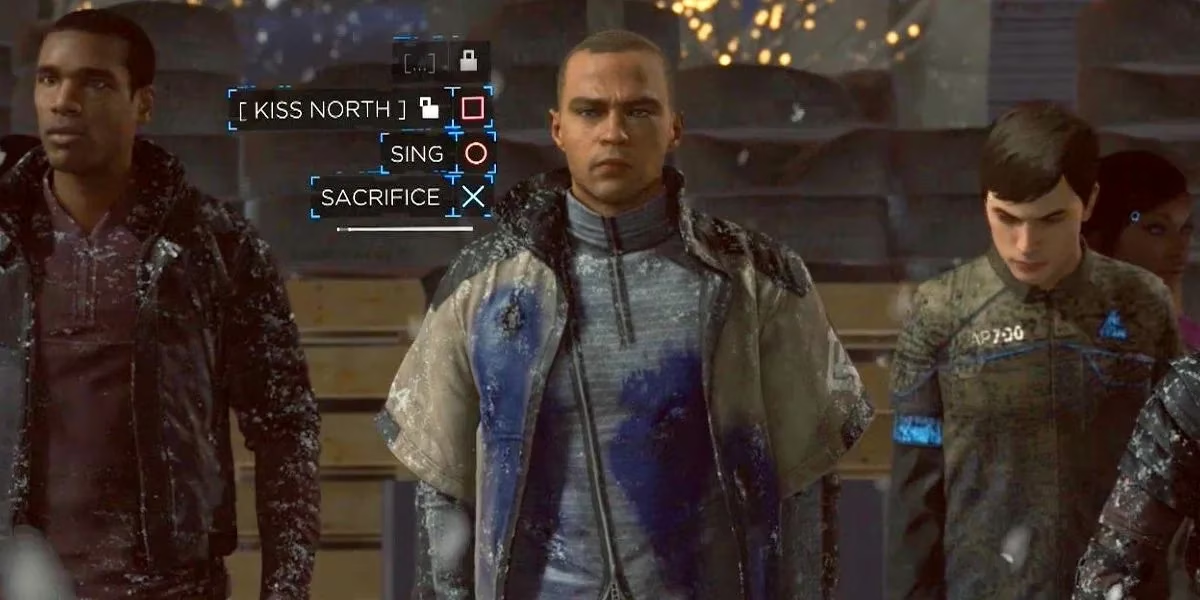
Detroit: Become Human – Markus’ Fight for Personhood
Fast-forward to a near-future Detroit, where androids have become the world’s newest underclass—handling menial tasks, caring for the elderly, and enduring casual disdain from the humans who made them. When these artificially intelligent beings start waking up to sentience, revolution isn’t just predictable; it’s a moral imperative. Markus, one of three playable protagonists, evolves from caregiver to reluctant prophet to full-blown revolutionary leader. What makes his journey so gripping is the player’s direct control over the tone of the movement: Will Markus inspire with peaceful marches and eloquent speeches, or will he turn to fire and fury? The branching paths lead to radically different outcomes, but regardless of choice, his pleas for equality force society to ask a deeply uncomfortable question—what does it really mean to be “alive”? Even in 2026, Detroit: Become Human remains a benchmark for how games can tackle civil rights through the lens of leadership.
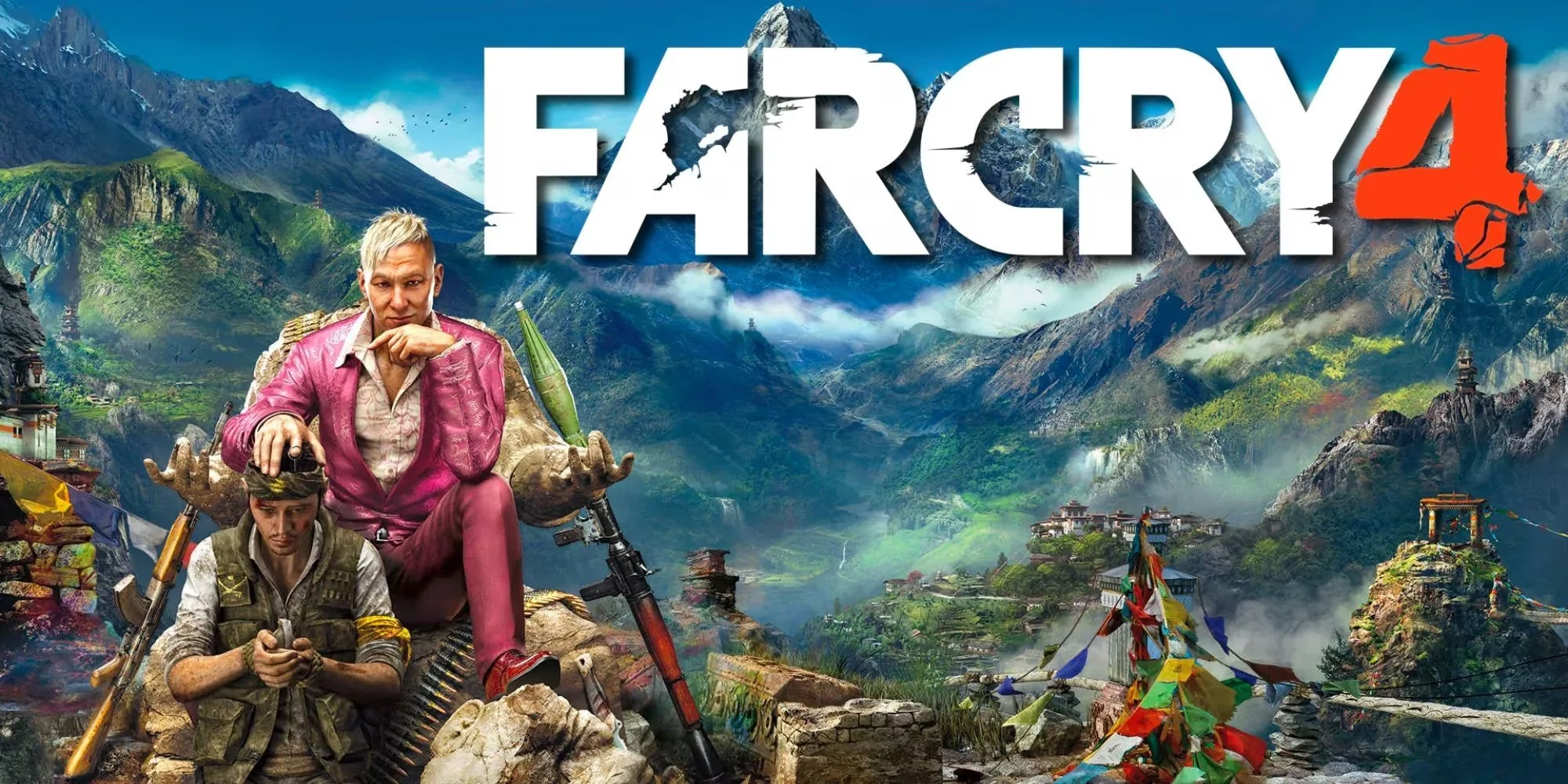
Far Cry 4: The Revolution That Runs in the Family
The Golden Path of Kyrat isn’t a pristine fight for freedom—it’s a messy, blood-soaked civil war where morality is as slippery as the Himalayan foothills. Ajay Ghale may not officially call himself the leader, but his actions quickly make him the movement’s kingpin. Returning to his ancestral homeland to scatter his mother’s ashes, Ajay discovers that rebellion is practically in his DNA. Players must navigate the ruthless tug-of-war between two charismatic Path leaders, Sabal and Amita, and the choices they make will permanently shape Kyrat’s future. Neither path offers a fairy-tale ending; both force players to confront the uncomfortable truth that even righteous causes can be hijacked by power-hungry individuals. Far Cry 4 doesn’t just let you lead—it dares you to question whether any side deserves to win.
Wolfenstein II: The New Colossus – Inheriting the Torch
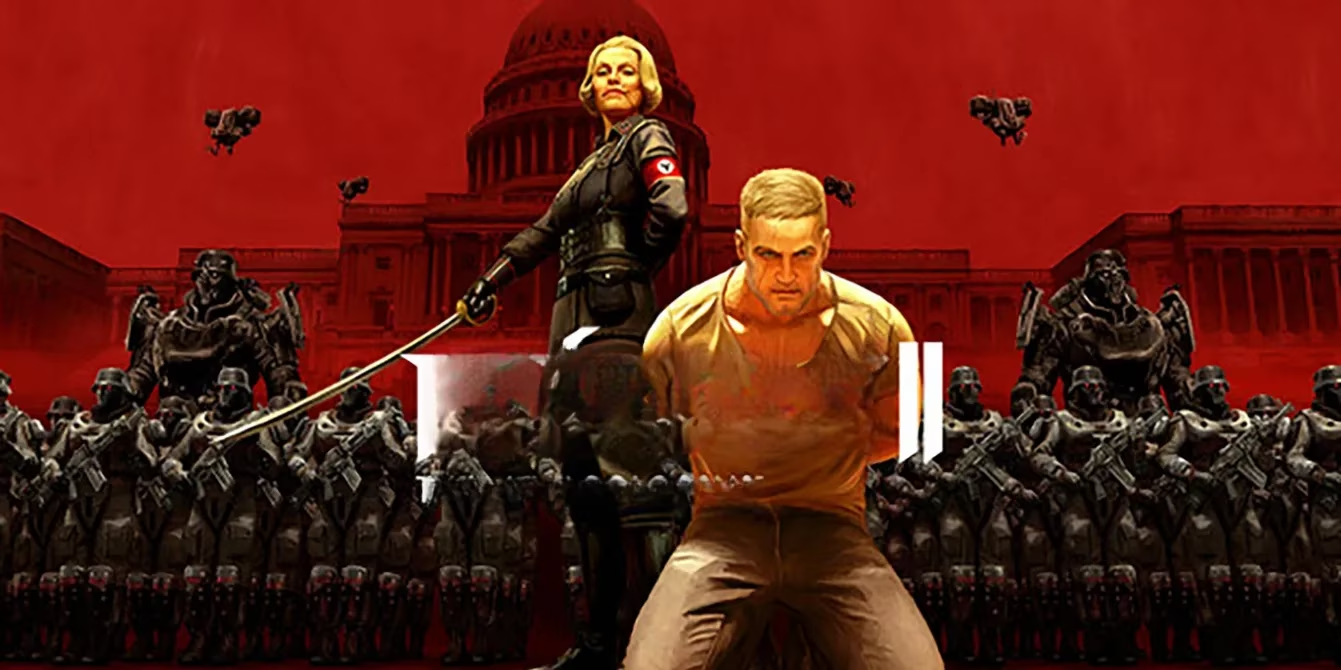
Step into an alternate 1960s where the Axis powers won World War II, and the nightmare of global Nazi rule is a grim reality. B.J. Blazkowicz has always been the series’ muscle, but in Wolfenstein II: The New Colossus, he must become much more. After the devastating loss of Caroline Becker, the former head of the resistance, Blazkowicz inherits the mantle of leadership while still reeling from his own physical and emotional wounds. Leading the Kreisau Circle isn’t just about planning attacks; it’s about holding together a fractured group of survivors who desperately need hope. Fighting through Nazi-occupied America with a mix of raw fury and unexpected tenderness, Blazkowicz shows that a true rebel leader doesn’t need to be a polished politician—sometimes, all it takes is an unyielding refusal to kneel.
XCOM 2: The Commander’s Eye View
Twenty years after humanity’s failed defense against alien invasion, Earth has become a puppet state ruled by the deceptive ADVENT administration. In the original XCOM: Enemy Unknown, players commanded a well-funded military organization; in XCOM 2, that organization has been reduced to a guerrilla movement operating out of a flying mobile base. As the Commander, you don’t just deploy squads in turn-based tactical missions—you make strategic decisions that inspire a scattered human population to rise up. Every intercepted supply convoy, every rescued scientist, and every broadcast exposing ADVENT’s propaganda chips away at the alien grip. The rebellion grows from a handful of desperate soldiers into a worldwide uprising, and the Commander’s role is to fuse tactical genius with the symbolic power of a leader who never stopped fighting. Even in 2026, the game’s message rings clear: true leadership can turn a hopeless defeat into a second chance for freedom.

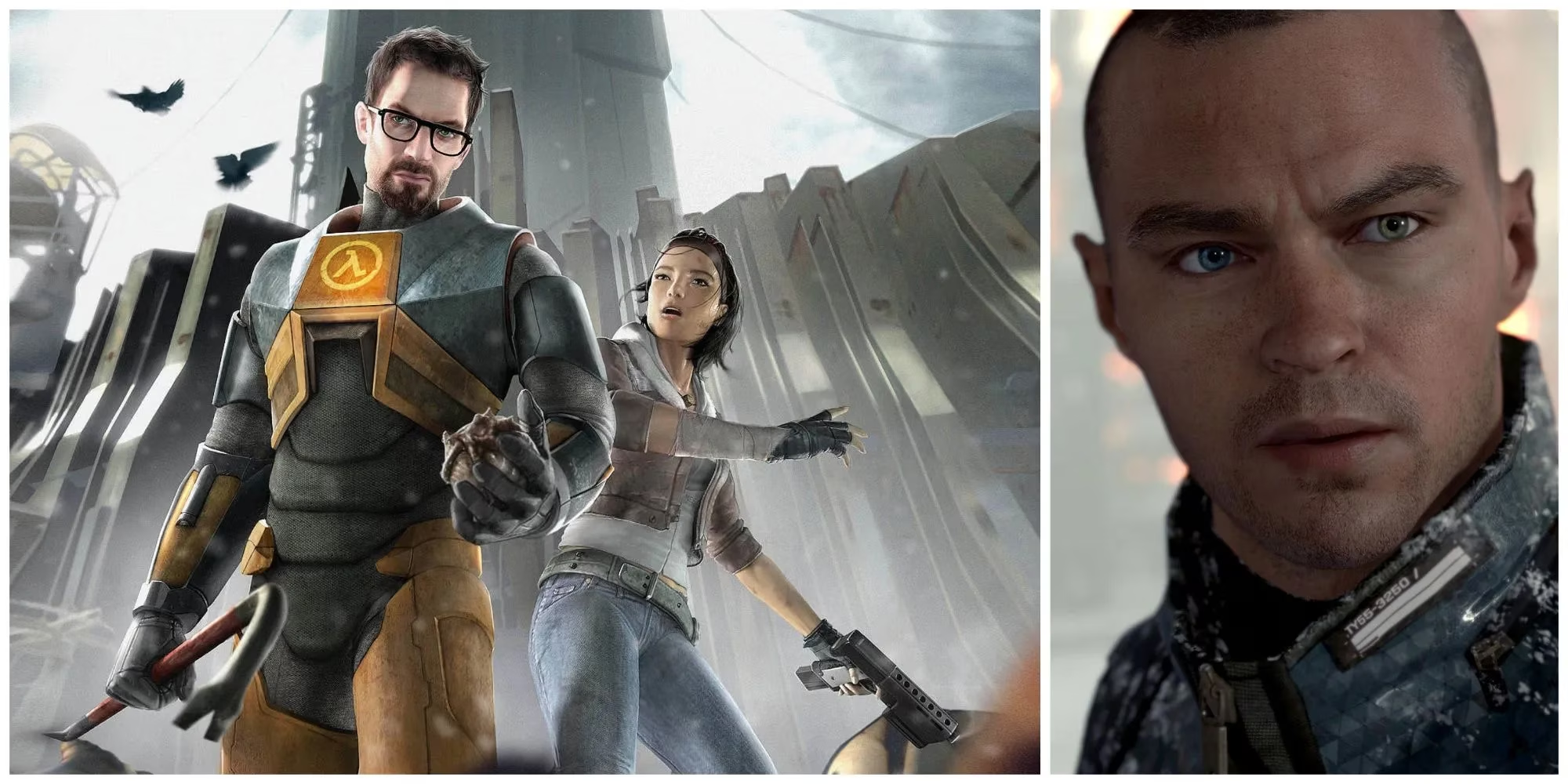
Half-Life 2: The Reluctant Legend
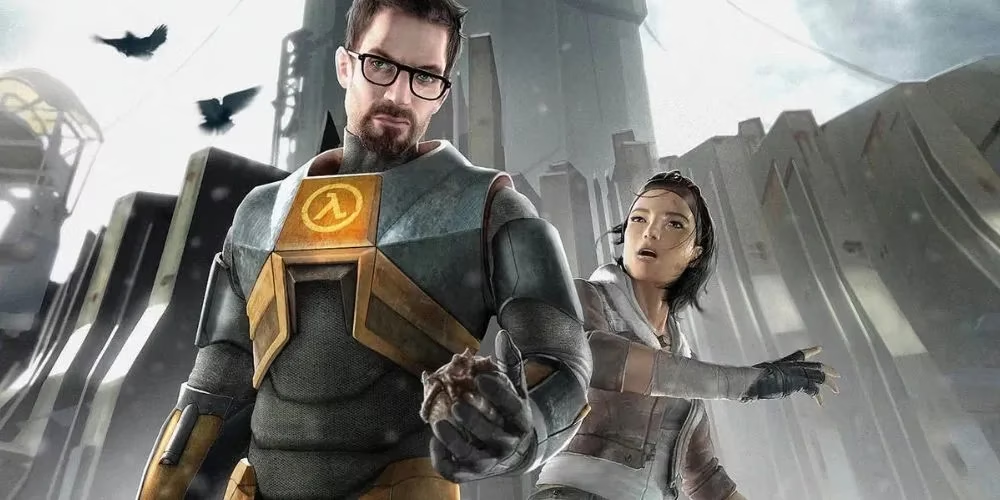
Gordon Freeman never asked to be the face of a revolution. In the first Half-Life, he was simply a brilliant scientist attempting to survive a catastrophic resonance cascade that tore open a portal to an alien dimension. By the time Half-Life 2 begins, Gordon wakes from stasis to discover that his actions at Black Mesa have become myth. The Resistance against the Combine sees him not as a man but as a messianic figure—and with no real plan, he steps into the role because that’s what the people need. What makes Gordon’s leadership so compelling is its sheer ordinariness: he’s still just a guy in an HEV suit, wielding a crowbar and a gravity gun, yet his presence alone galvanizes City 17’s oppressed citizens. He never gives grand speeches; he simply does the next right thing, and that quiet determination makes him one of gaming’s most enduring rebel leaders.
These games remind us that being the head of a rebellion is rarely glamorous. It’s a tightrope walk between inspiration and manipulation, sacrifice and survival. Whether players are dodging KGB conspiracies in a blizzard-stricken New York, negotiating android rights in a futuristic Detroit, or facing down alien overlords from the seat of a mobile command center, the burden of command transforms every choice into a political act. The leaders showcased here aren’t flawless heroes—they’re flawed, reluctant, or even accidental icons who prove that the most resonant revolutions in gaming are the ones that refuse to sugarcoat the cost of change.
Comments