
You know, looking back from 2026, it's incredible how the Far Cry series has evolved. It's always been more than just guns and explosions for me. Each entry, from the mainline games to the wild spin-offs, has tried to tell a unique story, dropping me into impossible situations and asking me to find a way out. Some stories have stuck with me long after I put the controller down, becoming more than just missions to complete. So, I thought I'd share my personal take on which Far Cry narratives have truly stood the test of time and what makes them so memorable.
Let's kick things off with the glorious anomaly that is Far Cry 3: Blood Dragon. This isn't your typical Far Cry tale. It's a love letter to the over-the-top, neon-soaked action flicks of the 80s, and it knows it. You play as Sergeant Rex Colt, a cyber-commando who's part man, part machine. The plot? It's pure 80s cheese: save the girl, kill the bad guys, prevent a global catastrophe. But here's the twist—playing through this absurd, hilarious adventure made me think about what it means to be human, even when you're a character with robotic parts. The story, wrapped in synthwave and laser beams, has a surprising heart. It's a reminder that sometimes the simplest stories, told with enough style and self-awareness, can leave a lasting impression.
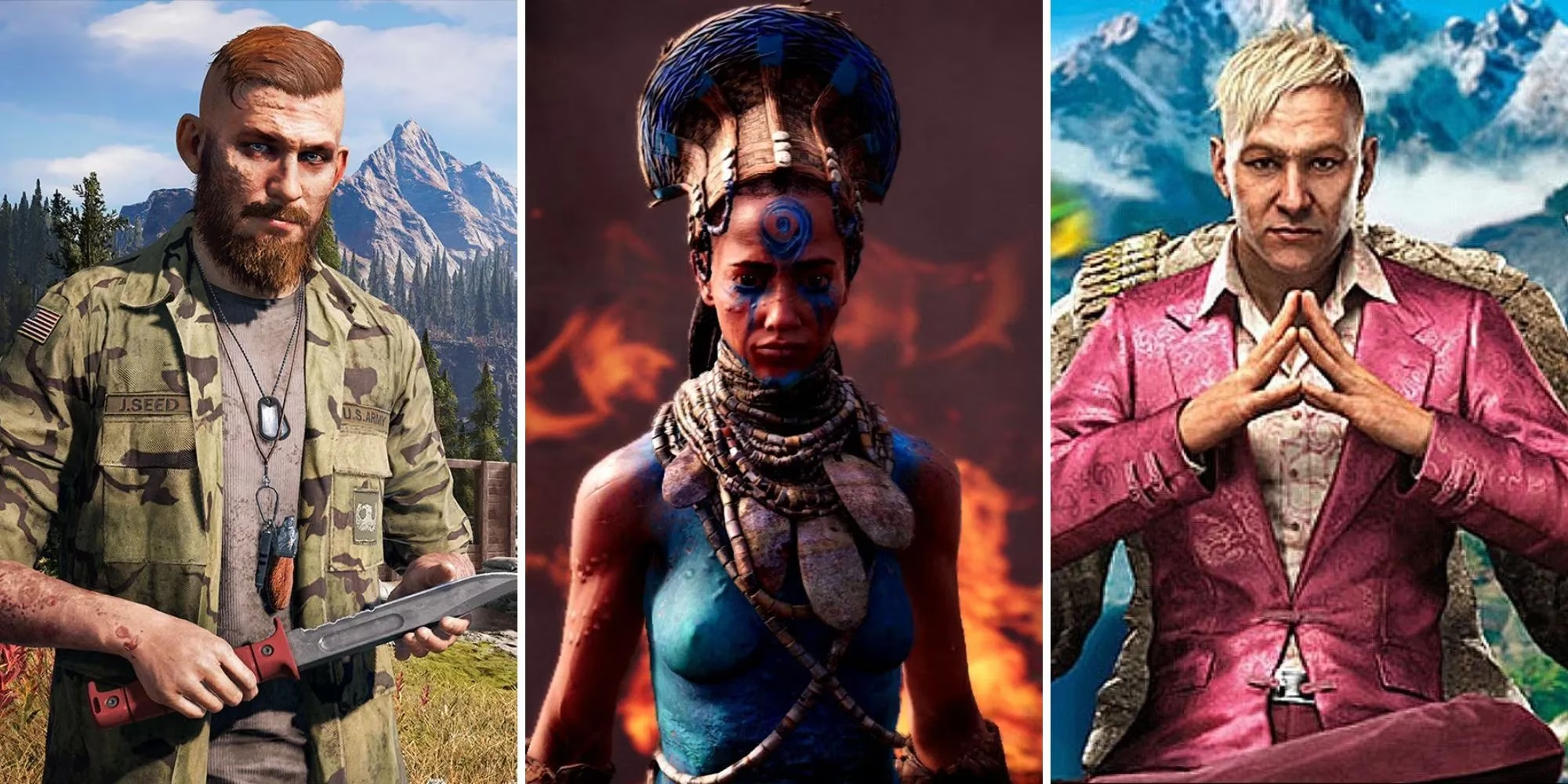
Then there's Far Cry 5, which dared to bring the chaos home to a fictional corner of the USA called Hope County. I remember starting that game thinking it was a routine arrest mission. Boy, was I wrong. Hope County was completely under the thumb of The Project at Eden's Gate, a fanatical doomsday cult. What began as a simple job quickly spiraled into a desperate fight for survival. The brilliance of the story here is in its structure. The county is divided into regions, each controlled by one of Joseph Seed's lieutenants—Faith, John, and Jacob. Each area has its own vibe and twisted narrative to uncover. You're not just liberating outposts; you're peeling back the layers of a community that's been systematically broken down. Helping the terrified residents and uncovering the cult's secrets made the final confrontation with the charismatic and terrifying Joseph Seed feel incredibly personal and heavy.
We have to pay respects to the past, and for me, Far Cry 2 delivers one of the most gritty and morally complex stories in the series. The gameplay might feel a bit dated now, but the narrative's rawness hasn't faded. You're a mercenary in a war-torn African nation, and your primary goal isn't heroism—it's survival. You're sick with malaria, and you need medicine. To get it, you're forced to play both sides of a conflict between corrupt warlords, making deals with terrible people just to stay alive. Every alliance feels dirty, every choice is compromised. The entire journey is a desperate scramble to reach the mysterious arms dealer known as The Jackal. Is he the source of all this misery? Can assassinating him actually save this place, or are you just another part of the cycle of violence? Far Cry 2 doesn't give easy answers, and that's why its story remains so powerful.
Now, let's talk about a radical departure: Far Cry Primal. Who would have thought one of the best Far Cry stories would have no guns at all? Set in the Stone Age, you play as Takkar, the last survivor of his Wenja tribe hunting party. Stranded in the brutal wilderness of Oros, your story is one of pure, primal survival and rebuilding. This isn't about liberating outposts from dictators; it's about finding scattered survivors, taming terrifying beasts like saber-toothed tigers, and reuniting your people. The central conflict against Ull, the leader of a rival tribe, feels ancient and visceral. The story is told through grunts, gestures, and the language of the world itself. It proves that a compelling Far Cry narrative doesn't need modern politics or firepower—it can be built on the fundamental drive to protect your tribe and secure a home.
Far Cry 4 presents a story steeped in personal conflict and political intrigue. You play as Ajay Ghale, returning to the fictional Himalayan country of Kyrat to fulfill your mother's final wish. Instead of a peaceful homeland, you find a nation torn apart by civil war and ruled by the flamboyantly cruel self-appointed king, Pagan Min. The genius here is the choice. You're quickly pulled into the rebel movement, the Golden Path, but you soon realize neither side—the Golden Path's dueling leaders, Amita and Sabal—is purely righteous. Your personal mission to honor your mother gets tangled in a web of familial legacy (you're the son of the Golden Path's founder!) and moral compromise. The story forces you to ask: What is the "right" thing to do for Kyrat? And how much of your own identity are you willing to sacrifice in the process? Pagan Min himself is a fantastically complex villain who often seems to be waiting for you to understand a bigger picture.
And finally, we come to what I consider the pinnacle of Far Cry storytelling: Far Cry 3. For me, this game perfected the formula and delivered a narrative that was both a thrilling adventure and a disturbing character study. You are Jason Brody, a spoiled tourist who wakes up in a cage on the lawless Rook Islands. Your friends have been kidnapped by pirates led by the unforgettable Vaas Montenegro. The initial goal is simple: survive, and save your friends. But the story masterfully charts Jason's transformation from a terrified everyman into a lethal warrior. The gameplay loop of liberating outposts and gaining skills mirrors his descent into enjoying the violence. Those psychedelic dream sequences aren't just for show; they're windows into his fracturing psyche.
Vaas isn't just a great villain; he's a dark reflection of what Jason could become. His famous "definition of insanity" monologue isn't just a cool line—it's the thematic core of the game. By the end, after all the chaos, you're presented with a heartbreaking final choice: escape with the remnants of your old life, or embrace the monster you've become and stay on the island. It's a story about the cost of survival and the loss of innocence, and it's executed nearly perfectly. For blending a gripping plot with profound thematic depth and an all-time great antagonist, Far Cry 3's story remains, in my book, the absolute best the franchise has ever offered.
So, there you have it. From the neon future to the distant past, from cult compounds to pirate islands, these are the Far Cry stories that have truly resonated with me. They prove that at its heart, this franchise is about dropping ordinary people into extraordinary circumstances and seeing what breaks—and what endures.
Comments