
It's 2026, and while the MCU has moved on to multiverse shenanigans, one thing remains certain: Thanos is the blueprint. The big, purple, world-altering, "I-have-a-plan-and-it-requires-collecting-shiny-objects" villain. Josh Brolin's performance in Avengers: Infinity War and Endgame left an indelible mark, spawning a thousand memes and a million bad impressions. But here's the twisted truth: video games were pulling this trick long before the snap heard 'round the universe, and they've continued to refine it in the years since. Whether it's misguided saviours, tragic daddy issues, or just a really big chair, certain gaming antagonists are Thanos-level extra. Let's take a look at the pixelated titans who'd make the Mad Titan proud.
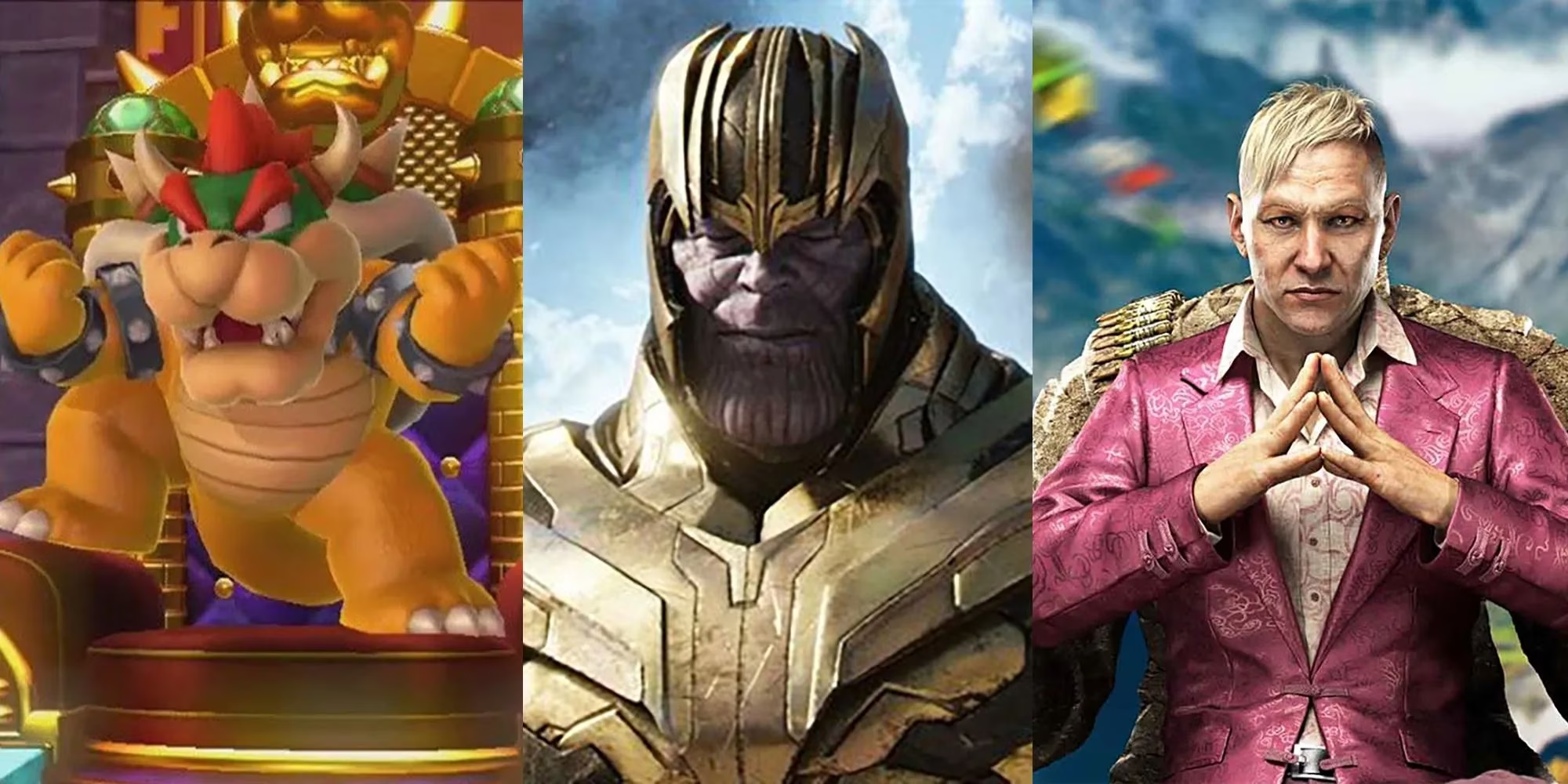
Pagan Min (Far Cry 4) – The Charismatic Kingpin 💬
Pagan Min doesn't need an Infinity Gauntlet; his wardrobe alone is a statement of absolute power. Like Thanos, he spends a good chunk of his screen time lounging on a metaphorical (and literal) throne, radiating the kind of charisma that makes you forget he's a violent lunatic. Both men lost daughters (Pagan's biological child; Thanos's adopted Gamora), and that grief drives their monstrous actions in profoundly human ways. Pagan's rule over Kyrat is savage, but in his twisted mind, it's a form of order—much like Thanos viewing genocide as salvation. In the Far Cry 6 DLC, it's revealed there's a nuclear warhead under his palace, proving his ambitions were never just local. He was ready to decimate the world if his vision demanded it. Thanos wiped out half the universe; Pagan was prepared to nuke the planet. Different methods, same "for your own good" energy.
 .jpg)
.jpg)
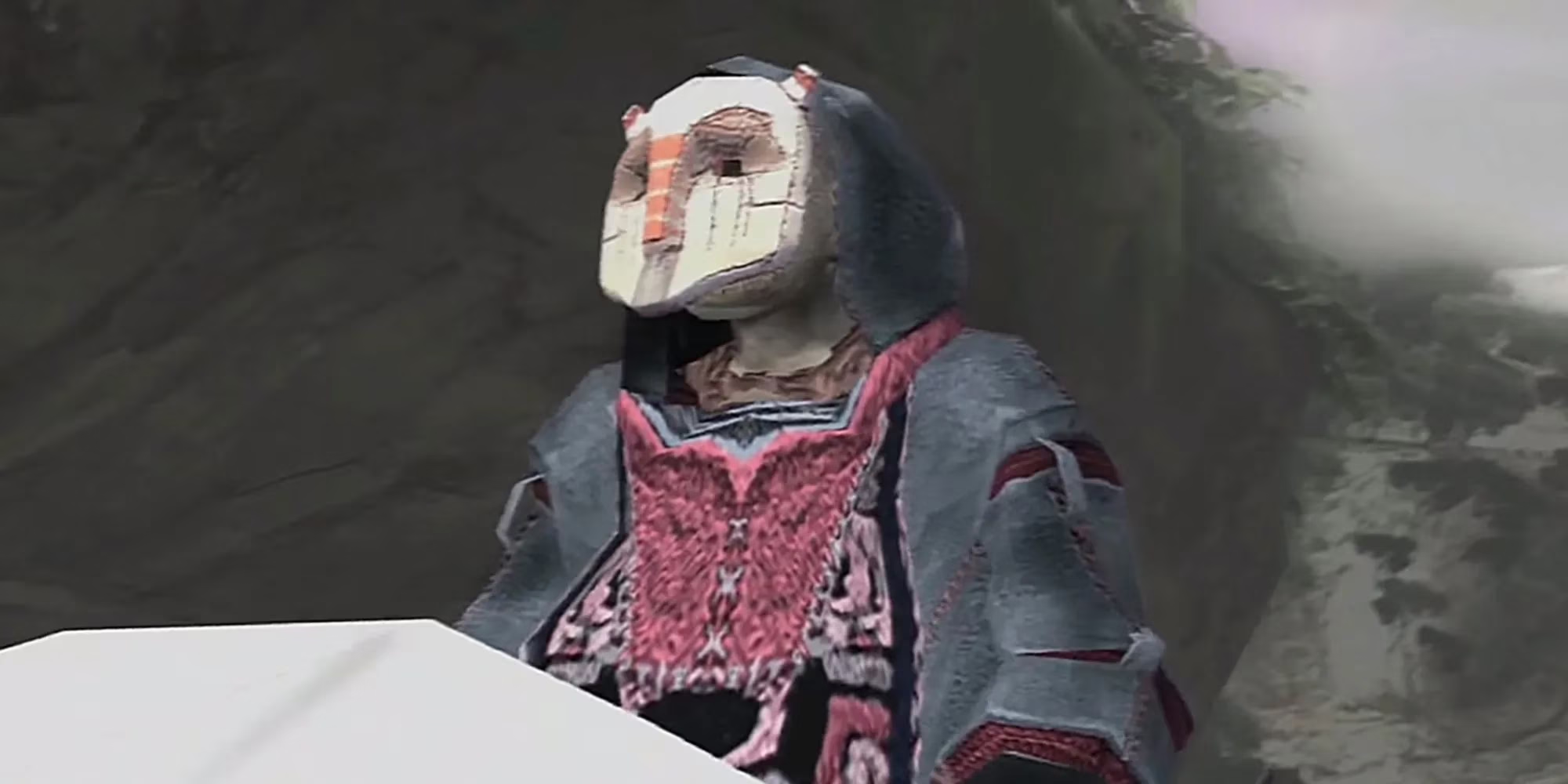
Lord Emon (Shadow of the Colossus) – The Ends Justify the Means, Right? ⚖️
This one's a mind-bender. Lord Emon is the antagonist of Shadow of the Colossus, but is he really a villain? His singular goal is to prevent the ancient entity Dormin from being resurrected—a noble cause if there ever was one. The problem? He's willing to kill Wander, the game's protagonist who's been manipulated into slaying the innocent Colossi, and he might even have orchestrated the death of Wander's lover to keep Dormin's vessel away from the shrine. Emon is a classic Thanos figure: a man so convinced of his moral righteousness that he justifies terrible acts. Thanos sacrificed Gamora to achieve his "balance"; Emon sacrifices Wander (and possibly his love) to maintain a cosmic seal. Both are haunted by a fear of what they're trying to contain, and both believe the cost is worth it. If a Shadow of the Colossus sequel ever surfaces, expect even more layers to this tragic, bald-headed foil.
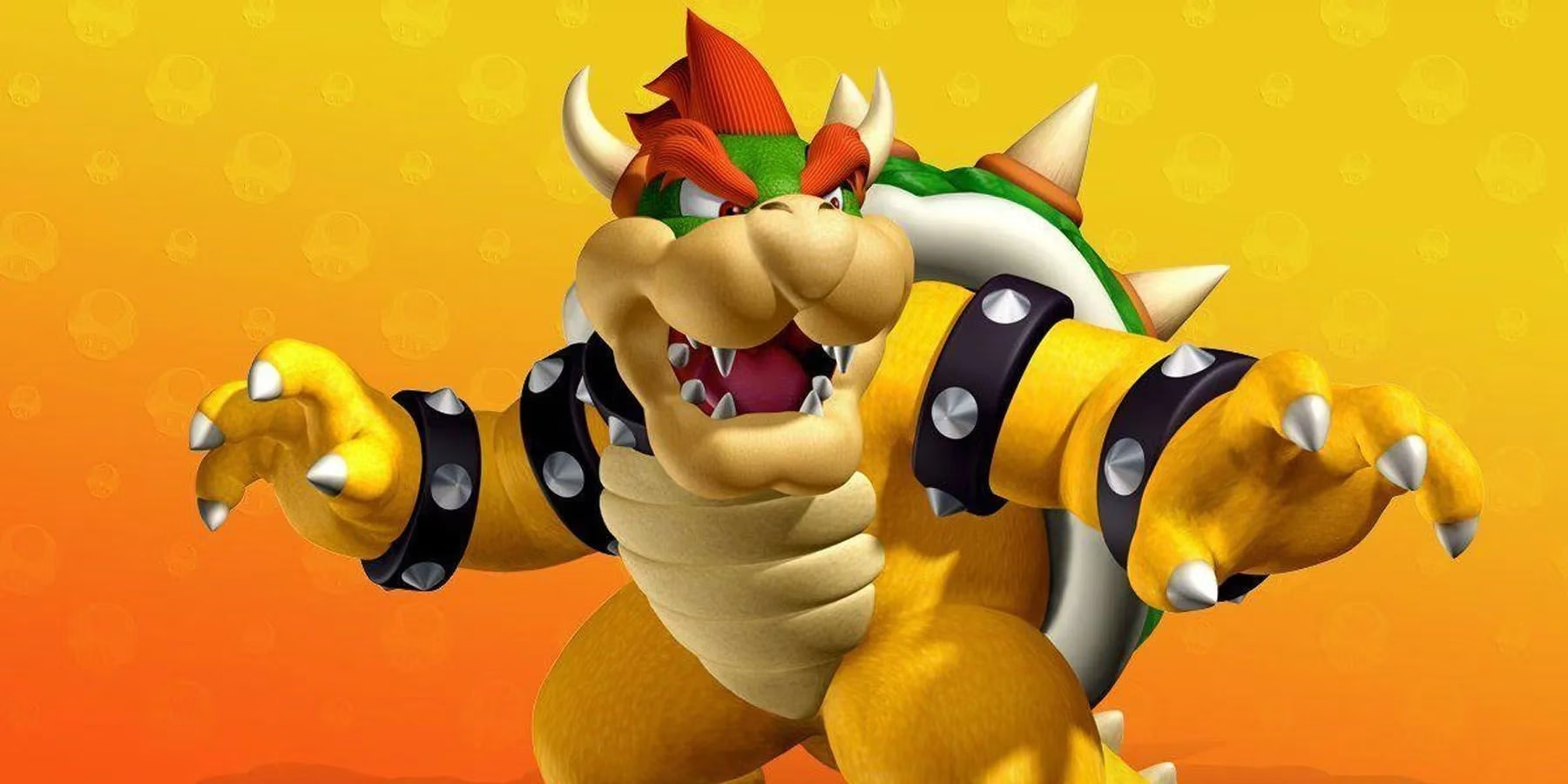
Bowser (Super Mario) – The Everlasting Thorn 🐢🔥
Okay, Bowser's intentions aren't exactly noble. He wants to marry Princess Peach and rule the Mushroom Kingdom, which is more petty tyrant than universe-level philosopher. But strip away the pretense, and you've got a massive, physically dominant warlord who constantly seeks power-enhancing artifacts (Power Stars, Grand Stars, the occasional Cat Shine). He's a relentless force who keeps coming back, no matter how many times a plumber stomps him into lava. Bowser is to Mario what Thanos is to the Avengers: an overarching, seemingly unkillable threat who defines the hero's journey. In Super Mario Galaxy, he literally builds his own galaxy, scale-wise not far off from a certain snap. He even had his own "I am inevitable" moment in Super Mario Odyssey, grabbing a wedding ring that could control reality. The King Koopa may not have a tragic backstory, but his presence, his legions of faceless minions, and his sheer refusal to stay down make him Nintendo's purple guy.
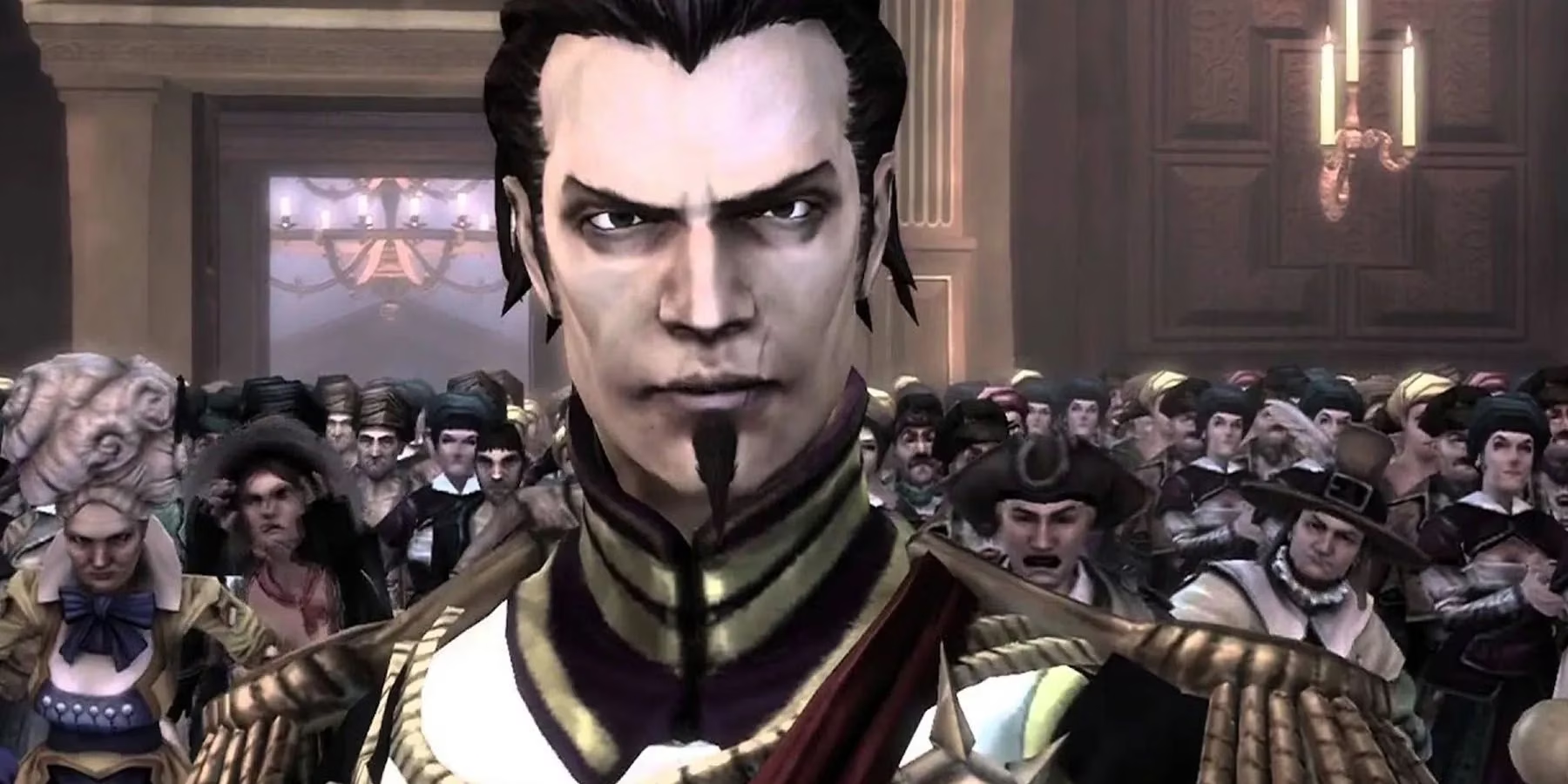
King Logan (Fable 3) – The Tyrant with a Prophecy 👑💀
Fable 3 players remember the early, brutal choice King Logan forces upon them: sacrifice your love interest or a group of innocent protesters. It's a moment of sheer cruelty, and for much of the game, Logan appears as nothing but a despot. The big reveal, however, reframes every act of tyranny: Logan was preparing the kingdom of Albion for an apocalyptic invasion by the Crawler. His oppressive taxation, his military buildup, his harsh laws—all designed to give humanity a fighting chance. Sound familiar? Logan, like Thanos, believes in necessary suffering. He's calm, collected, and voiced with chilling gravitas by Michael Fassbender. He doesn't collect colorful stones, but he does collect an army, and he's willing to be the monster so his people can survive. By the end, players must decide if they'll become the same kind of ruler, making Fable 3 a morality play heavily indebted to the Thanos school of leadership.
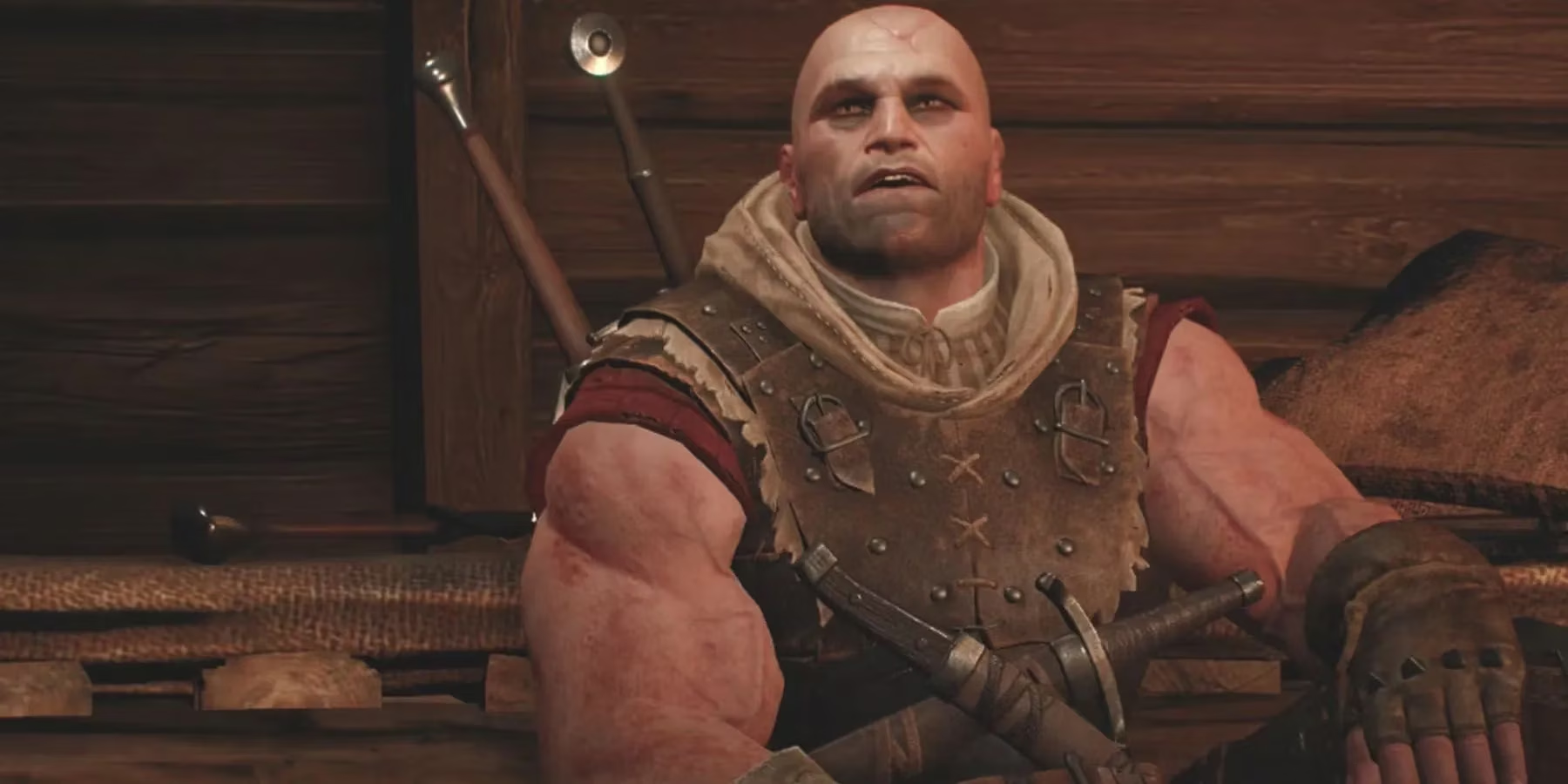
Letho of Gulet (The Witcher 2) – The Muscle with a Code 💪🐍
If Thanos walked into a Witcher school, he'd look like Letho. The bald, hulking Viper School witcher is the primary antagonist of The Witcher 2, and he's on a regicide spree across the Northern Kingdoms. At first, he seems like a simple assassin, but his motivation is deeply personal and strangely honourable. Emperor Emhyr var Emreis offered to restore the dying School of the Viper if Letho destabilized the North by killing its kings. Letho, driven by love for his brotherhood, accepts the impossible task. He still operates by a code, sparing Geralt because the White Wolf once saved his life. This sense of twisted honour mirrors Thanos's own twisted love for Gamora—he'll commit atrocities, but he'll also shed a tear while doing it. Letho isn't trying to save the universe; he's trying to save his family. Yet the scale of his violence, his physical intimidation, and that melancholic edge place him squarely in the Mad Titan's shadow.
Vayne Solidor (Final Fantasy XII) – The Philosopher King 🔮📜
If any villain deserves to wear an Infinity Gauntlet, it's Vayne. The scheming Archadian prince is a master tactician who engineers wars and assassinations to acquire the divine Nethicite crystals—objects of immense power, not unlike Infinity Stones. His goal? To break humanity free from the influence of the Occuria, godlike beings who manipulate history. Vayne wants to become the Dynast King and give humanity control over its own destiny. That's a remarkably sympathetic ambition, even as his methods spill oceans of blood. He's articulate, intelligent, and utterly convinced of his righteousness, delivering monologues that could make a Titan weep. In Final Fantasy XII: The Zodiac Age (still holding up brilliantly in 2026), Vayne's layered personality and the philosophical weight of his quest make him one of the most Thanos-like JRPG villains ever coded. He didn't snap his fingers, but he absolutely would have if the gods had given him the chance.
As gaming continues to evolve in 2026, the Thanos archetype isn't going anywhere. Players love a villain who makes them question their own morality, who has a point so compelling it's almost seductive. Whether it's a king preparing for apocalypse, a mutant turtle with a kidnapping habit, or a witcher just trying to save his school, these characters remind us that the best antagonists are the ones who see themselves as the hero. And if they happen to have a massive chair and an army of unquestioning minions? Well, that's just the cherry on top. 🍒
Data referenced from GamesIndustry.biz helps frame why “Thanos-style” antagonists like Pagan Min, King Logan, and Vayne Solidor keep showing up in modern game narratives: as production values rise and audiences mature, studios increasingly lean into morally complicated villains whose ideology (order, survival, liberation) can be argued as rational even when their methods are monstrous, giving players that same uneasy push-pull of empathy and dread that made the Mad Titan so sticky in pop culture.
Comments