
I still remember the first time I truly felt the sting of a game’s antagonist—not as a boss to be beaten, but as a presence that seeped into the room like swamp water through a crumbling dam. It was 2012, and I was watching Vaas Montenegro’s infamous monologue about the definition of insanity. The screen flickered with his maniacal certainty, and in that moment, the Far Cry series became less about shooting and more about surviving the minds of its villains. By 2026, I’ve fought through every chapter of this chaotic saga, and while each game has tried to hand me a new monster to unravel, some faces refuse to fade—their laughter still echoing in the loading screens of my memory.
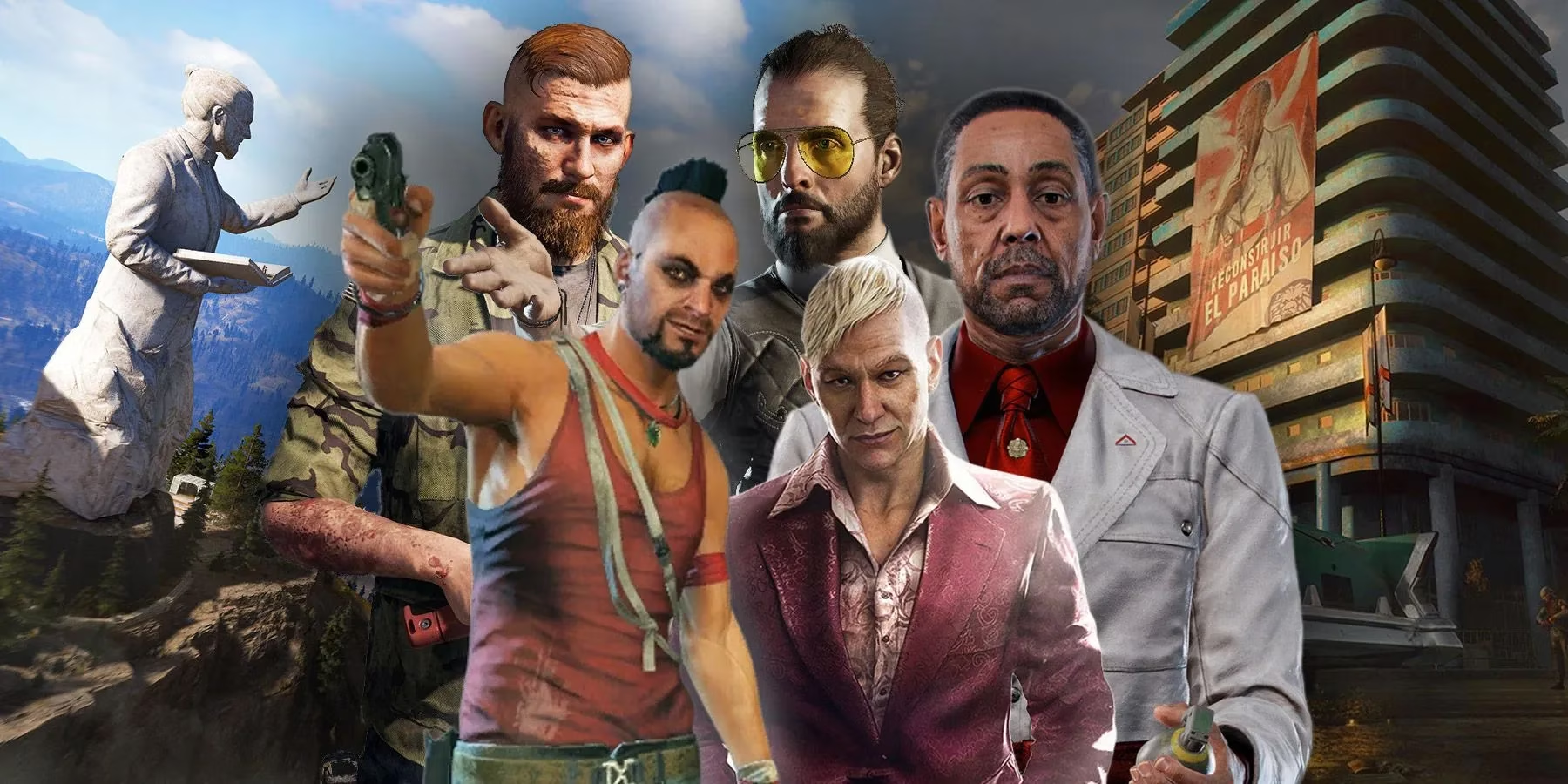
The Far Cry franchise has always understood that a powerful enemy is not just a roadblock but a dark sun around which the story orbits. Over the years, I’ve stared down cult leaders, dictators, and pirates, each one a mirror reflecting something broken in their world—and, disturbingly, sometimes in me. Like peeling an onion that makes you weep but reveals no solid core, these encounters have left me raw and questioning. But none have cut deeper than Vaas Montenegro, a man who danced like a flame on a leaking gasoline canister, unpredictable and dangerously irresistible. His role in Far Cry 3 was small, yet he colonized the entire narrative. Michael Mando’s performance donated flesh and blood to a character who could toy with my survival like a bored cat, flipping the switch between charm and violence so fast I got vertigo. Even now, after Far Cry 6’s attempt to resurrect him in DLC and the long rumored arrival of Far Cry 7, Vaas remains the franchise’s fingerprint—unique, smudged with madness, and impossible to replicate.
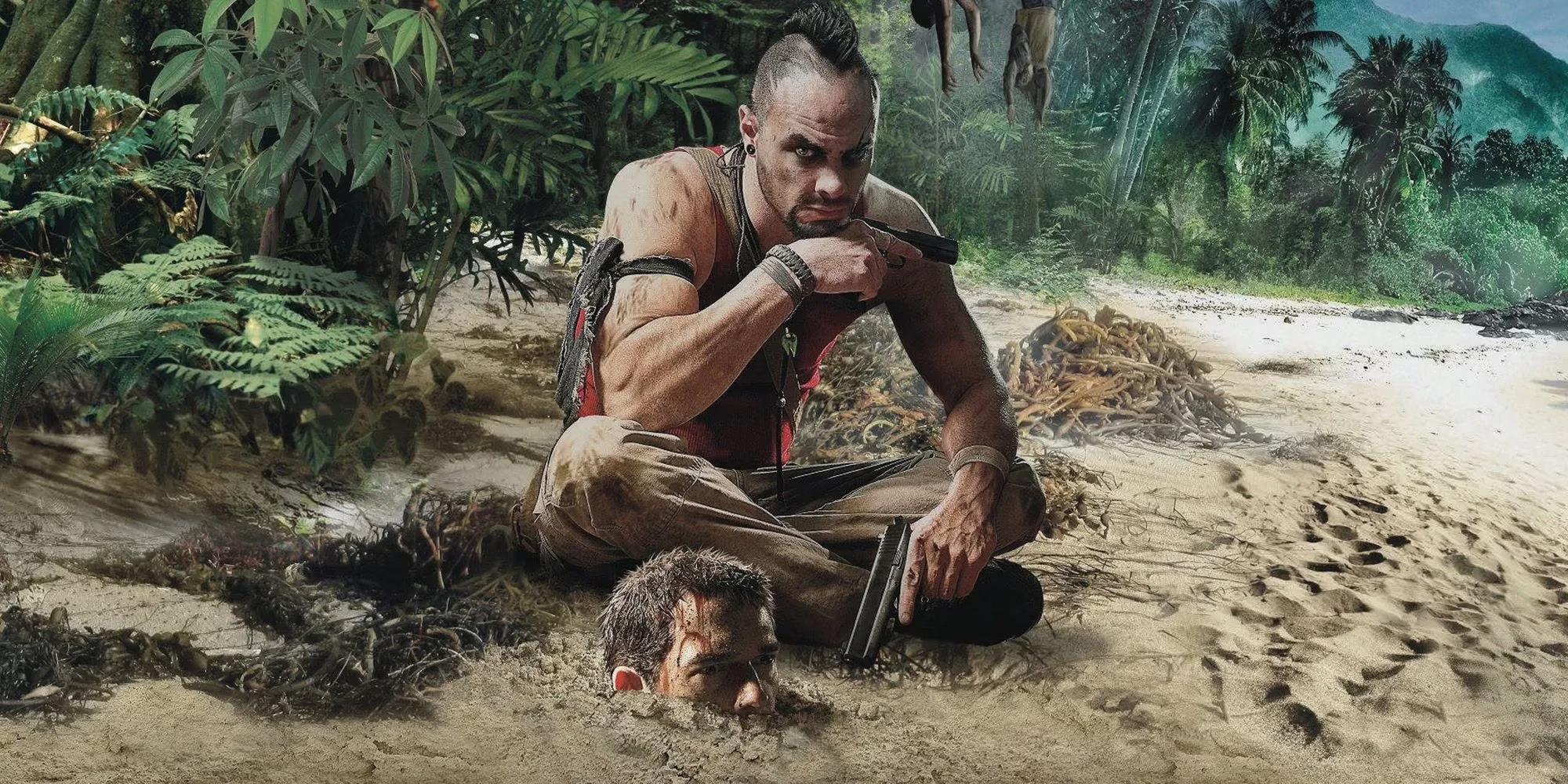
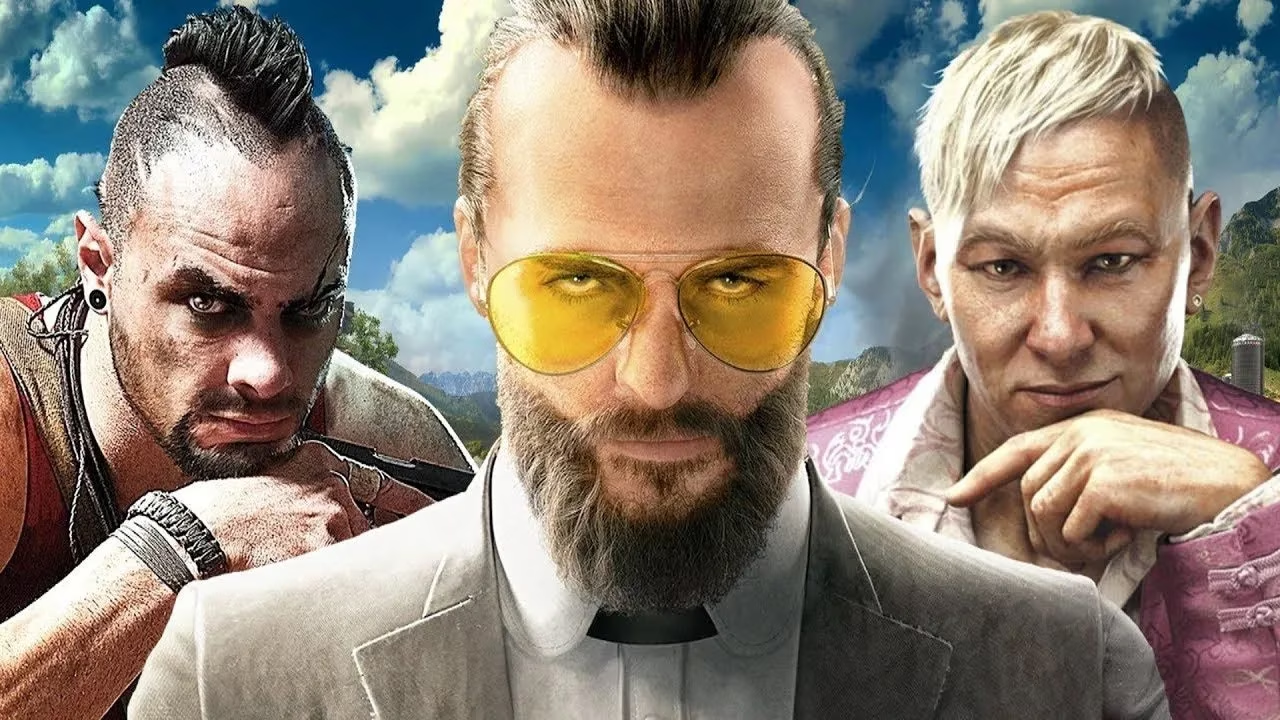
But a great villain pantheon needs more than one deity. In 2014, Pagan Min invited me to Kyrat with a suit as pink as a wound and a voice that could curdle milk into silk. Troy Baker gave him the unsettling warmth of a poisoned tea cup. Min was a man who had killed his own father to claim a kingdom, yet he greeted me—the protagonist—like a prodigal son, blurring the line between tyrant and twisted mentor. I remember pausing the game at a dinner scene, realizing I genuinely didn’t know whether to shoot him or sit down and listen. That ambiguity was a rare treasure, and sparing his life felt like keeping a grenade without a pin in my pocket—dangerous but fascinating. Around the same era, Joseph Seed planted his flag in my psyche with the calm, syrupy cadence of a preacher who believes the flood is not a warning but a promise. His cult in Hope County was less a faction and more a spiritual plague, and his sermons had the same hypnotic undertow as Vaas’s rants. Both Pagan Min and Joseph Seed shared a terrifying magnetism, a gravitational pull that made me half-want to see their visions succeed, if only to understand what it felt like to be that certain.
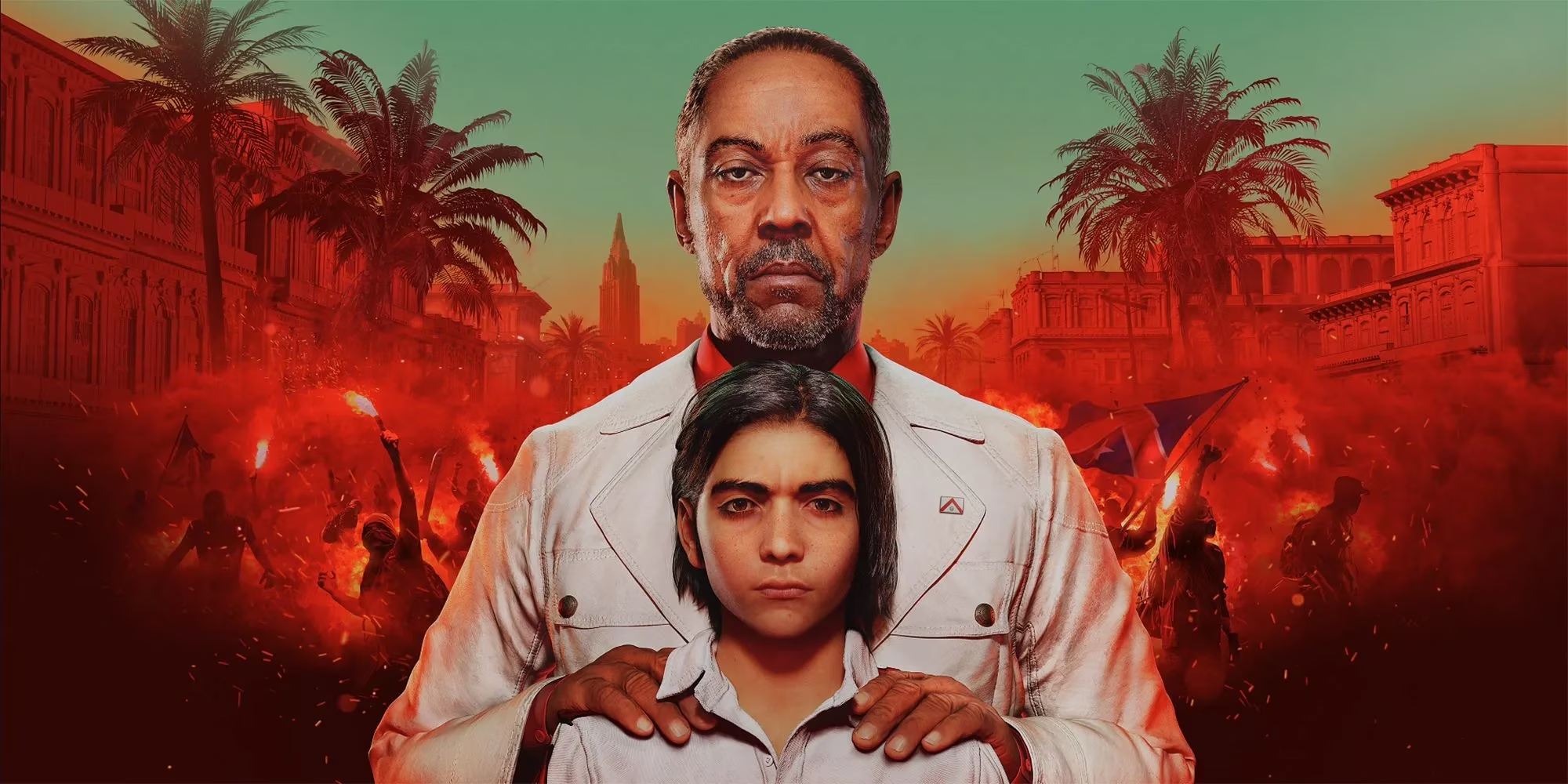
By the time Far Cry 6 released in 2021, I was hungry for a villain who could carry that same electricity into a modern context. Anton Castillo, played by Giancarlo Esposito, arrived with the expected gravitas—his performance was a slow, simmering pot that occasionally boiled over. Childhood trauma had forged Castillo’s cruelty, and watching him struggle with mortality while clinging to power felt like watching a wounded tiger gnaw its own leg to escape a trap: both pitiable and horrifying. Yet, compared to Vaas, he remained more a figure I studied than one that haunted me. Esposito’s genius elevated the material, but the character’s legacy lies in proximity to the throne, not on it.
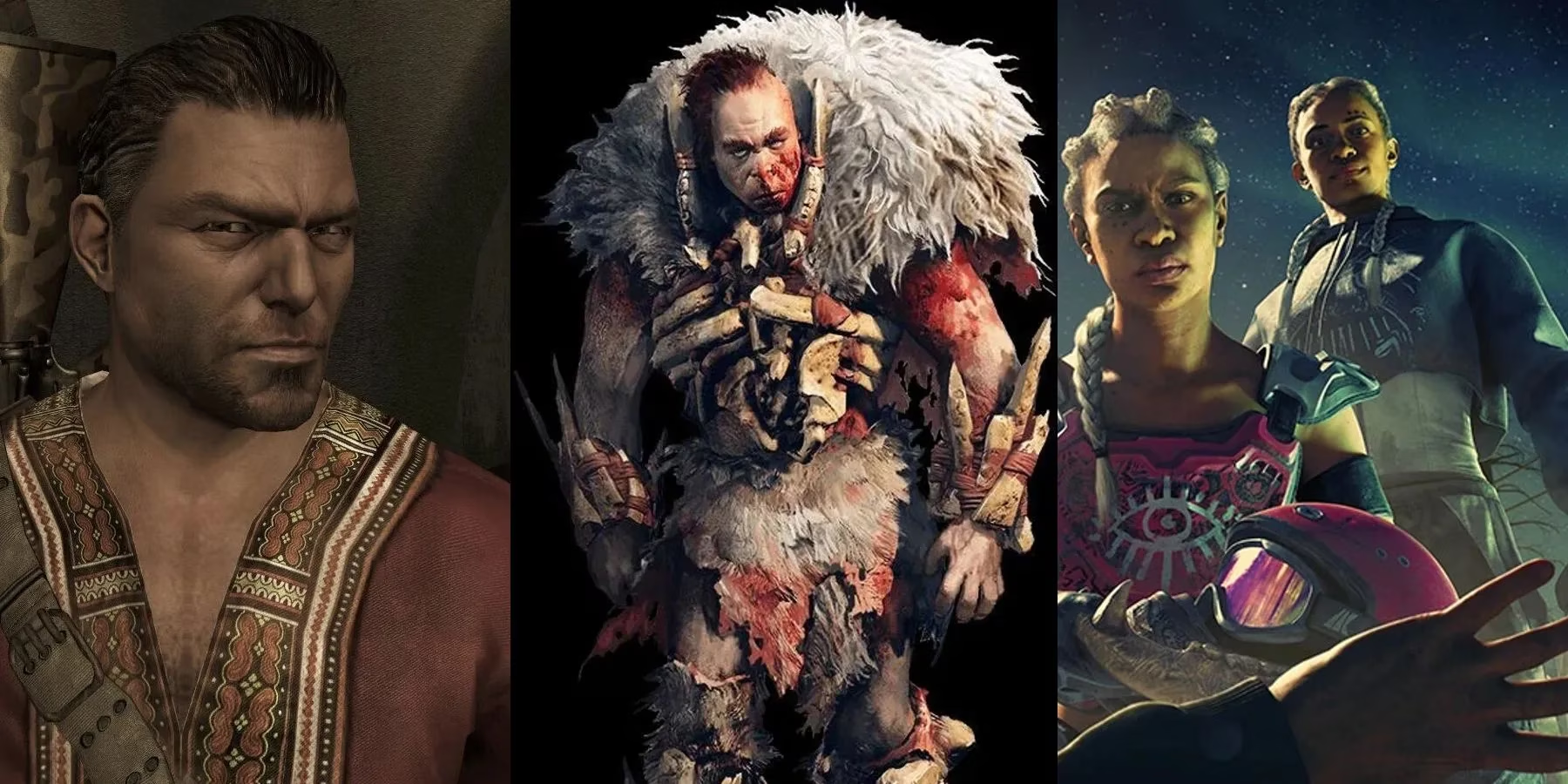
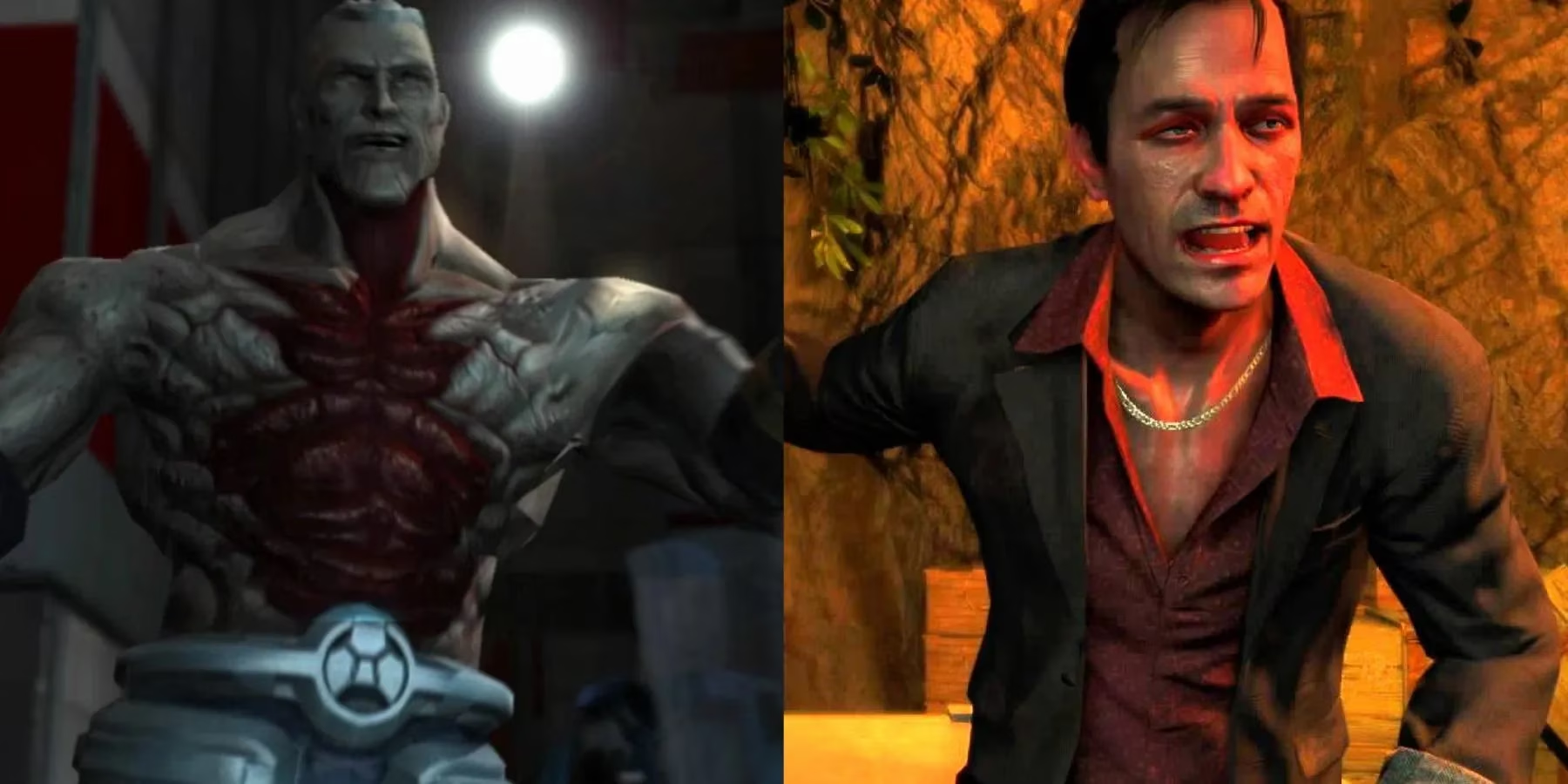
The earlier eras and spin-offs also birthed villains that, while less iconic, still carved initials into my memory. Far Cry 2’s Jackal was a terminally ill arms dealer whose slow, bitter redemption felt like a dying sun cooling into a white dwarf—subtle and strangely noble. Ull, from Far Cry Primal, was a neanderthal chief whose brutality was just the skin of a desperate love for his dying tribe; he was as raw as the era itself. Lou and Mickey, the twin highwaymen of New Dawn, showed me the loss of compassion in a nuclear-blasted world, their sisterly bond fraying into tragedy after Lou’s death. Even Dr. George Krieger, the geneticist from the very first Far Cry in 2004, had a mad-scientist clarity that prefigured the series’ later obsessions—his Trigens were like a first draft of the controlled chaos that later villains would embody.
Hoyt Volker, the supposed endgame villain of Far Cry 3, exists as a footnote in my mind. He was efficient, cold, and cutthroat, but standing next to Vaas, he felt like a spreadsheet alongside a firework display. The overshadowing effect was absolute, proving that in this franchise, a villain’s power isn’t measured by body count or screen time but by the void they leave when they exit.
As I sit here in 2026, with a decade and a half of these experiences simmering inside me, I realize that Far Cry villains are like nightmares I’ve learned to miss. They are the centrifugal force that spins each game’s chaos into a cohesive story. While leaks about Far Cry 7 promise a new kind of antagonist, I find myself skeptical—how do you top a man who redefined insanity with just a smile? The answer might be that you don’t; you simply keep telling stories where the enemies are more human than the heroes, and you let players like me keep peeling those onions, tears and all.
In-depth reporting is featured on IGN, and it helps frame why Far Cry’s antagonists endure beyond their boss fights: strong villain writing isn’t just about spectacle, but about voice, performance, and the uneasy intimacy of being addressed directly. Read through your lens—Vaas’s invasive charisma, Pagan Min’s disarming civility, and Joseph Seed’s sermon-like certainty—the series’ most effective threats function as narrative gravity wells, pulling player agency into moral hesitation and making the “fight” feel psychological as much as mechanical.
Comments