
First-person shooters have never been solely about racking up kills or testing twitch reflexes. The true magic often lies in the feedback loop, that immediate, visceral confirmation that a bullet found its mark. It is the way an enemy crumples, the slight delay before a body hits the floor, the spray of crimson that paints the walls, these are the details that transform a simple mechanic into a deeply satisfying experience. Over the decades, certain games have elevated death animations to an art form, creating moments of gruesome beauty that linger in the memory long after the credits roll. Even in 2026, as photorealism becomes the standard, these older titles still teach valuable lessons about impact, weight, and the sheer joy of a perfectly executed takedown.

What separates a forgettable shooter from a legendary one often comes down to the smallest of reactions. A limp ragdoll can feel weightless and comical, while a carefully choreographed sequence can make every kill feel personal. The games on this list understand that subtle art. Whether through pre-scripted agony or physics-based chaos, they make sure that pulling the trigger never becomes routine. Take, for instance, the way a game can teach players about its world simply through the way its inhabitants perish. A militaristic shooter might aim for brisk, efficient takedowns, while a horror-infused title will drag out the suffering, ensuring no one looks away.
GoldenEye 007
Rare’s masterpiece on the Nintendo 64 did not just popularize console shooters; it changed how death could be a storytelling tool. Every enemy in GoldenEye 007 was a performer, reacting uniquely depending on where the fatal bullet struck.
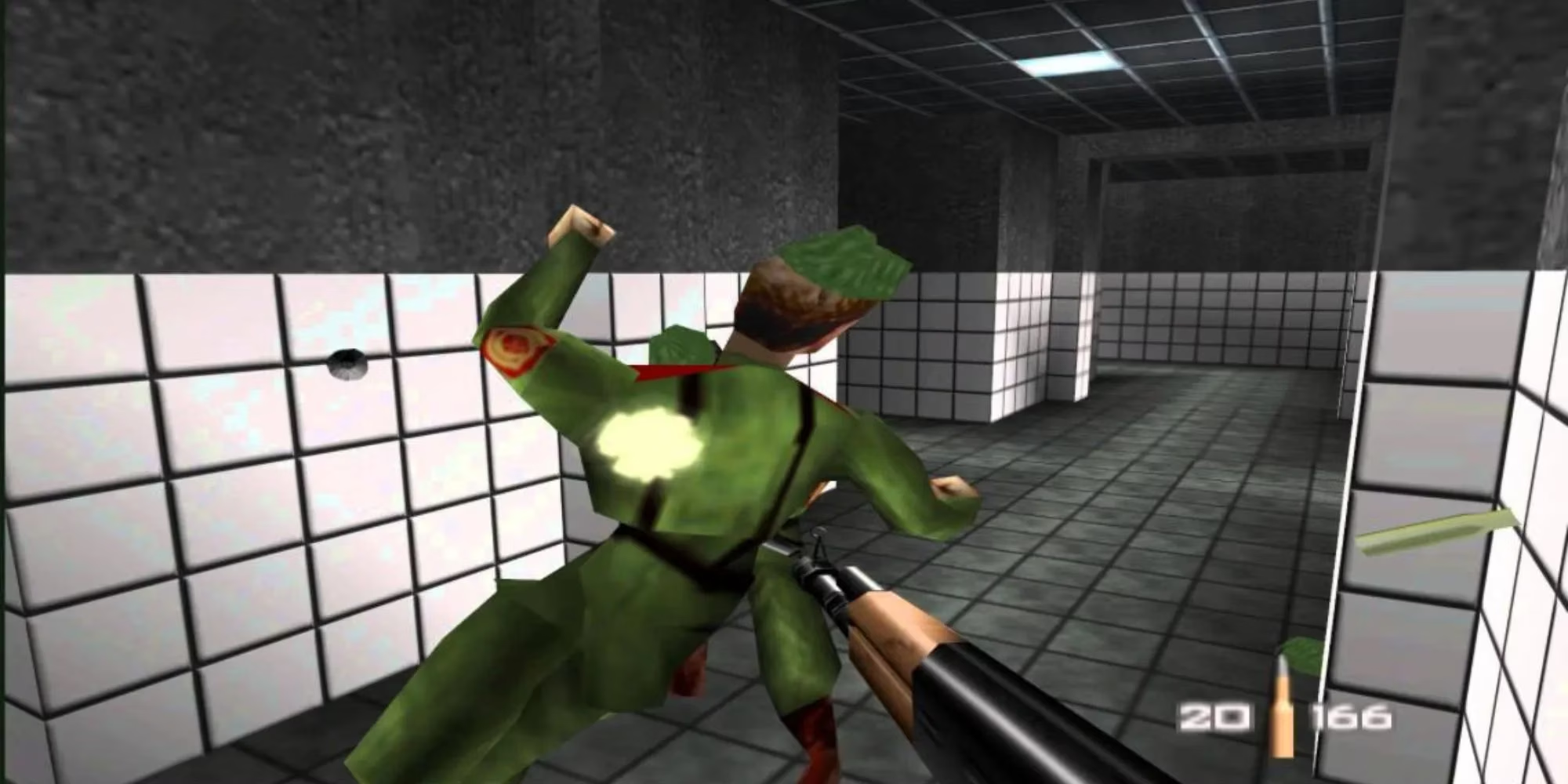
A shot to the leg would send a soldier hobbling, clutching his wound before collapsing. A headshot might drop him instantly, while a hit to the chest could trigger a drawn-out stumble backward, arms flailing, until he finally slumped against a wall and slid down to the floor. These were not mere prefabricated animations; they felt contextual, almost cinematic. The variety was staggering for the era. Some enemies would even kneel over and clutch their stomachs in a moment of dramatic delay before toppling forward. This attention to reactive detail made every firefight feel like a mini movie scene, and it is a huge reason why the game remains so beloved decades later. The animations gave weight to the weapons, making the iconic PP7 and the mighty RC-P90 feel distinct long before damage numbers could tell the difference.
RoboCop: Rogue City
In contrast to the spy-thriller elegance of GoldenEye, RoboCop: Rogue City serves up hyper-violent catharsis straight from the cult 1987 film. This 2023 title understands that RoboCop is not just a cop; he is a walking tank, and the death animations reflect that brutal power imbalance with unflinching enthusiasm.
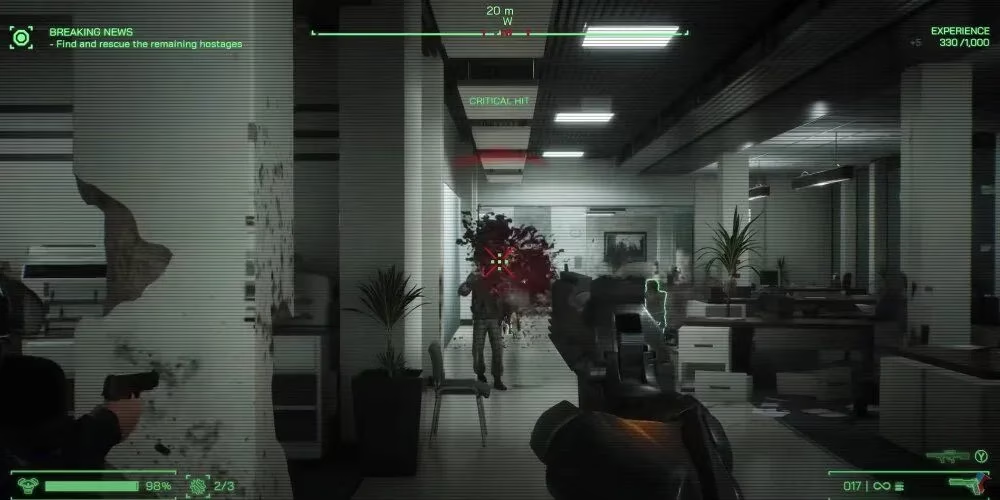
Criminals do not simply fall over when hit by the Auto-9. They come apart. Limbs detach, torsos explode into clouds of red mist, and body parts land in entirely different zip codes. The over-the-top gore never feels gratuitous for its own sake, though. It is a constant reminder of the protagonist’s mechanical nature versus human fragility. Beyond gunfire, the game allows players to grab enemies and hurl them with impossible force. A thug grabbed by the throat can be launched into a wall, shattering both the plaster and every bone in his body, or bowled into a group of his friends, sending them scattering like skittles. The sound design amplifies every wet crunch, making each disposal a gruesome, guilt-free celebration of 80s action mayhem.
Doom Eternal
Few series treat enemy demise as a central gameplay pillar like Doom. While the classic 1993 original relied on imagination to fill in the gory blanks between falling pixelated sprites, the modern reboots shove the violence directly into the player’s face. Doom Eternal, in particular, turns death into a resource and a reward.
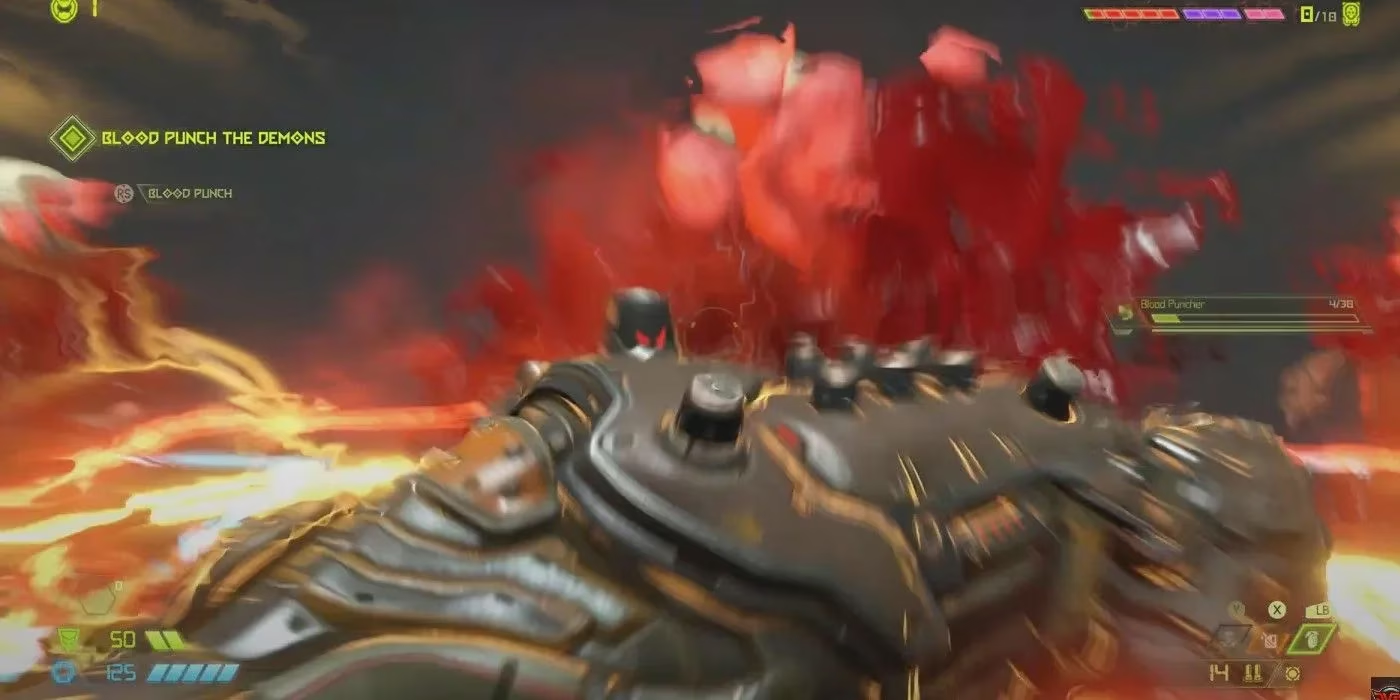
Standard shooting can reduce demons to puddles of meat, but the Glory Kill system demands intimacy. When an enemy starts flashing, players are pulled into a momentary animated sequence of pure brutality. The Slayer might rip out a Pinky’s eye using its own leg, tear an Imp’s head vertically through its torso, or punch clean through a Mancubus’s stomach to pull out vital organs. These are not just flashy finishers; they shower the player in desperately needed health or ammunition, making them an essential rhythm of combat. Eyeballs pop, spinal columns are shorn, and every single death feels like a personal insult delivered to the legions of Hell. The demons do not just die, they are annihilated.
TimeSplitters: Future Perfect
Moving from hellish landscapes to a campy 70s-inspired time-travel romp, TimeSplitters: Future Perfect takes a completely different approach. The game leans into cartoonish exaggeration, and its death animations are pure slapstick comedy.

A close-range shotgun blast sends a foe rocketing several feet into the air, limbs pinwheeling like a Looney Tunes character. A well-placed headshot might cause an enemy to stand perfectly still for a beat, then drop straight backwards with the rigidity of a felled tree. One particularly memorable sequence has the victim grab their stomach, stare down at the blood pooling in their hands with a look of tragic realization, and then slowly, dramatically collapse. The theatricality is infectious, perfectly matching the game’s arsenal of quirky weaponry and its cast of bizarre characters. In a genre often obsessed with grit, TimeSplitters proves that humor and satisfying gunplay are not mutually exclusive.
Far Cry 6
Not all memorable deaths come from gunfire. The Far Cry series has long embraced hands-on brutality, and Far Cry 6 pushes its knife takedowns into disturbingly personal territory.
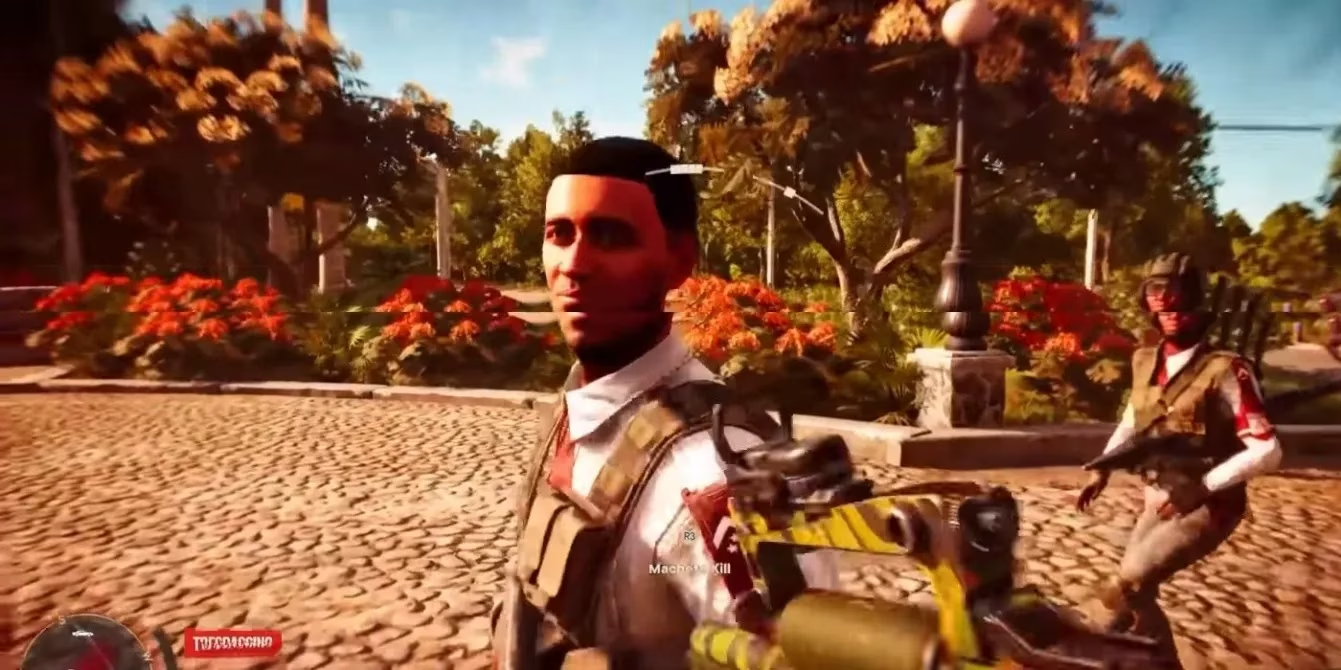
When players initiate a stealth kill, the animation stretches out, forcing them to witness the struggle. An enemy might desperately grab at the protagonist’s arm, fingers scrabbling for purchase as the blade sinks deeper. Some try to reach back over their shoulder, a last pathetic attempt to fight off the inevitable. These moments of futile resistance make the eliminations feel weighty and unsettling. It is a far cry from the clean, instant assassinations of other franchises. The heaviness of the act is emphasized by the dying man’s eyes, which often remain open, confused, and accusatory. It borrows heavily from the same school of ultra-realistic violence that made The Last of Us Part 2 so emotionally draining. In Yara, taking a life feels like a real transaction, and the death animations ensure the player never forgets the cost.
Halo: Combat Evolved
Sometimes, an animation becomes iconic not because it is realistic, but because it is absurdly memorable. Halo: Combat Evolved contributed more to the shooter genre than co-op campaigns and regenerating shields. It gave gamers the "splatter" and the unforgettable gymnastics of its grenade deaths.

The game’s physics model ensured that any Grunt, Elite, or Jackal caught near a plasma grenade or rocket was suddenly swimming through the air. Their limbs would flail in a comical, rapid windmill motion that persisted for an unnaturally long time. They did not just tumble; they elegantly backstroked across the sky until gravity finally remembered they existed and slammed them into a wall or off a cliff. It was a physics quirk that defied all logic, but it became a cherished part of the game’s identity. Combine this with the squeaky, panicked screams of the Grunts, and every explosive kill became a tiny, chaotic comedy sketch. The absurdity provided a perfect counterbalance to the game’s more epic, serious moments.
These games, spanning generations, demonstrate that a gun is only as good as the reaction it provokes. The most advanced rendering engines and the highest frame rates mean very little if enemies simply vanish or collapse without personality. Whether it is the dramatic slumps of a Bond henchman, the dismembered jigsaw of a RoboCop perp, or the flailing space-dance of a Halo Elite, these animations provide the exclamation point at the end of every firefight. They turn pulling a trigger from a mechanical input into a narrative punchline. As we look back from 2026, it is clear that while hardware has evolved beyond measure, the fundamental desire for a truly punchy, gratifying kill remains timeless. These classics nailed it, and their influence continues to ripple through every shooter released today.
Comments