
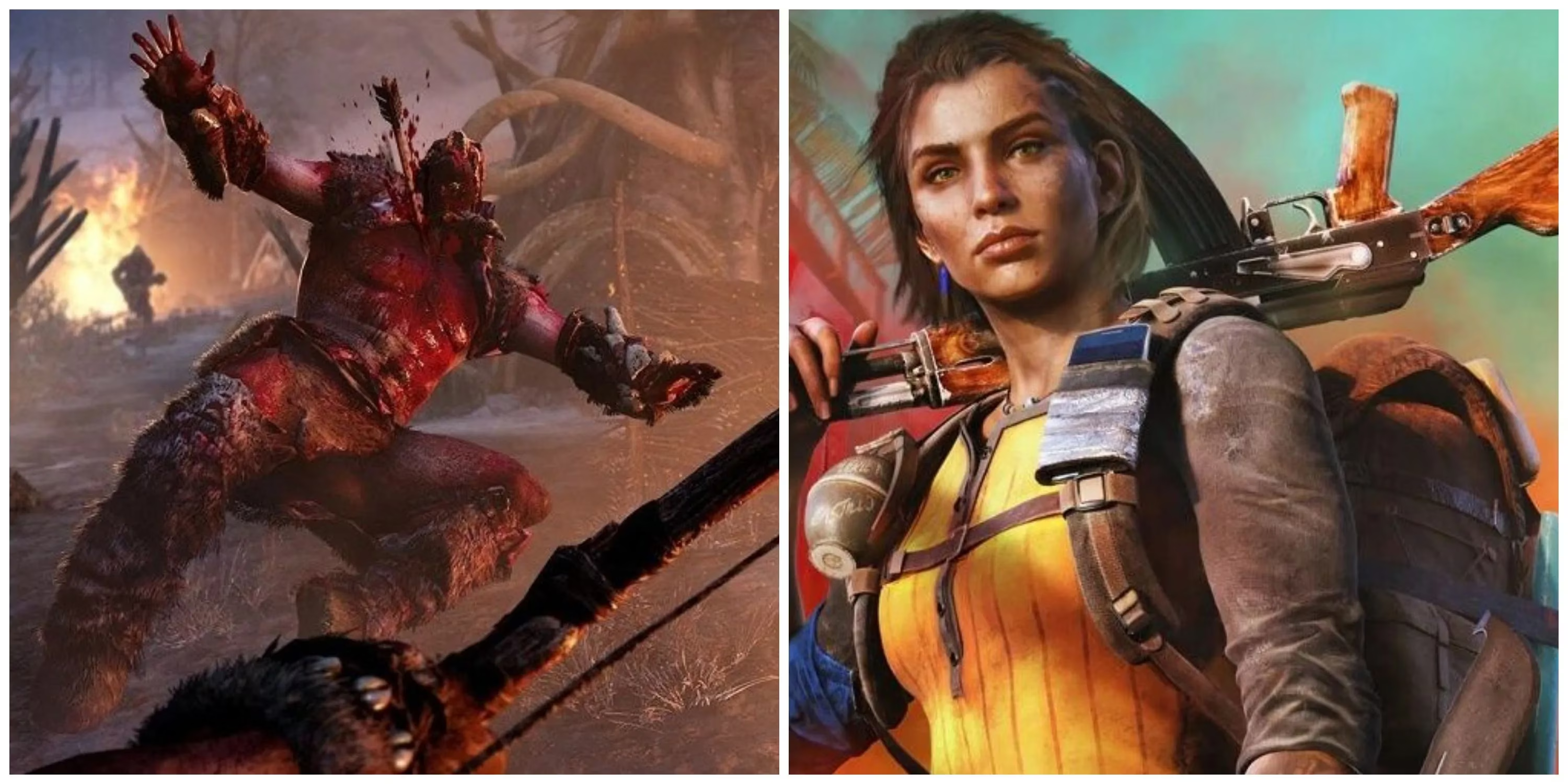
The midday sun beat down on a cluttered desk in a quiet apartment in Lyon. A veteran game designer named Marc leaned back in his chair, staring at a timeline pinned to the wall. It stretched from 2004 to 2026, each node representing a Far Cry game, with notes scrawled beneath about combat systems, AI behaviors, and player empowerment. He was preparing a retrospective talk for an industry conference, and his challenge was simple to state but devilish to execute: chart how combat had evolved across the series and why each shift mattered. Marc wasn't just a critic; he had played every single title at launch, often diving back in years later to see what held up. His journey through the Far Cry saga became a story of experimentation, peaks of brilliance, and occasional stumbles.
The tale began, as all epic journeys do, with a rough first step. Marc remembered booting up the original Far Cry on a creaky PC. The tropical island was a revelation back then, but its combat, viewed through the lens of 2026, felt frayed at the edges. Stealth was brutally unfair; enemies seemed to possess supernatural detection powers, spotting the player through thick foliage from impossible distances. Clearing an outpost without triggering alarms required reloading save after save. Marc had written in his notes: "The first game's combat is not inherently broken, but it is a product of its time—a blueprint without polish." It laid down the open-ended approach, but the execution didn't age gracefully. For many modern players, it would feel like a museum piece.
Then came Far Cry 2 in 2008, a game that Marc still insisted was underappreciated. He recalled the first time a gun jammed in the middle of a firefight, forcing him to frantically hammer the reload key while bullets shredded the corrugated iron shack beside him. The world was reactive: fires spread realistically, vegetation caught and burned, and enemies carried wounded comrades to safety. "The physics system was a playground," Marc murmured, tapping a photo on his desk. Yet, he conceded, the combat didn't age like a fine wine. The weapon degradation, while immersive, became tedious, and the clunky aiming gave the whole experience a heaviness that later entries would shed. It was a noble experiment that pointed the way forward but stumbled in its own weight.
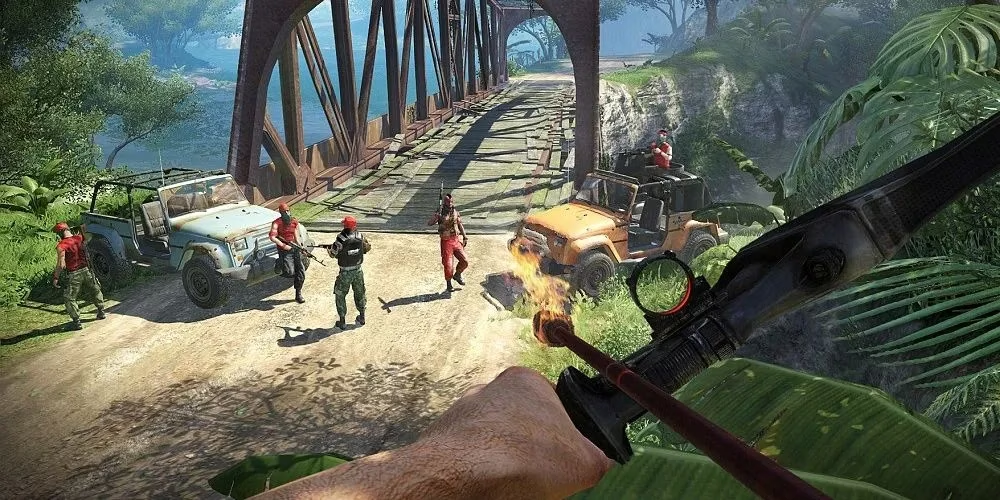
Everything changed with Far Cry 3. Marc could still hear the sound of the title screen music as he first set foot on Rook Islands. This was the game that injected the series with rocket fuel. The combat loop—stealth takedowns from above, chain kills with a machete, explosive arrow ambushes—felt revolutionary in 2012. Vaas Montenegro's unforgettable monologue about insanity was the cherry on top, but the real star was how smoothly the action ebbed and flowed between ghost-like infiltration and full-throated chaos. Marc's notes grew thick here: "FC3 established the template: open world, outpost liberation, skill tree progression, charismatic villain." It wasn't perfect, but it was a seismic leap. Players could now truly craft a personal approach to each encounter, and the series never looked back.
Far Cry 4 arrived in 2014, draped in the snowy peaks of Kyrat. Marc remembered the initial grumbling from fans about it being a "reskin" of its predecessor. But when he sat down to replay it in 2026, he noticed something sharper in the combat. Animations were faster, takedowns had new chained variants, and driving-by-shooting from an elephant felt gloriously absurd. "A minor yet meaningful refinement," he jotted down. The grapple hook added verticality, and the sheer intensity of storming a fortress in co-op remained unmatched for years. Ubisoft had listened, tweaked, and delivered a combat system that hummed like a well-tuned engine.
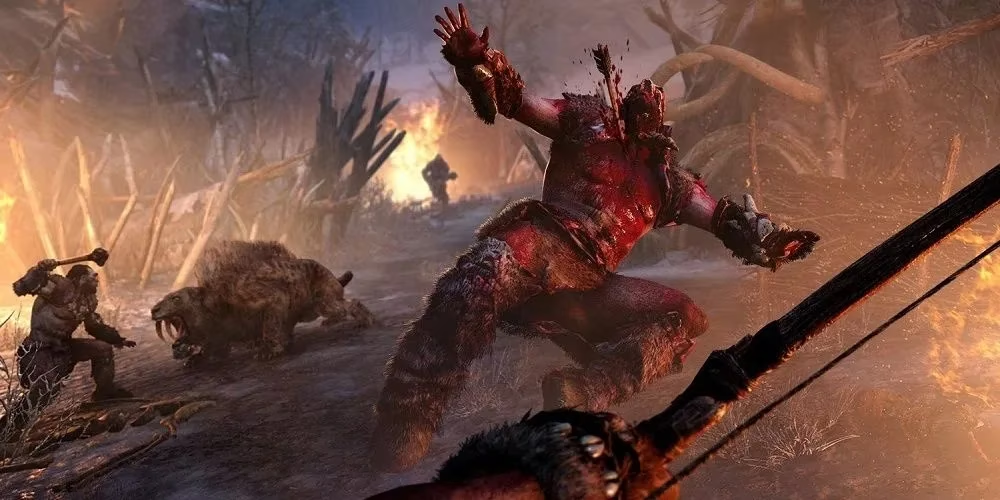
The next stop was a brave left turn. Far Cry Primal (2016) stripped away every gun and explosive and dropped players into the Stone Age. Marc had been skeptical at first—no sniper rifles, no C4? But the combat reinvented itself. He found himself mastering spear throws, commanding a saber-toothed tiger to maul enemies, and setting entire villages ablaze with a torch. "It forced players to engage with space and timing differently," Marc thought. The map might have been a reshaped Kyrat, but the moment-to-moment brawls felt primal (pun intended). The story was forgettable, yet the combat system remains one of the most distinctive experiments in the series.
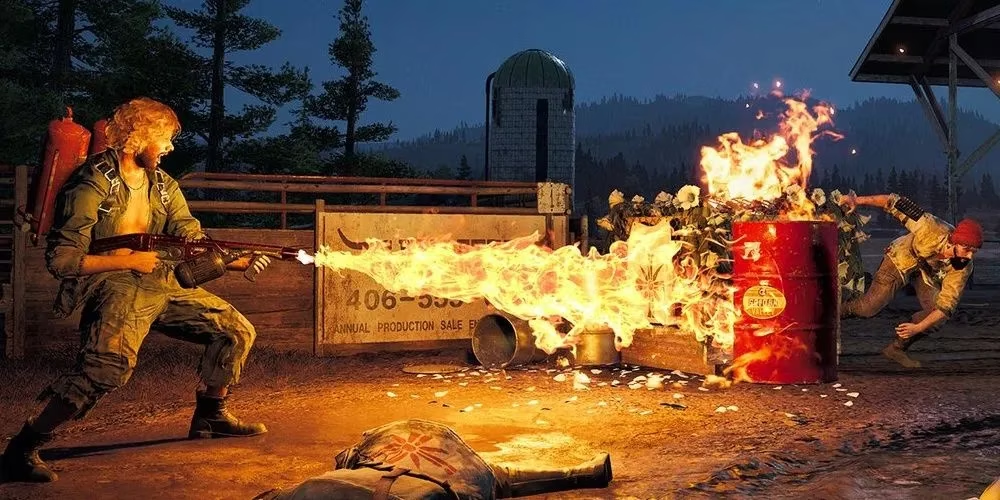
Then, the golden child: Far Cry 5. When Marc first walked through the lush fields of Hope County, Montana, he felt something shift. Ubisoft had killed the radio towers. Exploration became organic. The combat was sharp as a scalpel—guns felt weighty, the "Guns for Hire" companions added tactical depth, and the ability to fly a plane and drop bombs on a cult outpost never got old. The downside? Enemy spawns could go berserk, throwing waves of pickups filled with zealots at the player. But even that madness, Marc admitted, became part of the charm. Far Cry 5 refined the formula to a T, and its four charismatic antagonists—the Seed family—gave every firefight emotional stakes. It was the pinnacle of classic Far Cry combat.
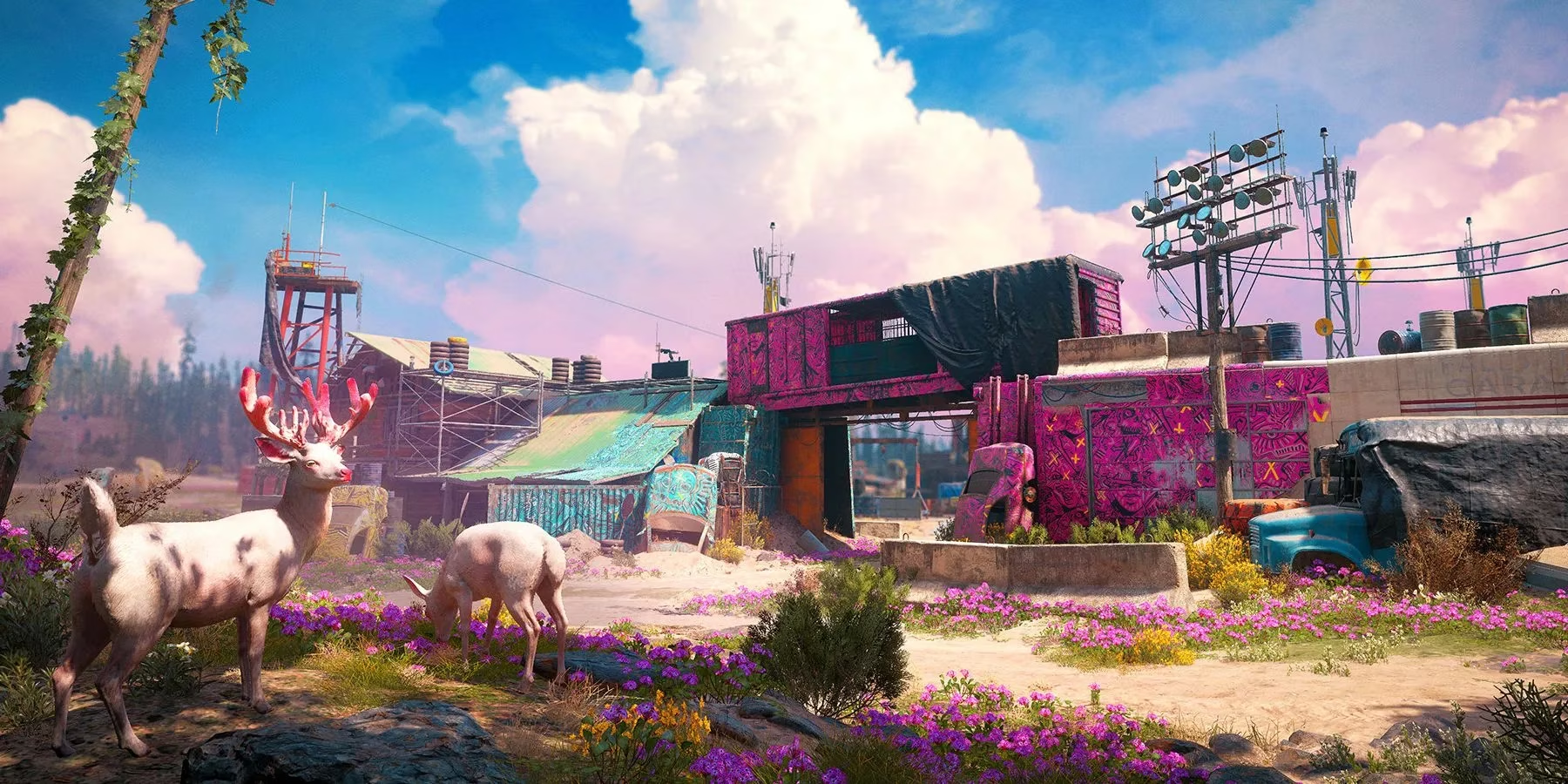
The post-apocalyptic spin-off, Far Cry New Dawn (2019), didn't fare as well in Marc's memory. It used the same engine as the masterpiece that preceded it, but the combat felt strangely hollow. The villains were bland, the health bars on enemies introduced a spongy feel, and it seemed content to retread old ground without meaningful improvement. "A vapid expansion," Marc noted. "Better to just replay Far Cry 5."
Then came 2021's Far Cry 6, a game burdened by enormous expectations. Giancarlo Esposito's Anton Castillo promised a powerful nemesis, yet the combat system divided players. Perks were no longer earned via a skill tree but tied to gear, a change many fans hated. The "Resolver" weapons—improvised cannons that shot CDs or fireworks—went so far into absurdity that they broke immersion for some. Marc had to admit, though, that unleashing a backpack missile salvo never stopped being fun. "The core action is polished to a mirror sheen, but the systems around it feel misaligned," he wrote. It was a stunning action sandbox, but the heart felt muted.
Marc leaned forward and pulled up a blank slide on his laptop. He would title his talk "The Dance of Chaos and Control." The Far Cry series had danced and stumbled through two decades, but each step taught Ubisoft something. Players in 2026, anticipating whatever came next, could look back and see a lineage: the raw ambition of Far Cry 2, the paradigm shift of Far Cry 3, the quiet refinement of Far Cry 4, the primal gamble, the Montana masterpiece, and the over-polished but soul-searching Far Cry 6. Combat had evolved from unfair detection systems to a playground of creative destruction. The story wasn't over yet. Far Cry continued to shape how players experienced freedom and friction in virtual worlds, one outpost at a time.
Comments