
In the sun-drenched, war-torn paradise of Yara, a young boy's destiny is written in blood and ideology, a story that lingers long after the controller is set down. Diego Castillo, the teenage son of the iron-fisted dictator Anton Castillo, isn't just a character in Far Cry 6; he's the beating, fragile heart of its conflict. Promised as the future of a nation, he's trapped in a gilded cage built by his father's dreams and paranoia. While players guide Dani Rojas through a fiery revolution, Diego's own struggle is quieter, more internal, and ultimately, heartbreakingly futile. His mind, still impressionable, grapples with the monstrous reality of his father's rule—he sees the injustice, feels the fear, yet remains powerless to break free. It's like watching a sapling trying to grow in poisoned soil; you can see it straining for the light, but the roots are already corrupted.
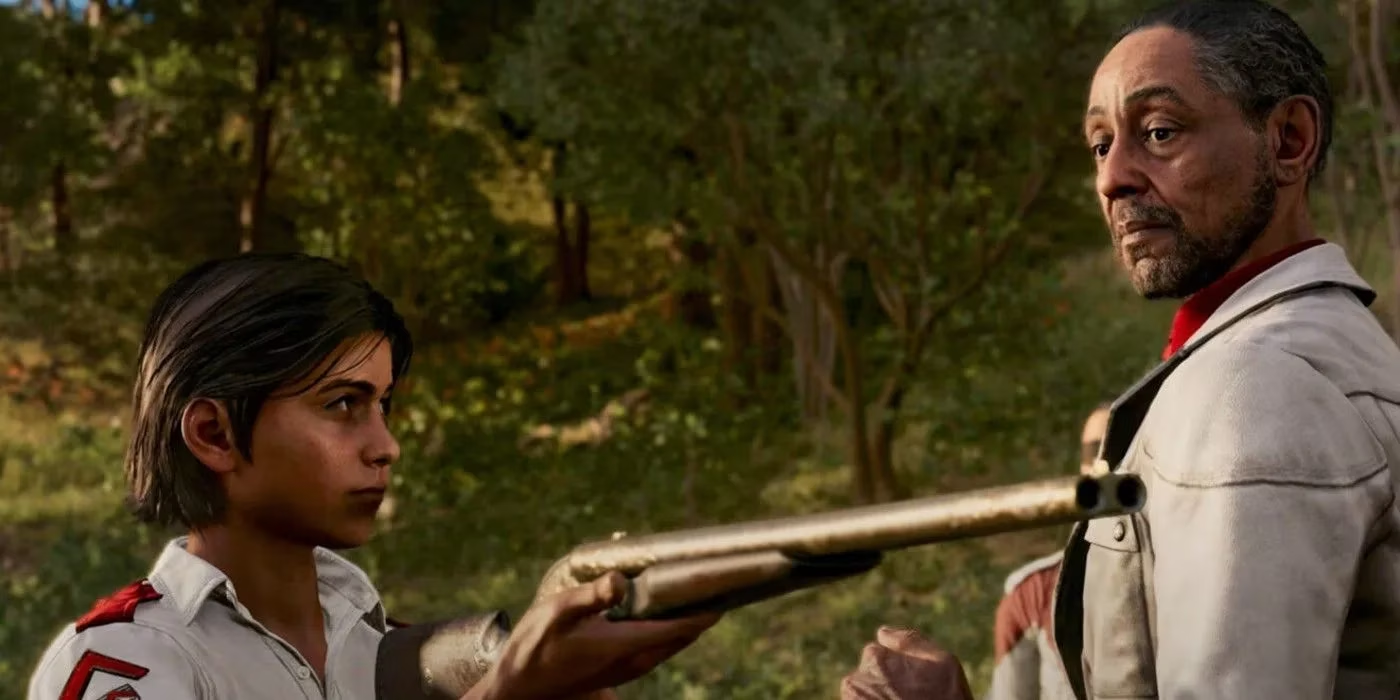
The Illusion of Choice: Can You Really Save Diego?
Let's cut to the chase, because every player who meets Diego asks the same gut-wrenching question: can you save him? The short, brutal answer is no—not in the way you hope. If you follow the main story to its intended, explosive conclusion, Diego's fate is sealed. In a final, devastating "lesson," Anton Castillo, facing his own mortality and the collapse of his regime, makes a horrific choice. Believing death is a purer fate than living under a rebel victory, he turns his gun on his own son. This moment isn't a player decision; it's a forced narrative climax. No amount of stealth, no stockpile of Resolver weapons, no clever dialogue option can stop that bullet. It's the game holding up a mirror to the absolute, corrosive nature of Anton's tyranny—a control so complete it consumes even his heir.
However... there is a technical way Diego survives. Far Cry 6 features a secret, early ending. Early on, when Clara Garcia first offers Dani a chance to escape Yara by boat, you can take it. Dani flees to the shores of the United States, leaving the revolution behind. Lounging on a beach, a radio broadcast delivers the grim news: Libertad has been crushed, Clara is dead, and Anton rules unchallenged. In this timeline, with no successful rebellion to threaten his throne, Anton has no "need" to kill Diego. So, yes, the boy lives. But here's the kicker—is surviving the same as being saved? Absolutely not. This "victory" is perhaps even more tragic. Diego remains, alive but imprisoned, his father's living puppet. He's "saved" from death only to be fully consumed by the very ideology Dani fought against. Talk about a hollow victory.
The True Tragedy: A Prison of the Mind
Diego's story isn't just about life or death; it's about the soul. He's perhaps the most tragic figure in all of Yara because his prison has no physical bars. Throughout the game, we see flashes of the good kid buried underneath:
-
Disgust at his father's brutal methods.
-
Fear of becoming the monster he's being groomed to be.
-
Sorrow for the people of Yara.
Anton, however, is a master manipulator, relentlessly trying to twist his son into a "lion," to force him to carry a bloody legacy he never asked for. Diego is a victim of generational trauma, a cycle of violence where a parent sees their child not as a new beginning, but as a mere tool to continue an old, destructive fight. The game's message is stark: not everyone can be rescued, even the most innocent. Sometimes, the damage is done long before the hero arrives on the scene.
Why This Heartbreak is the Point
It feels awful, right? To be given so much agency in an open world yet be utterly powerless to change this one boy's fate. But that discomfort? That's the whole point. Far Cry 6 uses Diego's inevitable tragedy as its most powerful narrative tool. By denying players a true "save Diego" happy ending, the game delivers a far stronger condemnation of Anton Castillo and the poison of absolutism. If we could magically whisk Diego away to safety, it would cheapen the lesson. The game forces us to sit with the consequences, to feel the weight of Anton's sins. The more we rage against Diego's fate—whether in death or in spiritual captivity—the more successfully the game communicates its themes about parental influence, corrupted legacies, and the high cost of freedom.
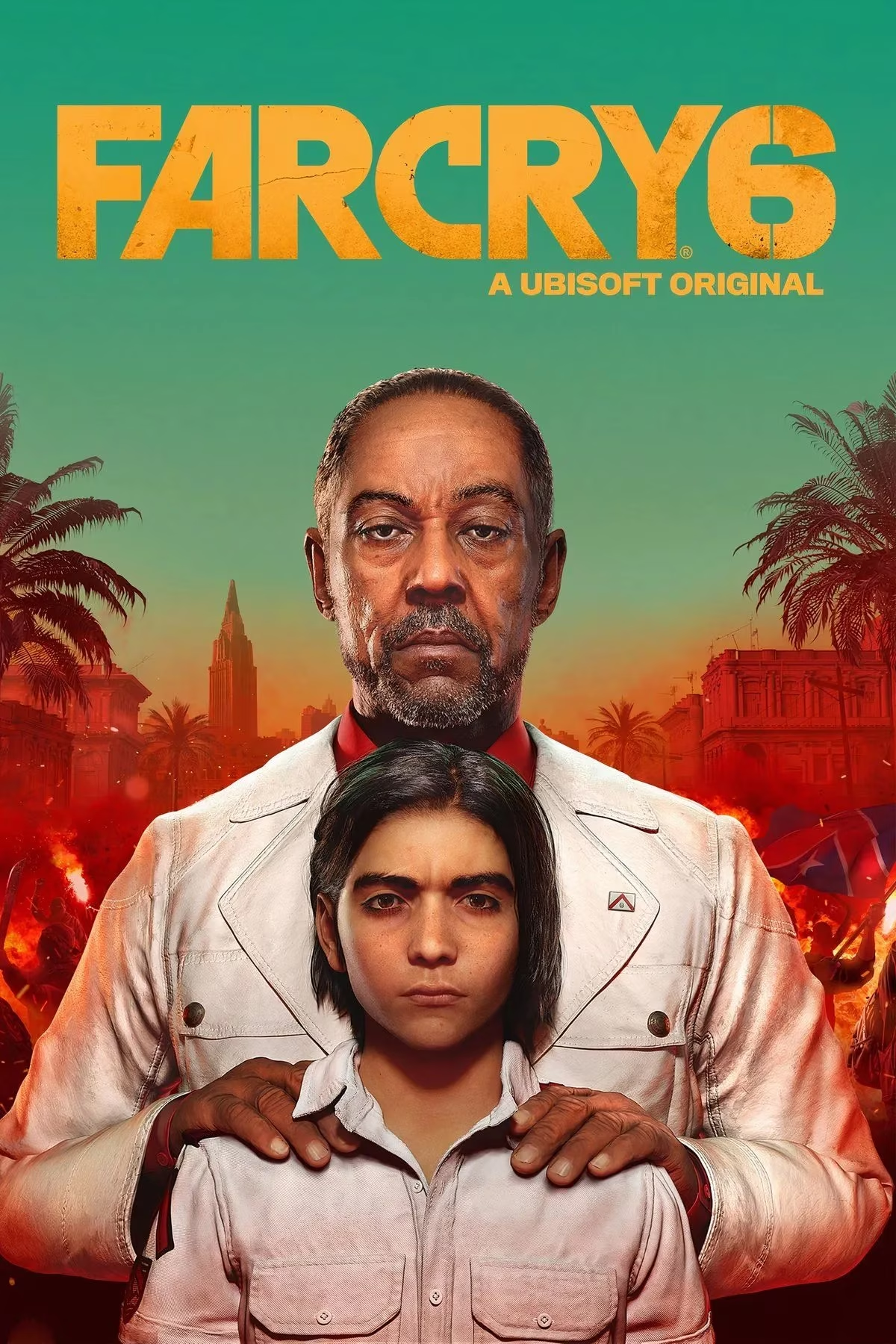
In the end, Diego Castillo stands as a poignant reminder in the world of video games. Some stories aren't about winning; they're about witnessing. They're about the collateral damage that even a successful revolution can't undo. His character lingers, a ghost in the lush landscape of Yara, asking us a difficult question: in a world shaped by monsters, what hope is there for their children? The answer, Far Cry 6 suggests, is often far more complicated and sorrowful than we'd like to imagine. And honestly? That kind of storytelling sticks with you. It's a bold choice, a narrative gut-punch that makes the sunny shores of Yara feel forever shadowed by one boy's lost future.
Comments