
As the gaming industry continues to push the boundaries of scale and immersion, the open-world genre remains a titanic undertaking for developers. These sprawling digital landscapes are not just defined by their vistas and quests, but crucially, by the threats that inhabit them. The core of the player's experience in any open-world role-playing game (RPG) hinges on combat and conflict. In 2026, the evolution of enemy artificial intelligence and behavior has reached new heights, transforming these virtual worlds from passive backdrops into reactive, hostile ecosystems. Enemies are no longer mere obstacles; they are aggressive, adaptive forces that define the tempo and tension of the adventure, ranging from minor skirmishes with common thugs to desperate, large-scale battles for survival. The modern open-world game thrives on this dynamic, creating experiences where danger is a constant, palpable presence.
🏙️ Marvel's Spider-Man 2: Symbiotes & Street-Level Hostility

Insomniac Games' Marvel's Spider-Man 2 stands as a prime example of escalating urban hostility. While the freedom of swinging through New York City offers a sense of safety, touching down transforms the city into a battlefield. The game's enemy aggression is brilliantly tiered:
-
Common Thugs: These criminals employ basic but effective gang tactics, surrounding the player and calling for immediate backup. Their aggression is persistent but predictable.
-
Symbiote Invasion: This is where the game's challenge truly intensifies. The alien symbiotes are relentlessly aggressive, swarming Spider-Man with high-damage attacks designed to overwhelm through sheer numbers and ferocity. Their behavior creates chaotic, high-stakes combat scenarios that test the player's crowd-control abilities to the limit.
The contrast between these enemy types ensures that the threat level scales seamlessly with the narrative, making the open world feel increasingly dangerous as the story progresses.
🏯 Assassin's Creed: Shadows & Ghost of Tsushima: The Aggression of Feudal Japan
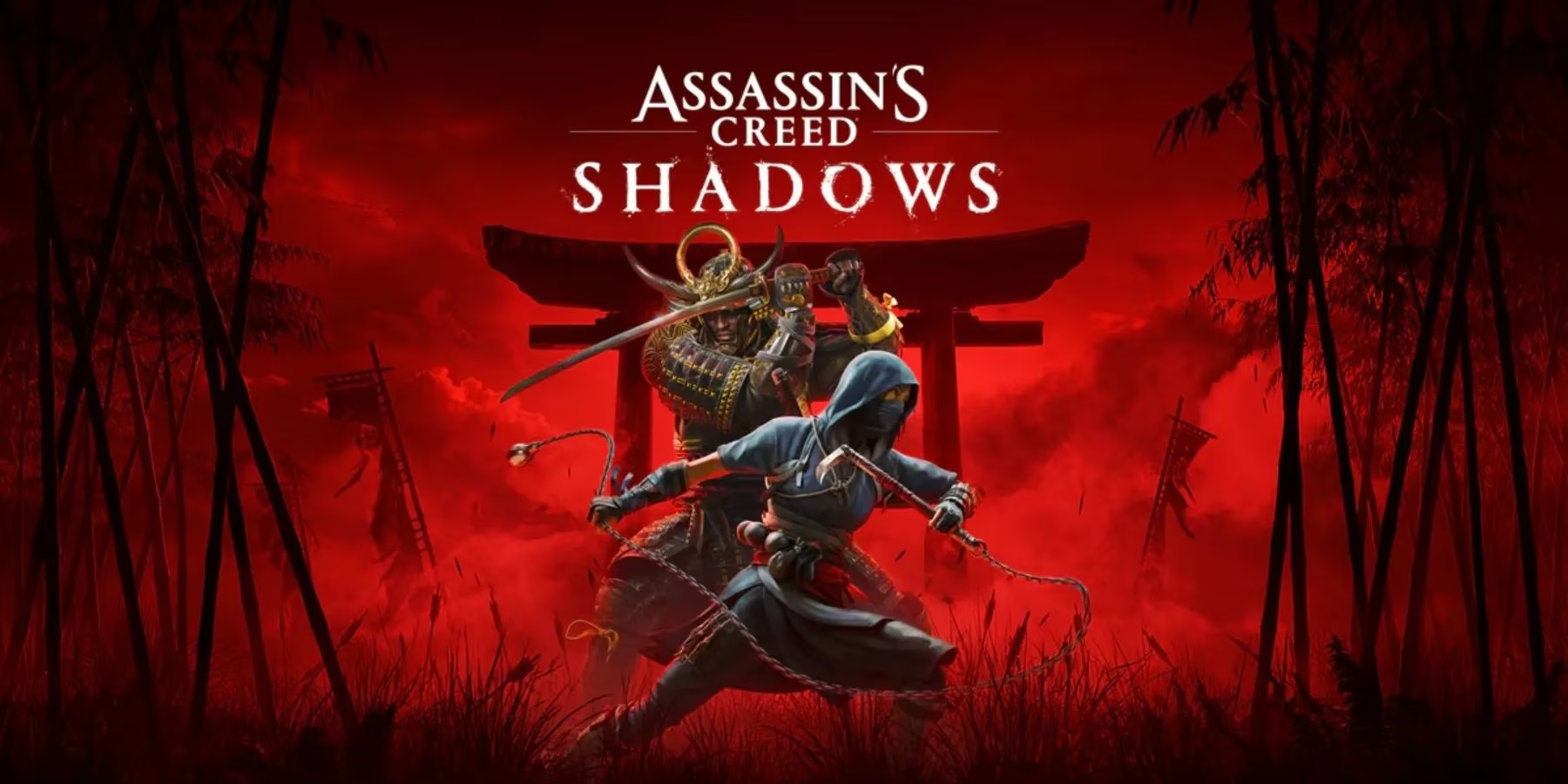
Ubisoft's latest, Assassin's Creed: Shadows, transports players to the perilous Sengoku period. The game's dual protagonists, Naoe and Yasuke, face enemies who are exceptionally alert and unforgiving. In this setting, stealth is not just an option but often a necessity, as detection triggers an immediate and aggressive response. Enemies hold no quarter, and their heightened awareness means that even attempted stealth attacks can fail if a foe is already suspicious. This creates a tense, methodical gameplay loop where aggression is a constant risk.
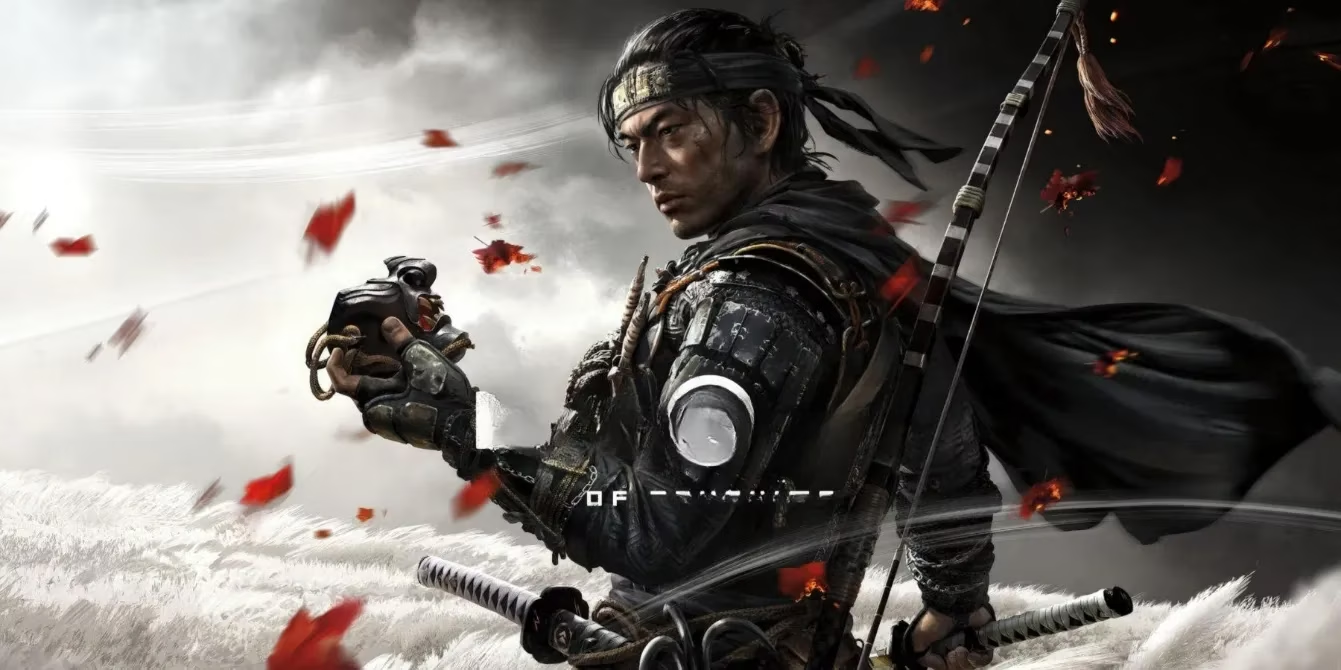
Similarly, Sucker Punch Productions' Ghost of Tsushima pits Jin Sakai against the brutal Mongol invasion. Enemy behavior here is varied and tactically aggressive:
-
Mongol Squads: Attack on sight, using coordinated group tactics to swarm the player.
-
Higher-Ranked Enemies: Act as relentless hunters, pursuing Jin with greater skill and resilience.
-
Archers & Specialists: Maintain distance to exploit openings, forcing players to adapt their approach constantly.
This diversity in enemy aggression ensures that no encounter feels the same, whether Jin is confronting a raiding party or infiltrating a heavily fortified stronghold.
🏝️ Far Cry 6: Systemic Oppression in a Tropical Paradise

The Far Cry series is synonymous with hostile open worlds, and Far Cry 6 continues this tradition on the Caribbean island of Yara. The aggression here is systemic and relentless, reflecting the oppressive rule of Anton Castillo. Enemy behaviors are designed to make the player feel hunted:
-
Reinforcement Calls: Enemies quickly call for backup, escalating small skirmishes into large-scale firefights.
-
Vicious Pursuit: Soldiers will aggressively hunt down the player across large distances.
-
Rapid Respawn Waves: The game's systems send endless waves of aggressive enemies, creating a constant state of conflict. This respawn mechanic ensures the world never feels safe, embodying the theme of a nation under a militaristic dictatorship.
🌃 Cyberpunk 2077: Hostility in the Urban Jungle

Night City in Cyberpunk 2077 is a metropolis designed to consume the weak. Following its extensive post-launch support and updates, the game in 2026 presents an open world where hostility is woven into the fabric of daily life. The aggression is multifaceted:
| Enemy Type | Aggressive Behavior |
|---|---|
| Gang Members | Territorial and attack on sight if their turf is violated. |
| Corporate Forces | Utilize advanced tactics and can trace the player's digital footprint after causing disruptions. |
| Bounty Hunters | If a faction is provoked, they will dispatch posses to chase the player across the city for a bounty, creating persistent, dynamic threats. |
This ecosystem of aggression means that trouble can find the player at any turn, from a back-alley ambush to a coordinated corporate hit.
🧟 Dying Light 2 & Days Gone: The Relentless Undead Horde
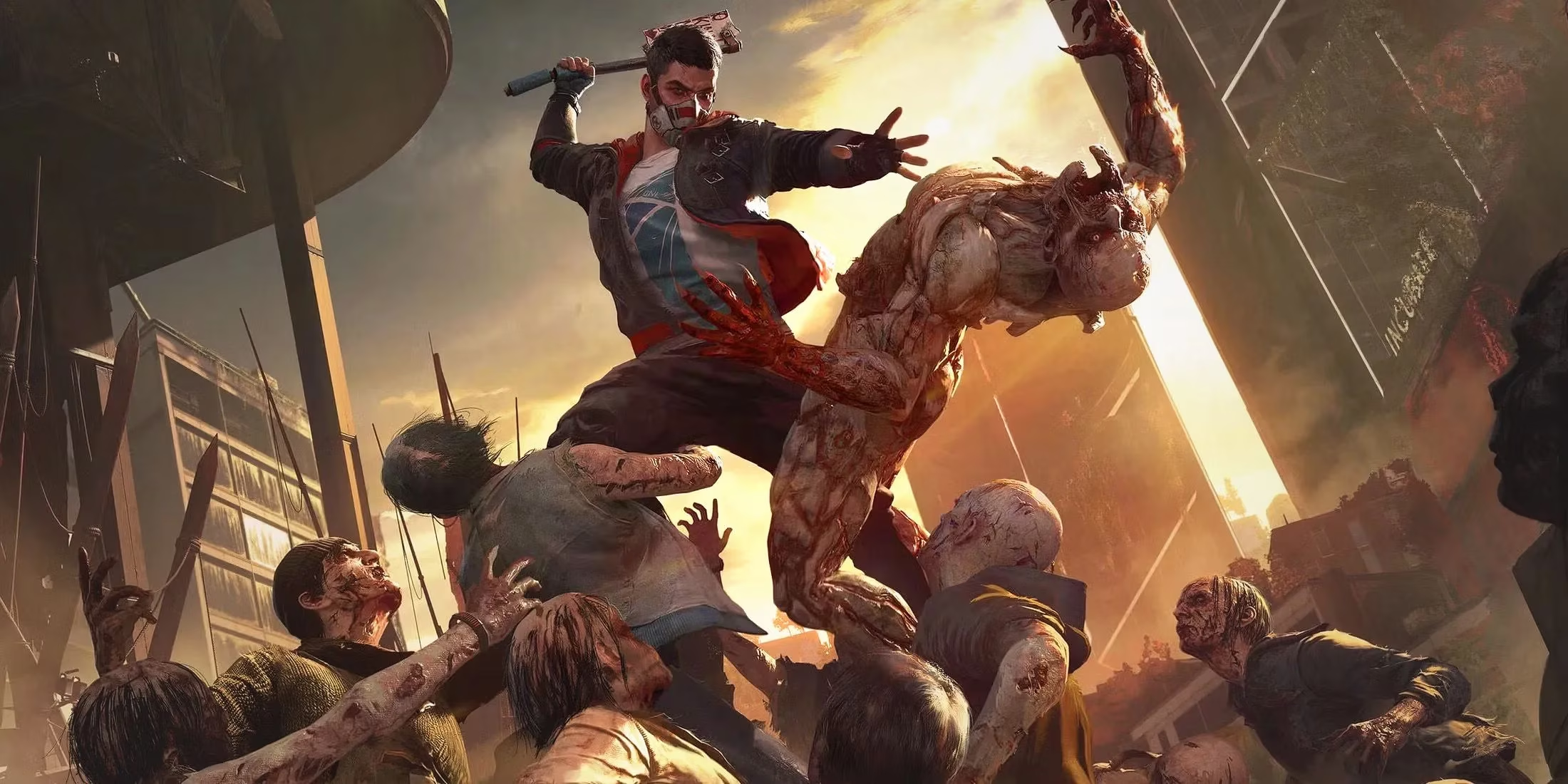
Open-world zombie games specialize in a very particular breed of aggression: mindless, overwhelming numbers. Dying Light 2: Stay Human refines this with a diverse infected ecosystem in the city of Villedor. Each zombie variant has a distinct, aggressive personality in combat:
-
Chargers rush the player head-on.
-
Howlers scream to summon massive reinforcements.
-
Dodgers weave through chaos, making them hard to target.
The aggression intensifies dramatically at night, forcing players to rely on parkour and evasion as much as combat.
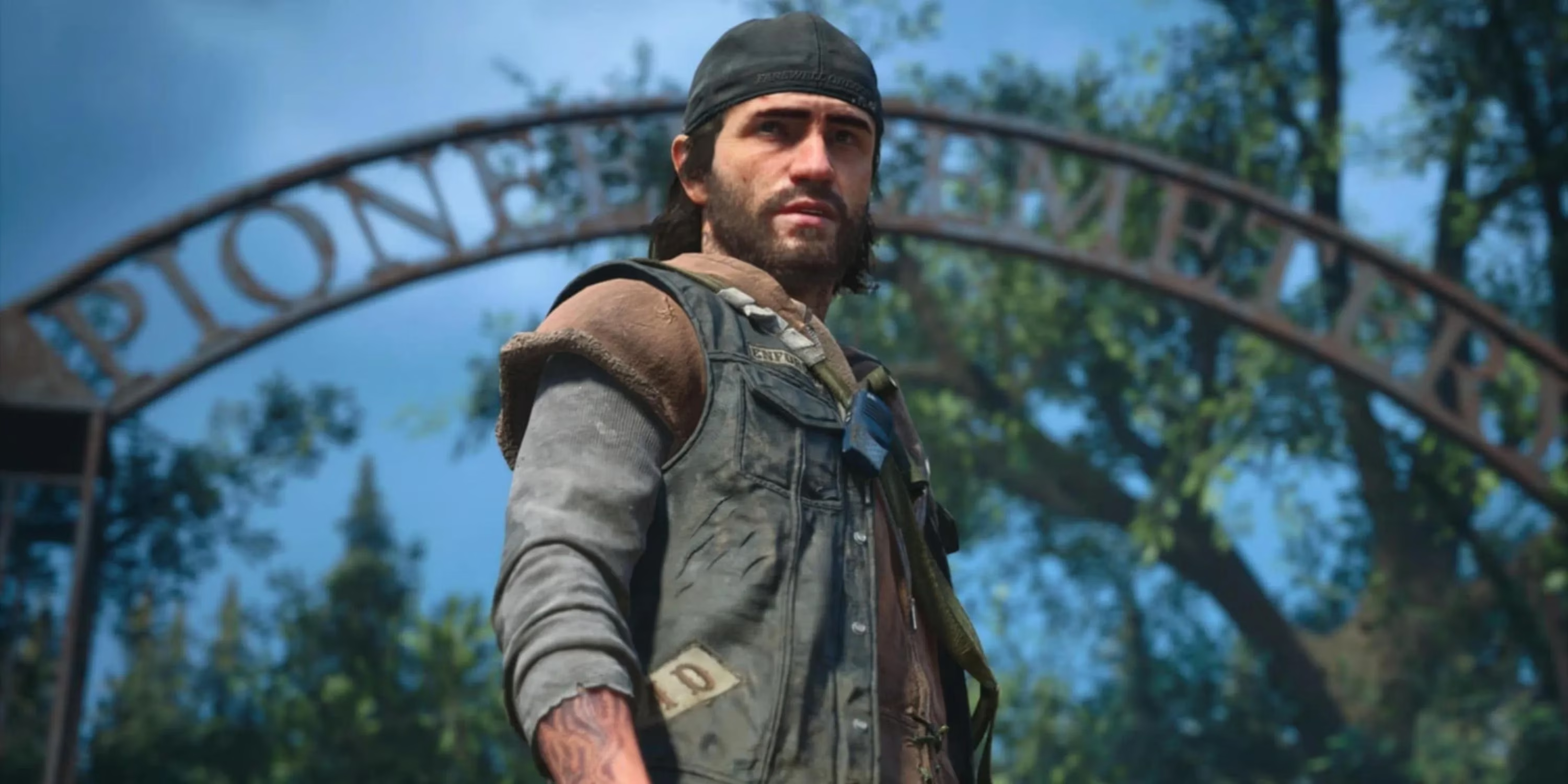
Bend Studio's Days Gone takes the concept of the horde to an iconic level. The zombies, or "Freakers," are universally and instantly aggressive upon detecting the player. Their threat is differentiated by type:
-
Swarmers: Fast, numerous, and hard to escape.
-
Heavy Variants (Breakers, Reachers): Incredibly tanky and deal massive damage.
The game's signature horde events involve hundreds of these creatures descending upon the player, creating some of the most intense, panic-inducing moments in modern gaming, where aggression is measured in sheer volume and persistence.
🐉 Elden Ring: Mythological Peril in a Shattered Realm

FromSoftware's Elden Ring represents the pinnacle of deliberate, punishing aggression in an open-world setting. As a Tarnished, players explore the Lands Between, a world populated by mythological beings of immense power. The aggression here is not about scripting or numbers, but about masterful combat design:
-
Bosses & Mini-Bosses: From dragons to hell knights, these enemies have elaborate, high-damage attack patterns designed to test player skill and patience. Their aggression is calculated and relentless.
-
Environmental Threats: Danger lurks in every corner, from hidden assassins to giant roaming beasts. The world itself feels hostile.
The game's genius lies in making this extreme aggression fair yet unforgiving, encouraging exploration while maintaining a constant sense of peril. It is a world where every new area promises unseen dangers and aggressive foes waiting to challenge the player's resolve.
In conclusion, the state of open-world gaming in 2026 demonstrates that enemy aggression is a fundamental pillar of the genre's design. From the swarming symbiotes of New York to the calculated strikes of a Sengoku-era warrior, and from the systemic oppression of Yara to the mythological horrors of the Lands Between, aggressive enemies define the rhythm, challenge, and ultimate satisfaction of these vast digital worlds. They transform exploration into adventure and combat into a narrative of survival, ensuring that these open worlds remain compelling, dangerous, and utterly unforgettable places to inhabit.
Comments