
It’s a scene replayed in living rooms everywhere: a gamer unwraps the big December release they’d been craving all year, spends a blissful week or two immersed in its world, and then — like clockwork — a January blockbuster lands, a surprise indie gem goes viral, and the earlier title slides into a backlog shadowed by FOMO. Fast-forward twelve months, and that once-coveted game has joined the ranks of the perpetually “almost finished,” its save file a digital ghost haunting the console dashboard. In the age of endless new releases, the hardest game to return to isn’t the ancient classic requiring DOSBox gymnastics; it’s the one that came out last year.
By 2026, this phenomenon has only intensified. With subscription catalogs pumping out day-one drops like a candy factory and algorithm-driven storefronts nudging players toward the shiniest new thing, a game’s shelf life in the collective conversation can barely stretch past a fiscal quarter. Psychologists call it “recency bias,” but gamers know it as that twinge of guilt when a podcast crew mocks a still-unplayed 2024 title they promised themselves they’d conquer. The irony is as thick as armor plating: the same person who happily sinks 60 hours into a remaster of a 20-year-old RPG will struggle to fire up a perfectly good game from two winters ago. What makes the twelve-month gap so treacherous?
The answer lies in a strange cognitive limbo. When a player boots up, say, a classic like Deus Ex or Chrono Trigger, the experience feels cloaked in purpose — it’s “studying the medium’s history,” a kind of cultural vegetables-eating. The decades-old interface and dated graphics become charming artifacts rather than flaws, and every clunky mechanic is a lesson in how far design has come. Meanwhile, the brand-new releases exert a gravitational pull of their own. Everyone is talking about them; social feeds overflow with clips and hot takes. Jumping in feels less like leisure and more like joining a cultural tide, a way to ride the wave of communal discovery before it crashes on the shore of yesterday’s news.
A game from the previous year, however, gets marooned between these two forces. It’s too recent to feel like archaeology and too old to fuel the group-chat buzz. As one developer at a major studio described it, the situation resembles a library of unread novels: “Picking up last year’s literary sensation is harder than tackling Moby-Dick or the hot debut everyone’s debating. It’s not mandatory for the cultural conversation, but it also doesn’t grant you intellectual bragging rights. It just … sits there.” An apt analogy might be a loaf of artisanal bread baked a day too early. It’s still delicious, still nourishing, but when it sits next to the fresh-baked steam of a morning pastry, the slightly stale crust seems to whisper, “You missed my peak.” The game isn’t spoiled — far from it — but the mental accounting of time and social currency tips the scales toward something newer.
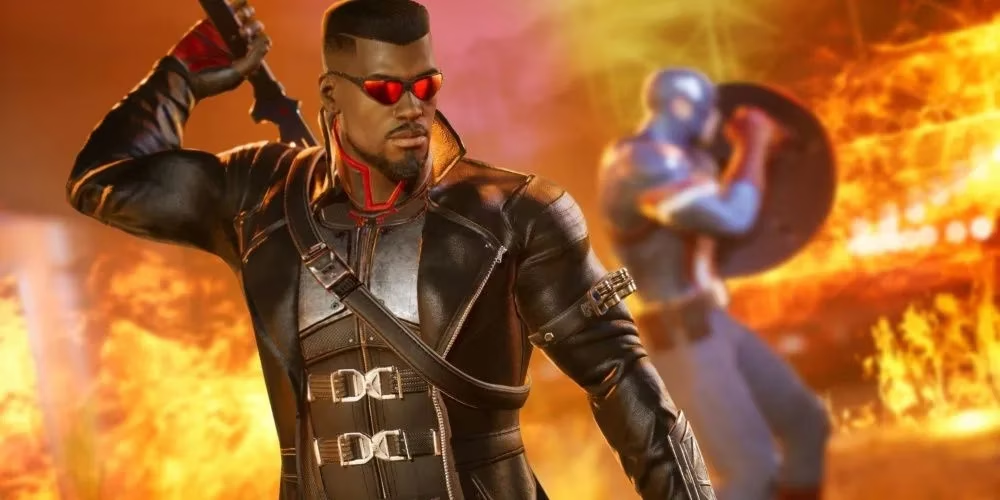
There’s another, less-discussed layer: the peculiar shame of the “mid-tier backlog.” Completing a 50-hour RPG from 2023, like a certain tactical superhero epic, can actually require more persistence than beating a 2026 flagship. Since nobody’s discussing it anymore, the player loses the extrinsic motivation of staying current; every puzzle solved in solitude feels oddly detached, like clapping at a theater performance long after the actors have taken their bows. Compare that to the sunk-cost energy of a just-launched battle pass, where logging in daily feels borderline mandatory. That older title? It waits with infinite patience, its loading screen a passive reproach.
Yet in 2026, a quiet countermovement is emerging. Small Discord communities now host “backlog book clubs,” selecting a game that turned one-year-old and collectively playing it, recreating the communal experience on a time delay. Content creators, too, have spotted a hunger for what they call “retrospective playthroughs” — deep dives into 2024 and 2025 gems that nobody had time to finish during their launch windows. It turns the lonely act of catching up into a shared event, and players report feeling far freer to enjoy the artwork without the pressure of hot-take timelines. Some even describe a strange liberation: when a game is already yesterday’s news, you can ignore its microtransactions, its hype, its multiplayer meta, and simply savor what remains.
Ultimately, no piece of good art comes with an expiration date. The 2024 masterpiece that gathered virtual dust on a Christmas hard drive is still the same 90 on Metacritic it ever was. The only thing standing between a player and that final boss is a mindset that treats games like perishable tweets rather than lasting works. So, as the 2026 holiday season glimmers on the horizon, consider letting that one-year-old jewel shine again. It might just taste richer after a little cellar time.
Comments