
As I stand on the precipice of yet another sun-drenched, untamed frontier in 2026, the familiar scent of digital pine and gunpowder washes over me. Ubisoft's Far Cry, a companion for over two decades of my gaming life, remains a constant in a world of fleeting trends. Its formula, as enduring and predictable as the orbit of the moon, is not a cage but a familiar landscape I return to, a ritual of liberation played out across generations of hardware. The series, for all its iterations, has clung to a specific set of rules—a genetic code written in the DNA of Far Cry 3 that continues to express itself in every new release. While others, like Assassin's Creed, have undergone radical metamorphoses, sometimes to the dismay of their oldest followers, Far Cry has remained steadfast. Its identity, woven from open-world exploration, themes of primal freedom, and a cycle of conquest, is a comfort, a known quantity in the chaotic wilderness of modern gaming.
The Open-World Blueprint: A Map Etched in Stone
One cannot speak of Far Cry without first bowing to its most iconic contribution: the open-world design that it helped codify. To me, playing a new Far Cry is like returning to a childhood home that has been meticulously redecorated; the floorplan is achingly familiar, but the wallpaper and furniture are new. This world operates on a rhythm as ancient and reliable as a heartbeat. The ritual begins with the climb. I seek out those skeletal radio towers, their metal frames rising like mechanical sequoias against the sky. Scaling them is a meditation, a moment of quiet ascent before the chaos to come. Activating one is not just revealing a map; it is a declaration, a beacon of my presence in this lawless land, and a future fast-travel point that stitches the world together with threads of convenience.
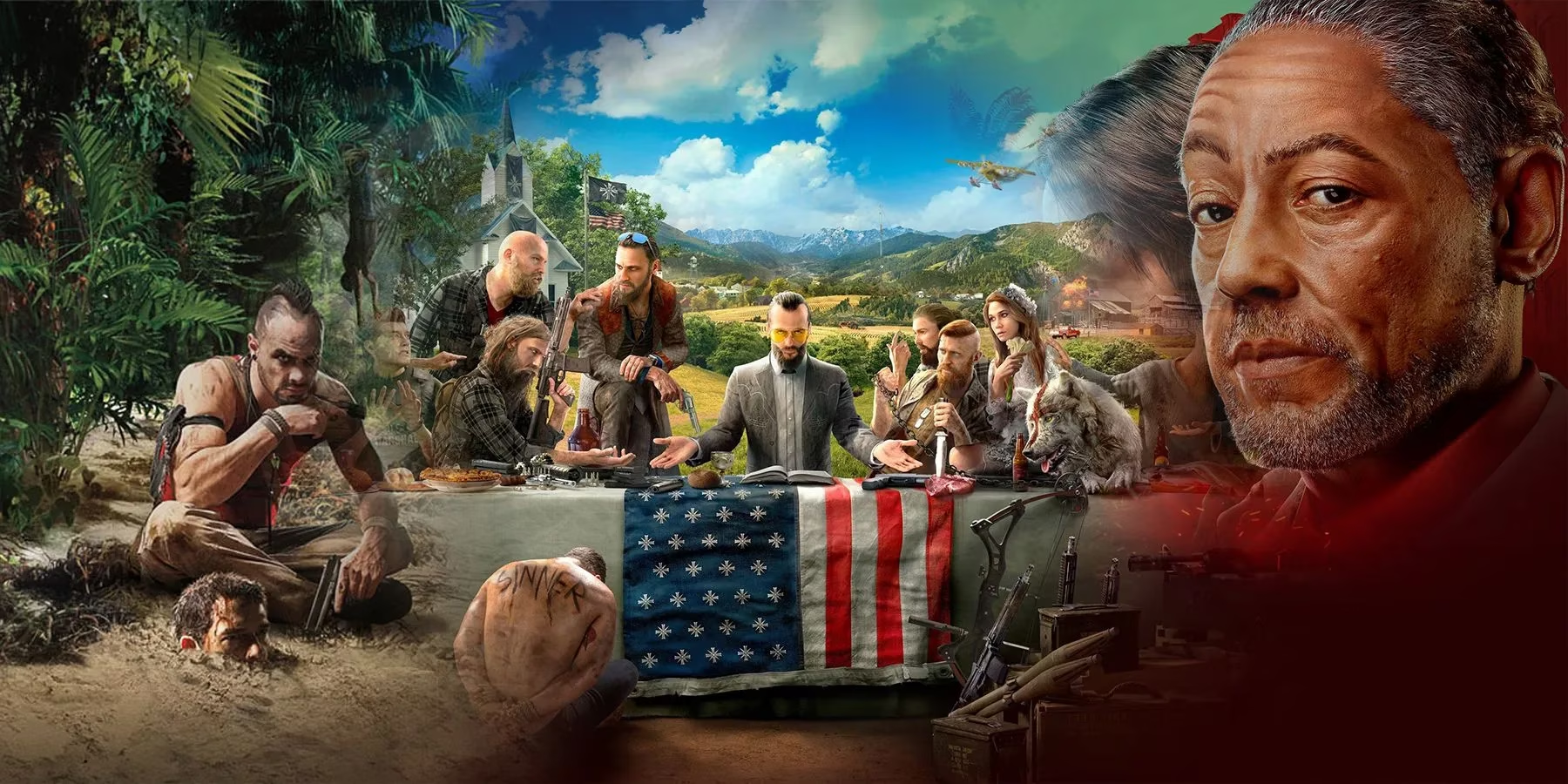
The world that unfurls beneath me is always a curated chaos. It is a diorama of conflict waiting for my intervention. The checklist is a comforting liturgy:
-
Conquerable Outposts: These are the pustules of oppression on the skin of the world. Liberating them is the core gameplay loop, a satisfying cycle of planning, execution, and clean-up.
-
A Home Base: My sanctuary, often a ramshackle collection of buildings that grows with my efforts. It's where I return to breathe, to hear the hopeful chatter of allies, and to stock up for the next foray.
-
Optional Activities & Collectibles: The world is littered with distractions—races, hunting challenges, forgotten letters. They are the glittering sediment in the riverbed of the main narrative.
This structure has become Ubisoft's signature, for better or worse. To critics, it's a repetitive template; to me, it's the framework upon which countless personal stories of liberation are hung. Knowing the rules allows me to focus on the unique flavor of each rebellion.
The Primal Dance: Hunting, Crafting, and the Theatrics of Freedom
The wilderness in Far Cry is never just a backdrop; it is an active participant, a character as vital as any villain. This is where the series' most primal traditions come alive: hunting and crafting. Venturing off the beaten path feels like stepping into a living ecosystem that is both beautiful and brutally indifferent. I don't just hunt animals; I engage in a resource ballet with the environment. A prowling tiger is not merely an enemy but a walking satchel of leather needed to expand my gear pouches. The act of skinning a kill and seeing my inventory grow is a progression system that feels tangible, rooted in the earth.
This system peaked in Far Cry Primal, where survival itself was the narrative, and every hunt was a tense negotiation with prehistory. But even in the modern settings, this loop remains. It connects me to the land in a way that pure combat cannot. Crafting a homemade syringe from rare flowers or a larger weapon holster from predator hide makes my advancement feel earned, a direct result of my engagement with the world's ecosystem.
These mechanics serve a greater thematic purpose. Far Cry's worlds are, without fail, "lawless frontiers." They are places where the thin veneer of civilization has cracked, and the raw struggle for power and survival is laid bare. The antagonists are often charismatic megalomaniacs who have imposed their own twisted order. My role, then, is not just to shoot, but to restore a semblance of balance—or at least, to replace one form of chaos with another. Liberating an outpost is a theatrical act of defiance. Seeing the enemy flag burn and the friendly forces move in provides a dopamine hit of justice that the series has perfected. The theme is always oppression versus freedom, a story as old as time, told here with flamethrowers and improvised shovels.
An Unchanging Ritual in a Digital Age
As I look to the future in 2026, I see no reason for this ritual to change. The Far Cry formula is a ship in a bottle, a self-contained world with its own perfectly balanced physics. Tinkering with it risks breaking the delicate ecosystem that fans, myself included, have come to cherish. Its traditions are its pillars:
-
The Open-World Liturgy (Towers, outposts, home base).
-
The Primal Feedback Loop (Hunt, craft, upgrade).
-
The Theatrical Narrative (Overthrow the tyrant, free the land).
These elements combine to create an experience that is uniquely Far Cry. It is a series that understands the power of familiar comfort. Playing a new entry is like hearing a beloved folk song played on a new instrument; the melody is known, but the timbre can still surprise and delight. The open world is my canvas, the outposts are my brushstrokes, and the act of liberation is the finished painting—slightly different each time, but born from the same palette. In an industry obsessed with the new, Far Cry's commitment to its core self is a statement. It is a wilderness that refuses to be tamed, and I am forever willing to get lost in it once more.
Comments