
Ubisoft stands as a titan in the gaming world, the creative force behind global sensations like Assassin's Creed and Far Cry. Known for its reliable formulas, the publisher occasionally ventures into bold, experimental territory. These ambitious leaps often birth games that are passionately debated—experiences that aren't simply 'good' or 'bad,' but are deeply personal hits or misses depending on what each player values. From graphical downgrades to radical tonal shifts, let's explore the Ubisoft titles that have most divided their audiences. 🔥
Watch Dogs (2014) - The Promise vs. The Reality
Remember the hype? The 2012 trailer for Watch Dogs promised a seamless, hacking-everything sandbox. The 2014 release, however, delivered a different reality. While the hacking mechanics were fun, they felt more limited than the breathtaking previews suggested. The noticeable graphical downgrade was a major point of contention. Yet, this wasn't a universal disappointment. Many players championed its unique gameplay and compelling, gritty narrative. The serious tone itself was a split decision—some loved the darkness, while others yearned for the lighter touch its sequel would later embrace. It became the poster child for managing player expectations.
Tom Clancy's Splinter Cell: Conviction (2010) - Stealth, Streamlined
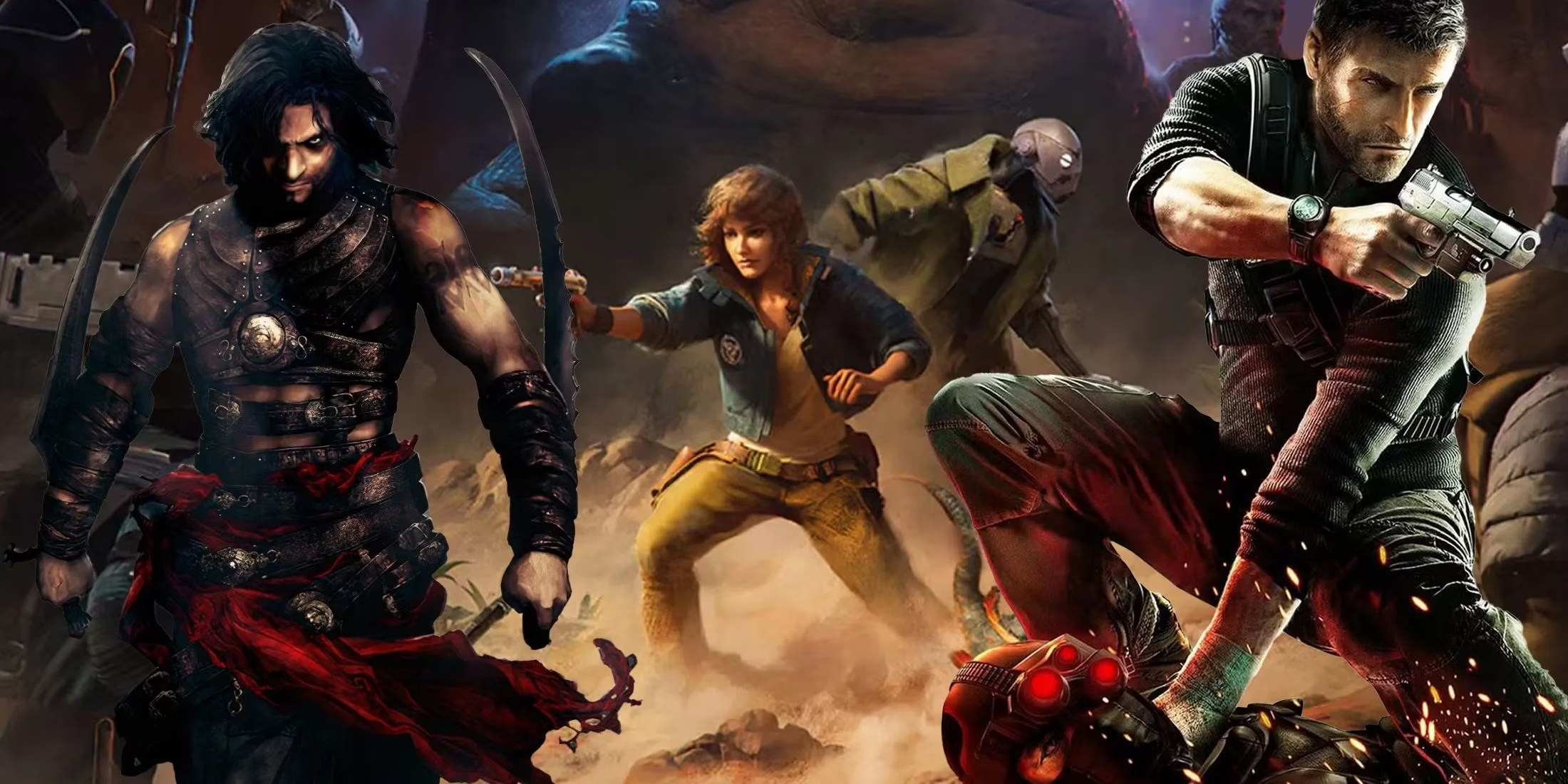
After a long wait following Double Agent, Sam Fisher returned... but different. Conviction refined the series' taste, leaning hard into action. The iconic stealth was still present, but the focus shifted to stylish eliminations. The new 'Mark and Execution' mechanic—targeting multiple foes for instant takedowns—epitomized this streamlined approach. For players seeking a more linear, accessible Splinter Cell, it was a triumph. For purists longing for the methodical, shadow-dwelling tension of earlier games, it felt like a departure from its roots. This divide left many wondering if the true Sam would ever return.
Far Cry 6 (2021) - Breaking the Loop
Sticking to the classic Far Cry loop of liberation and outposts, Far Cry 6 still managed to stir controversy with key changes. The introduction of ammo types—requiring specific rounds to damage certain enemies—was a major flashpoint. 🎯 Some praised the added strategic depth, while others just wanted their guns to work, period. Even more divisive was replacing the traditional skill tree with a gear-based progression system tied to armor and weapons. For some, it was a refreshing overhaul; for others, it was an unnecessary complication of a perfected formula.
Avatar: Frontiers of Pandora (2023) - A Beautiful Clone?
Announced to initial skepticism, many predicted a simple Far Cry reskin. While its open-world structure is familiar, Frontiers of Pandora carves its own identity. The undeniable star is Pandora itself—a lush, jaw-dropping world that immerses players like few others. Soaring on ikran mounts and harvesting for experience points are unique mechanics that set it apart. Yet, the debate persists: are these elements enough to transcend the Ubisoft formula, or does it remain a stunningly beautiful iteration of a well-known blueprint? The answer depends entirely on what you seek from the experience.
Star Wars Outlaws (2024) - A Galaxy of Contrasting Wants
Heralded as the first true open-world Star Wars game, Outlaws faced immense hype. Its reception perfectly illustrates a game built for specific tastes. Players who dream of exploring vibrant, alien-packed cities and engaging with quirky characters found a treasure trove of fun. However, those digging into the RPG mechanics and combat often found them undercooked, with stealth mechanics criticized as overly basic. It's an enjoyable adventure, but one that clearly appeals to different player archetypes within the Star Wars fandom.
Assassin's Creed Odyssey (2018) - The Map That Divided
Even years later, Odyssey remains a lightning rod for debate, and it all centers on scale. Featuring the largest map in series history, it fully embraced the new RPG direction. For fans of this style, the staggering amount of content was a blessing. For those yearning for a return to the tighter, more narrative-focused classics, it felt like a bloated departure. In an era of open-world fatigue, Odyssey' sheer size cemented its status as the most divisive Assassin's Creed entry, ultimately splitting the fanbase and prompting Ubisoft to scale back in future titles.
Prince of Persia: Warrior Within (2004) - A Dark Descent
Following the beloved, light-hearted Sands of Time, Warrior Within took a shockingly dark turn. Released just a year later, it transformed the charming Prince into a brooding, violent anti-hero. The gothic aesthetic and heavy metal soundtrack were a stark contrast. This radical shift created an acquired taste—some adored the edgy new style, while others were alienated. The increased focus on combat, making the game feel less diverse than its predecessor, further fueled the debate. It's a testament to how dramatically tone can redefine a series.
Skull and Bones (2024) - The Weight of Expectation
Perhaps no game embodies the 'divisive' label through circumstance more than Skull and Bones. Announced in 2017, it endured a protracted, turbulent development cycle filled with delays. Upon its 2024 release, opinions shattered. Many players praised its immersive naval atmosphere and carefree, pirate-life vibe, especially with friends. Yet, others couldn't overlook the lengthy development time, expecting more complexity and content as a result. Dubbed a 'AAAA' game, its sky-high expectations—forged over seven years—meant it was judged not just on its merits, but against the myth it had become. Had it launched sooner, the conversation would be entirely different.
Why Do These Games Divide Us?
The common thread? Ambition meeting expectation. Ubisoft's divisive titles often result from:
-
Formula Innovation: Changing core mechanics (e.g., Far Cry 6's progression).
-
Tonal Shifts: Drastically altering a series' vibe (e.g., Warrior Within).
-
Scope & Scale: Embracing or abandoning vast open worlds (e.g., Odyssey).
-
Development Narrative: When a game's journey impacts its perception (e.g., Skull and Bones).
These games prove that a mixed reception isn't a mark of failure, but a sign of a title that dared to be different. They challenge player comfort zones and, in doing so, create passionate communities of both advocates and critics. In the end, their legacy is defined not by consensus, but by the strength of the conversations they spark. 💬 Which side of the divide do you stand on?
Comments