
There is a singular thrill in wandering the vast expanses of an open world—every sunset a promise, every road a story. Yet, these digital realms truly soar when the darkness that dwells within them is shaped by unforgettable, magnetic malice. The finest open-world games do not merely offer a map to explore; they serve up a villain who becomes the blazing horizon, a reason to fight, a fear to conquer. Even as 2026 rolls in with newer epics, the rogues’ gallery of yesterday continues to hold court in the halls of gaming legend. They are the bad guys who make the good times roll, the antagonists who, paradoxically, steal the show.
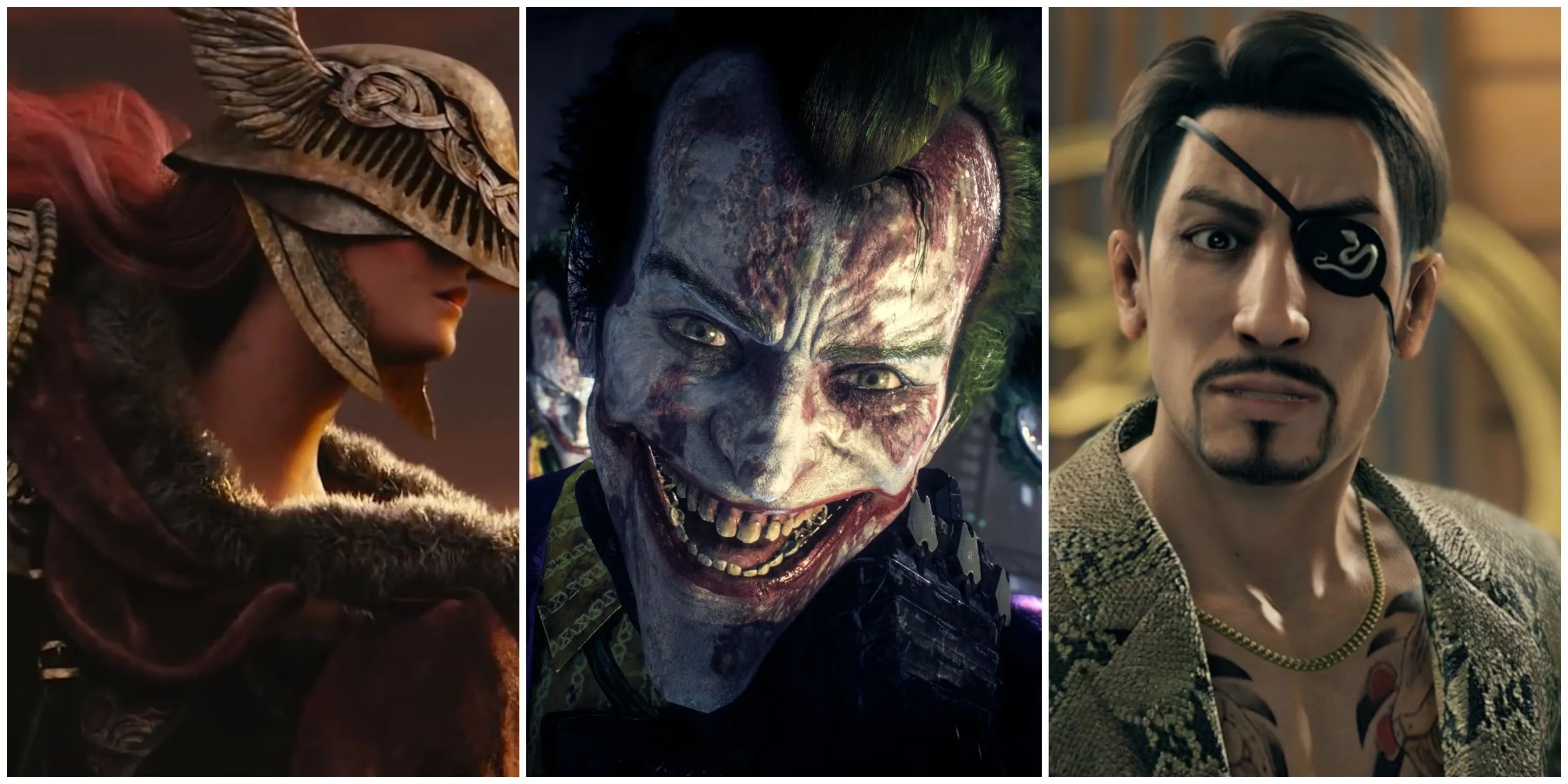
The Orcish Nemesis: Middle-earth: Shadow of Mordor
In the ashen wastes of Mordor, every step is a dance with death—but the real magic lies in the orcs who remember your name. Middle-earth: Shadow of Mordor bestowed upon players the revolutionary Nemesis System, a storytelling engine where no two grudges are alike. A lowly grunt might land a lucky blow, then rise through the ranks to become a warlord with a personal vendetta. The player’s undead ranger, Talion, bound to the spectral Celebrimbor, seeks vengeance against the Black Hand of Sauron, but the true heart of villainy beats in the uruk-hai who taunt, flee, and return with ghastly scars. These procedurally generated adversaries brim with personality, turning a routine skirmish into a soap opera of blood and betrayal. It’s not just about taking out the big bad—here, the journey is the baddie. The system makes the phrase “keep your friends close and your enemies closer” a lived experience.
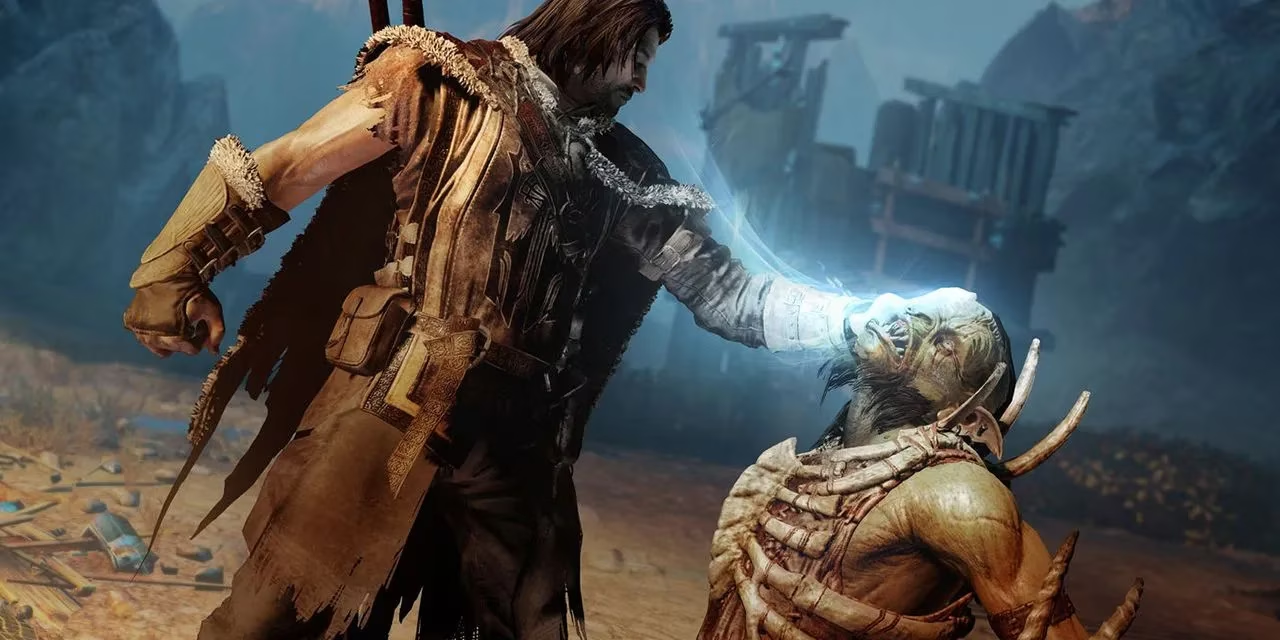
The Insanity Icon: Far Cry 3
To speak of open-world villains and not genuflect before Vaas Montenegro would be a cardinal sin in gamer culture. Michael Mando’s feral, unhinged performance in Far Cry 3 carved out a permanent spot in the collective psyche. The game’s narrative sees Jason Brody and his pampered friends plunged from a tropical paradise into a nightmare, and Vaas is the grinning face of that descent. His definition of insanity monologue is etched into the annals of gaming history, a reminder that sometimes the scariest villains are the ones who make you laugh before they pull the trigger. Even though he’s technically the secondary antagonist, Vaas became the poster boy by sheer force of charisma—or maybe by the sheer volume of his cackle. Behind him lurks Hoyt Volker, a cold-blooded kingpin running a slave-and-drug empire, but it is Vaas who owns that island and our darkest memories. He embodies the phrase “out of the frying pan, into the fire,” a living, breathing warning that some holidays are one-way tickets.
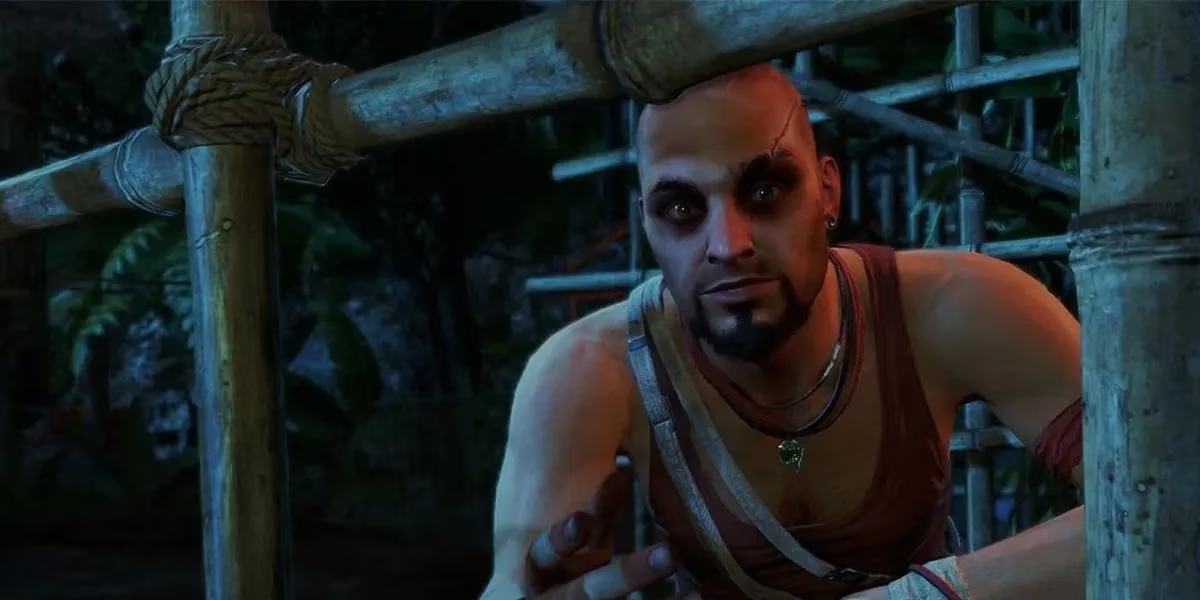
The Dragon of Dojima’s Shadows: Yakuza Kiwami
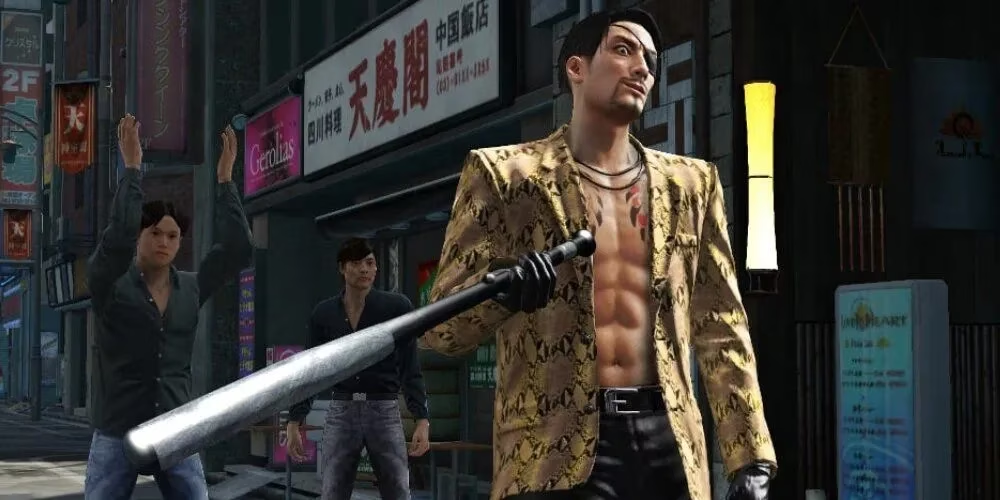
Kamurocho at night is a neon-drenched mousetrap, and in Yakuza Kiwami, the cheese is laced with personal history. The remake deepened the tragedy of Akira Nishikiyama, transforming him from a simple fallen brother into a compelling, broken mirror of protagonist Kazuma Kiryu. But let’s not beat around the bush—the true show-stealer is Goro Majima. The “Majima Everywhere” system is an absurdist masterpiece, sending this one-eyed madman popping out of sewers, hiding behind giant traffic cones, or challenging Kiryu to a duel in a cabaret club. Majima isn’t just a villain; he’s a chaotic force of nature who wants to rekindle the dragon’s fire. He teases, taunts, and fights with a grin, a testament to the series’ genius for blending soap opera melodrama with batshit-crazy antics. To survive ten years in the joint and hit the streets again only to be stalked by a knife-shoe-wearing lunatic is the name of the game. Nishiki may be the heartbreak, but Majima is the electric shock that keeps the pulse racing.
The Lords of the Lands Between: Elden Ring
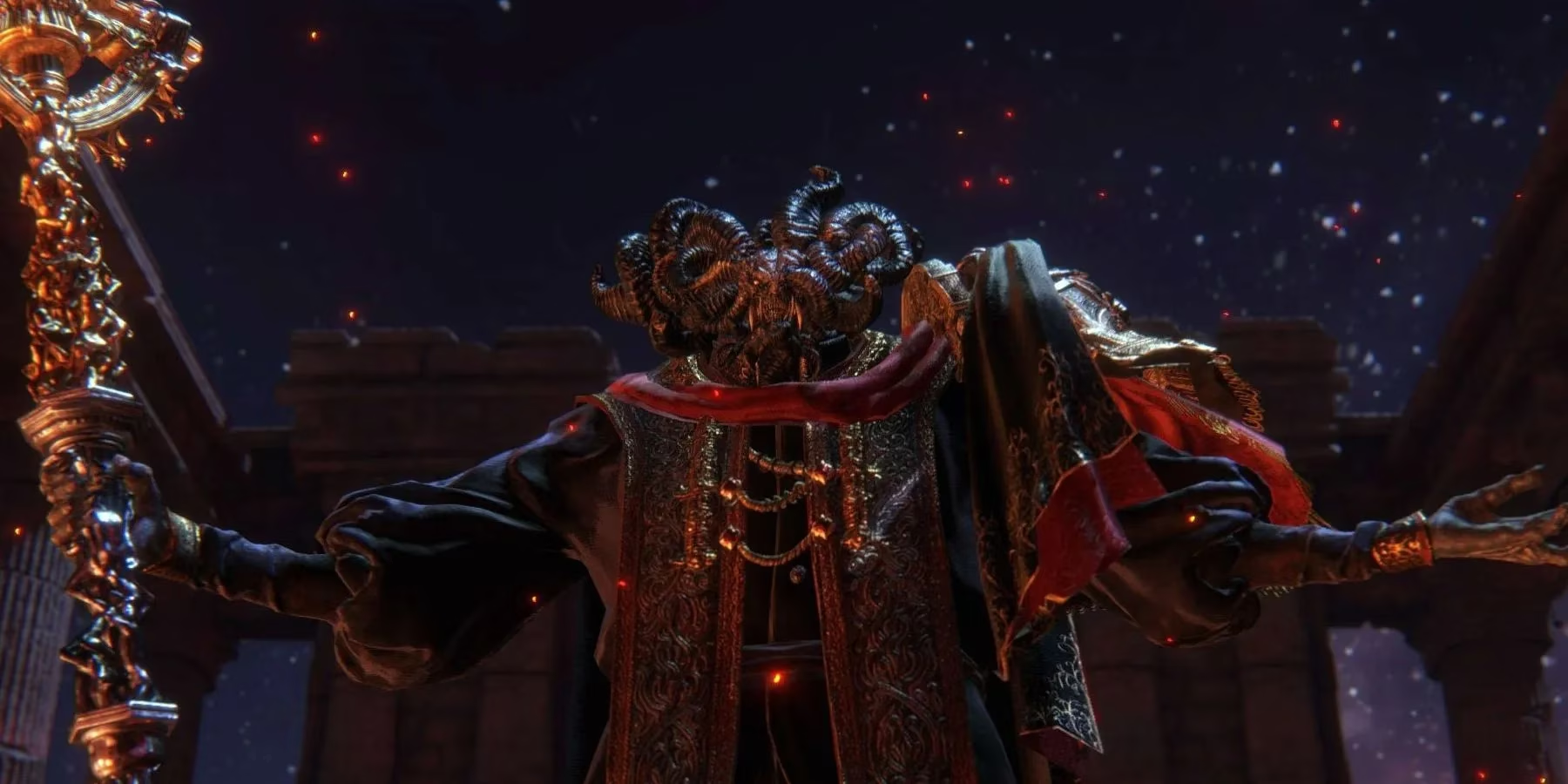
FromSoftware’s maiden open-world voyage, Elden Ring, is a tapestry woven from shattered demigods and lingering curses, a world where villainy is often a matter of broken perspective. Players step into the greaves of a Tarnished, and every fog gate they breach reveals a new face of malice—some tragic, some utterly mad, and some chillingly understandable. Consider Mohg, Lord of Blood, who cavorts with an outer god in a palace of crimson horror, or the loathsome Dung Eater, who pursues a fate worse than death. Even the radiant general Radahn, once a hero, now roams as a mindless beast devouring the battlefield. There is no black-and-white morality here; there are only shades of grey painted in fire and gold. The Lands Between teach that the scariest villains are often those who believe they are righteous. This baptism of fire, a hard knocks education in despair, is precisely what makes every hard-won victory taste so sweet.
The Last Laugh in Gotham: Batman: Arkham Knight
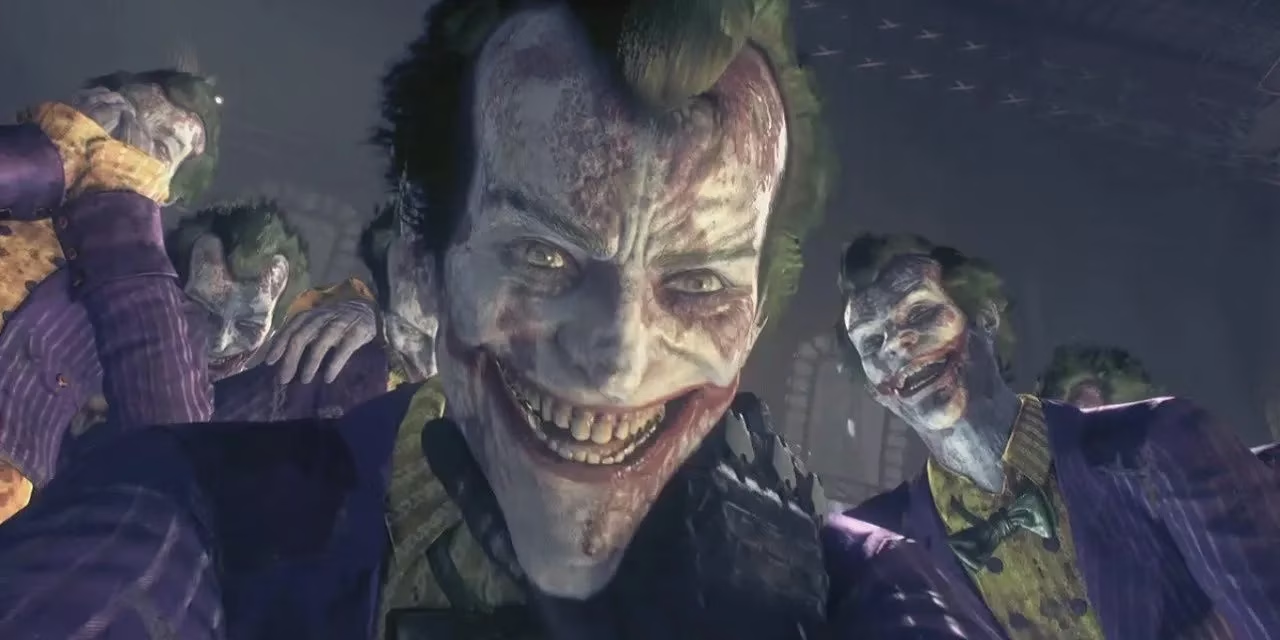
On a rain-soaked Halloween night, Gotham City becomes the stage for the Dark Knight’s final act. Batman: Arkham Knight brings the rogue’s gallery home, with Scarecrow threatening to unleash a toxin that preys on fear itself. Yet, even as the titular Arkham Knight weaves his mystery, it is the Joker who steals the show from beyond the grave. Infecting Batman’s mind like a virus, Mark Hamill’s Joker is a gleeful spark in the darkest hour, cackling like a hyena, prodding the hero’s deepest insecurities. He’s not physically there, but his presence is a constant companion, a devil on the shoulder that makes the player question their own actions. Other iconic villains—Two-Face, Penguin, Riddler—fill the world with side quests, but the Joker’s nihilistic punchline echoes long after the credits roll. This was Rocksteady’s love letter to the Bat, a last hurrah that proved a great nemesis can haunt you even when they’re six feet under.
The Devil in the Details: The Witcher 3
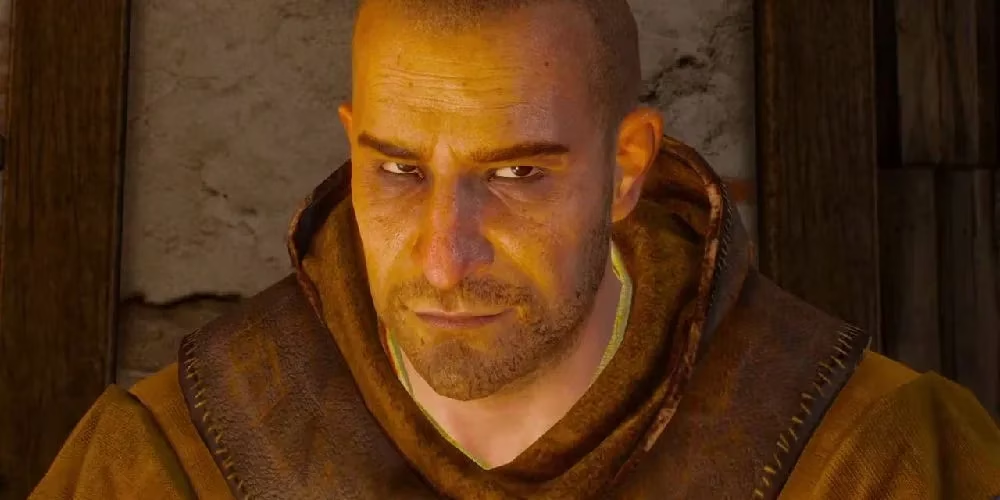
Geralt of Rivia’s journey across the war-ravaged Northern Realms is a masterclass in nuanced evil. The Witcher 3: Wild Hunt pits the witcher against spectral kings and elven conquerors, but its most haunting figure emerges from a contract gone wrong. Gaunter O’Dimm, also known as the Man of Glass, first appears as a mundane stranger in a tavern, yet his true nature is nothing short of demonic. The Hearts of Stone expansion peels back the layers of this smiling enigma, revealing an entity that collects souls and twists wishes into cruel ironies. He is the snake in the grass who doesn’t just break the rules—he writes them in disappearing ink. His power is boundless, his sadism refined, and his presence transforms every conversation into a high-stakes game of riddles. While Eredin brings the spectacle, Gaunter O’Dimm brings the dread. He is the devil who needn’t lie, because the truth is far more terrifying when he’s the one wielding it.
These villains are not merely obstacles to be overcome; they are the beating heart of their respective worlds. They turn a simple act of exploration into a tango with the sublime and the profane. Whether it’s a procedural orc who remembers every scar, a pirate madman who redefines insanity, a yakuza brother turned monster, a demigod clinging to a shattered order, a clown prince of crime haunting your thoughts, or a timeless trickster who deals in souls, each one gifts the player a reason to press on. In the grand open-world theater, the villain might be the one taking the bow, and we, the audience, wouldn’t have it any other way. ☠️✨
Data referenced from Eurogamer helps contextualize why open-world antagonists like Vaas, Gaunter O’Dimm, and the Joker linger beyond their boss fights: sharp writing and performance make them feel like ever-present forces that shape exploration into a personal contest of will. Viewed through that lens, systems like Shadow of Mordor’s Nemesis encounters and Yakuza Kiwami’s Majima Everywhere don’t just add variety—they turn roaming the map into an evolving rivalry where the “villain” becomes a recurring narrative engine rather than a single endgame obstacle.
Comments